The short version
- At least thirty-three British residents remain unaccounted for following a glacial lake outburst that triggered deadly flash floods near the Nepal-Tibet border.
- The death toll has risen to at least 359, with over 1,300 people missing, including hundreds of tourists participating in religious pilgrimages.
- Rescue operations are severely hampered by destroyed bridges and power outages, while officials warn of potential secondary flooding risks.
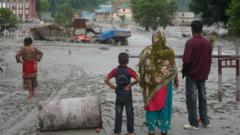
A catastrophic glacial lake outburst in Tibet has triggered devastating flash floods along the Nepal-Tibet border, leaving at least 359 people dead and more than 1,300 missing. Among those unaccounted for are thirty-three residents of the United Kingdom, including teenagers, prompting a somber response from British leadership and the royal family. King Charles III and Queen Camilla described themselves as heartbroken by the scale of the disaster, sending profound sympathy to families who have lost loved ones and to those anxiously awaiting news of missing relatives.
The tragedy has struck particularly hard at groups participating in the Kailash Mansarovar Yatra, a sacred pilgrimage for Hindus that had only recently resumed after disruptions caused by the pandemic and geopolitical tensions between India and China. Mount Kailash, located in the Himalayas near the border, is considered the spiritual home of the Hindu god Shiva. Multiple tour operators have reported significant losses, with Alpine Eco Trek confirming it has lost contact with twelve British nationals on a trip to the mountain. The Trekkers’ Society also confirmed that nine UK citizens are missing after crossing into the region.
Other organizations involved in the pilgrimages face similar uncertainties. Himalayan Glacier US had forty-seven guests on a pilgrimage, two of whom were British citizens. Kailash Journeys reported twenty-seven guests and staff members missing, including two British men, while Fishtail Tours confirmed one British national was unaccounted for. The demographic of the missing varies widely, with Alpine Eco Trek noting that the youngest person missing from their group is a thirteen-year-old girl. Four Nepali tour guides associated with the same company are also listed as missing.
Prime Minister Andy Burnham characterized the situation as distressing and devastating, announcing that the UK government has offered five million pounds in aid to support the Nepalese government’s response efforts. The Foreign Office has urged British nationals to follow local guidance and remain alert to the rapidly changing conditions. Officials are working closely with Nepalese authorities to coordinate search and rescue operations, though progress is slow due to the remote nature of the terrain and the sheer volume of debris.
For families in the UK, the lack of communication has created an agonizing wait. Pramod Pudel, a British resident originally from Nepal who lives in East Sussex, described a scenario where nothing remains of his family’s home. He is traveling back to search for his wife, mother, brother, and uncle, noting that broken bridges and land barriers prevent crossing. The complete loss of electricity and power infrastructure means he cannot contact anyone, leaving him in the dark regarding their fate.
Personal accounts from other diaspora members highlight the suddenness and violence of the water surge. Rajendra Pudasaini, a nurse from Essex, reported that relatives were swept away by the speed of the floodwaters, including his wife’s aunt, uncle, their granddaughter, her husband, and his godson. In Aberdeen, Barun Lamichhane shared that while his brother, uncle, and cousin died in the disaster, his parents and grandmother managed to escape by crawling up a hillside like infants. These stories underscore the chaotic conditions that prevented many from seeking higher ground.
The logistical challenges facing rescuers are compounded by warnings of secondary flood risks near the Bhote Koshi river. Nepali authorities have issued alerts regarding this potential threat, urging caution as they attempt to navigate the devastated landscape. The destruction of critical infrastructure, including bridges and power lines, has isolated communities and hindered the movement of emergency personnel. This isolation means that even if survivors are found, extracting them remains a formidable task.
As the search continues, the focus remains on locating the missing tourists and locals alike. Tatajana Phillips from Folkestone expressed hope that authorities could locate her sister, Julija Jakovicka, who was in the border area for a yoga and meditation retreat an hour before the floods struck. Her husband Ben noted the difficulty of knowing only the last known location without any further information. The international community watches as Nepal grapples with one of its most severe natural disasters in recent memory.
The incident highlights the vulnerability of regions dependent on glacial stability, particularly in the context of changing climate patterns. While specific causal links to long-term environmental shifts are not detailed in immediate reports, the outburst itself demonstrates the raw power of high-altitude hydrological events. For now, the priority is humanitarian aid and information gathering, as families across the globe wait for any sign of life from those caught in the deluge.
Future developments will likely depend on the ability to restore communication networks and clear debris from key routes. The UK government’s financial contribution aims to bolster these efforts, but the scale of destruction suggests a prolonged recovery period. Until then, the uncertainty surrounding the fate of the missing remains the central concern for both local authorities and international observers.
Sources behind this briefing
Go to the original reporting
- BBC News↗King 'heartbroken' by floods as search for missing, including 33 from UK, continues

