The short version
- The UK government has updated regulations to permit the legal sale of plug-in solar panels in mainstream retail stores starting this week.
- These systems are capped at 800 watts for safety, meaning they supplement rather than replace grid electricity and do not qualify for export payments.
- Safety experts advise consumers to verify product compliance with G98 standards and have home wiring inspected before installation.
Major retailers in the United Kingdom are beginning to stock plug-in solar panel kits following a regulatory change that permits their legal sale. This shift marks a significant departure from previous restrictions, allowing consumers to purchase renewable energy equipment directly from high street stores and online platforms without requiring specialized certification for installation. The government anticipates that these products will provide a more affordable pathway for households to reduce their reliance on imported fuels, which have seen price volatility linked to geopolitical tensions in the Middle East.
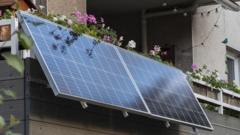
Unlike traditional rooftop solar arrays, these new systems are designed for simplicity and accessibility. They can be installed by homeowners without the need for a qualified electrician, making them suitable for properties with limited outdoor space, including some balconies. The kits typically include mounting hardware and instructions, allowing users to set up the equipment themselves. Because they are not permanently fixed to the property, they offer flexibility for renters or those who may move residences in the future, though permission from landlords or freeholders may still be necessary.
The financial implications of adopting this technology are modest but tangible. Industry estimates suggest that a single-panel kit currently costs around £699, while a two-panel system is priced near £1,089. However, officials expect market competition to drive prices down to a range of £400 to £600 as more manufacturers enter the space. Government research indicates that households could save between £70 and £110 annually on energy bills, depending on factors such as panel orientation and sunlight exposure. South-facing, unshaded locations yield the best results, and savings are maximized when electricity is consumed during daylight hours.
Safety constraints are built into the design of these systems to prevent risks associated with amateur electrical work. Each kit includes a microinverter that limits power output to 800 watts, which is sufficient to run low-energy appliances like refrigerators or devices left on standby but insufficient for high-demand items such as kettles. This cap ensures that the system supplements rather than replaces grid power. The microinverter also monitors the connection continuously; if a power outage occurs or the device is unplugged, it shuts down within milliseconds to prevent electricity from flowing back into dead wiring, protecting utility workers and maintaining grid stability.
Because these systems operate below the threshold for formal certification under the Microgeneration Certification Scheme, they do not qualify for the Smart Export Guarantee. This means homeowners will not receive payments for excess energy sent back to the grid. Instead, any unused power flows back without financial compensation. The government views this trade-off as acceptable given the lower upfront costs and ease of installation, aiming to democratize access to solar energy even if individual savings are smaller than those from full-scale installations.
Consumer safety organizations have issued guidance for potential buyers to mitigate risks associated with older home electrical systems. Electrical Safety First recommends that households have their wiring inspected by a registered electrician before purchasing panels, particularly in older properties where the condition of the infrastructure is unknown. The charity warns against using extension leads, cable reels, or plug-in adaptors, which can overheat and pose fire hazards. They also advise limiting usage to one plug-in device per household for now.
Verification of product compliance is critical for consumer protection. Legally sold panels in Great Britain must meet the G98 industry standard and government specifications. Buyers are encouraged to check the Energy Networks Association’s public register to confirm that a product is listed as compliant. Experts suggest purchasing from established retailers rather than third-party sellers on online marketplaces, as some platforms may not hold legal responsibility for the safety of goods sold through them.
The rollout represents a strategic move to diversify energy sources and reduce household expenses in a volatile market. While plug-in solar panels will not power an entire home, they offer a practical way to offset daytime electricity consumption. As more products become available and prices stabilize, the technology could become a common fixture in British households, providing a small but meaningful contribution to national energy independence and individual cost savings.
Sources behind this briefing
Go to the original reporting
- BBC News↗Plug-in solar panels are coming to a shop near you - here's what to know

