The short version
- Big Issue sales have declined by an average of twenty percent during weeks with declared heatwaves compared to the previous year.
- Vendors face immediate financial losses and health risks, forcing difficult choices regarding essential living costs like rent and food.
- The organization is providing safety supplies but acknowledges that extreme conditions sometimes make selling unsafe, further reducing income.
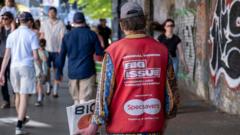
Vendors who sell the Big Issue magazine across the United Kingdom are experiencing a sharp decline in earnings as persistent heatwaves disrupt normal foot traffic and consumer behavior. Catherine Parsons, the managing director of the publication, stated that extreme weather has an immediate negative effect on the income of sellers, many of whom rely on these sales to manage homelessness or financial instability. The drop in revenue is not merely a seasonal fluctuation but a direct consequence of people seeking refuge from high temperatures rather than engaging with street vendors.
Data provided by the organization indicates that magazine sales fall by an average of twenty percent year-on-year during weeks when heatwaves are officially declared. The impact varies significantly by region, with some areas suffering more severe losses than others. During the record-breaking temperatures recorded in June, the West Midlands and Wales experienced particularly steep declines, seeing thirty-four percent and thirty-three percent fewer sales respectively compared to the same period last year. These figures highlight how regional weather patterns can disproportionately affect specific groups of sellers.
The week of June twenty-second marked a critical low point for sales, coinciding with the UK breaking its June temperature record. Temperatures reached thirty-seven point seven degrees Celsius in some areas, and during this specific week, Big Issue sales dropped by an average of twenty-two percent compared to the previous year. This correlation between peak heat and reduced economic activity underscores the vulnerability of informal street economies to climate extremes. As the Met Office warns that this summer is on track to be the hottest since records began, the financial strain on vendors is expected to continue.
George Anderson, a vendor who has been selling near Broadcasting House in London since twenty-nineteen, described the daily challenges of working in such conditions. He noted that lower footfall makes it difficult to sustain sales, as potential customers prefer to stay indoors where air conditioning is available. Anderson explained that people are generally uncomfortable and less inclined to stop and chat when standing in the heat. Despite his efforts to manage the situation, he acknowledged that his earnings have definitely decreased, creating a tough financial environment for someone who currently relies on hostel accommodation.
The physical toll of the heat adds another layer of difficulty for vendors who must stand outside for extended periods. Anderson mentioned that sleeping becomes challenging when nights remain warm after a full day of work in the sun. To cope, he attempts to stay in shaded areas and keeps iced water nearby, though he noted that bottled water heats up quickly in direct sunlight. The combination of physical discomfort and reduced customer interaction creates a stressful working environment that goes beyond simple inconvenience.
Parsons emphasized that while extreme heat is often viewed as an annoyance for the general public, it represents a serious threat to the livelihoods of Big Issue sellers. The loss of income forces vendors to make difficult decisions about how to allocate limited funds for rent, food, and other essential needs. The organization has responded by distributing sunscreen, caps, and water bottles to support their sellers. However, Parsons admitted that in the most extreme conditions, it is simply unsafe for vendors to remain on the streets, necessitating shorter working days that further compound financial losses.
This current spell of extreme weather marks the fifth heatwave the UK has experienced this year, intensifying concerns about the long-term viability of street-based income models in a warming climate. Northern Ireland is currently enduring its fourth heatwave of the summer, indicating widespread regional impact. While some local officials have urged shops to stop selling disposable barbecues to mitigate fire risks, the broader economic implications for vulnerable workers remain a pressing issue. The situation highlights the need for adaptive strategies to support those whose work is directly exposed to environmental hazards.
Looking ahead, vendors like Anderson express hope that conditions will improve as temperatures cool and public behavior returns to normal. However, the recurring nature of these heat events suggests that such disruptions may become more frequent. The Big Issue team continues to balance safety concerns with the economic realities faced by its sellers, recognizing that cutting working hours for health reasons directly translates to lost income. As climate patterns shift, the intersection of weather extremes and social vulnerability remains a critical area of concern for policymakers and support organizations alike.
Sources behind this briefing
Go to the original reporting
- BBC News↗Big Issue says vendors struggling as sales hit by heatwaves

