The short version
- Record-breaking heat is causing cauliflower to yellow, cucumbers to curl, and potatoes to develop irregular shapes.
- Supermarkets are temporarily loosening strict size and color guidelines to maintain stock levels and support farmers.
- Experts confirm that these visually imperfect vegetables remain safe and nutritious for consumption despite their appearance.
British supermarkets are adjusting their purchasing standards in response to one of the driest and hottest growing seasons recorded in decades. Following a warmer-than-average spring, repeated heatwaves have disrupted agricultural output across the United Kingdom, leading industry experts to predict the poorest harvest since records began. The extreme weather is not only reducing overall crop yields but also altering the physical appearance of common vegetables, forcing retailers to reconsider long-standing cosmetic requirements.
Traditionally, grocery chains reject produce that fails to meet strict specifications regarding size, shape, and color. However, with domestic supplies under significant pressure, many major retailers are expected to loosen these rules in the coming weeks. The primary motivation is to avoid empty shelves while supporting growers who are facing depleted water reserves and increased crop failure. This shift means consumers may increasingly encounter smaller, oddly shaped, or discolored vegetables on store aisles.
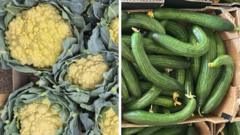
Cauliflower has emerged as one of the most visibly affected crops due to its high water requirements. Normally, the heads of these plants are shielded from sunlight by surrounding leaves, which keeps them white. In this year’s intense heat, however, more light is penetrating the foliage, causing the heads to turn yellow. Emilie Vanpoperingh, co-founder of the surplus produce subscription service Oddbox, described this discoloration as a purely cosmetic defect that does not affect taste. Her company recently acquired thousands of cauliflower heads deemed too dark for supermarket sale.
The impact extends beyond brassicas to greenhouse-grown vegetables like cucumbers. High outdoor temperatures cause greenhouses to overheat, stressing the plants and leading to misshapen growth. Some cucumbers are curling back on themselves or forming spirals because the extreme heat inhibits normal development, even when irrigation is provided. Growers report that once the thermal stress sets in, the plants often cease growing entirely, resulting in a shorter supply of marketable produce.
Pest activity has also increased, compounding the challenges for farmers. John Harper, a grower in Worcestershire who supplies major chains including Sainsbury’s and Aldi, has discarded more pak choi than usual due to damage from flea beetles. These pests thrive in hot, dry conditions, and with restrictions on pesticide use, net covers are often the only defense available. While supermarkets typically reject plants with even tiny holes, some have temporarily relaxed these standards during the heatwave, recognizing that the affected produce remains edible.
Potatoes are experiencing similar issues, with hot weather stunting growth and causing tubers to develop irregular knobs or separate sections. Lucy Munns, a potato farmer in Cambridgeshire, noted that when cooler weather follows a heat period, potatoes often grow small protrusions instead of expanding uniformly. These knobbly tubers are difficult to sell to traditional buyers like chip shops and supermarkets, leading to significant food waste. Munns emphasized that while peeling these potatoes requires extra effort, they are perfectly safe and suitable for consumption.
In recent years, several major UK supermarkets, including Tesco, Morrisons, and Waitrose, have introduced dedicated lines for imperfect vegetables. Calum Kelly, a produce manager at Waitrose, stated that the company relaxes size and shape guidelines during demanding weather conditions to reduce waste and provide additional income for farmers. He acknowledged that baking potatoes might be smaller than usual if the drought persists, but assured customers that the flavor remains unaffected despite the less-than-perfect appearance.
Despite these efforts to utilize domestic produce, retailers face a difficult balancing act. Andrew Opie, director of food and sustainability at the British Retail Consortium, noted that supermarkets are also increasing imports from abroad as UK supplies dwindle. The challenge lies in supporting local farmers while ensuring customers find the products they expect. Industry leaders warn that this period of scarcity and adaptation is likely to continue through the autumn, affecting a wide range of fresh produce categories.
Sources behind this briefing
Go to the original reporting
- BBC Business↗Sun-tanned cauliflowers and knobbly spuds - the heatwave veg that's good to eat