The short version
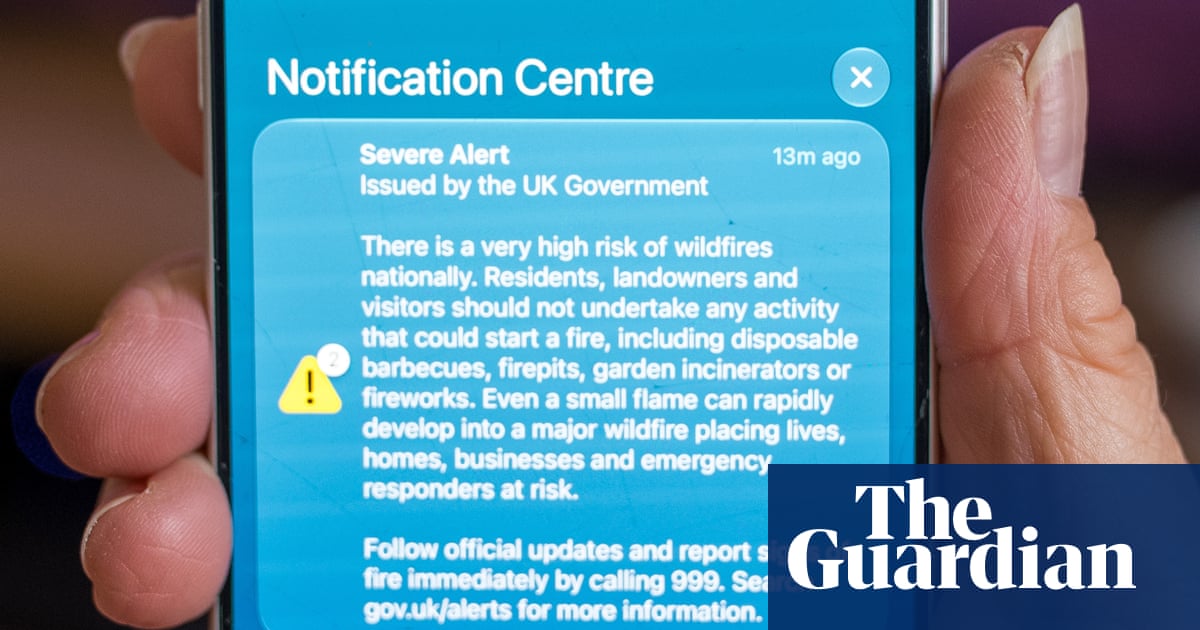
- A severe emergency alert sent to phones in England and Wales caused widespread alarm and criticism regarding its generic nature.
- Record wildfire activity has prompted the deployment of military personnel and a temporary ban on disposable barbecue sales.
- Political figures are using the crisis to argue for faster action on climate change and increased support for drought-stricken farmers.
A nationwide emergency alert issued on Friday evening regarding wildfires in England and Wales generated significant public reaction, ranging from shock to criticism of government strategy. The message, which included a piercing tone designed to capture immediate attention, was broadcast at 7 p.m., catching many residents off guard. Thérèse Coffey, a former cabinet minister, noted that the alert lacked specificity, expressing disappointment that it did not provide detailed instructions or localized information about the wildfire threat. Her comments reflected a broader sentiment among recipients who felt the generic nature of the warning was insufficient for such a serious situation.
Social media platforms quickly filled with reactions to the alert, with many users describing the experience as alarming and unnecessary. Some critics labeled the use of the severe alert system as an overreach, arguing that it should be reserved for imminent, life-threatening emergencies rather than broader environmental risks. Academic John Ritzema echoed these concerns, suggesting that frequent use of such high-priority alerts could lead to desensitization, a phenomenon often referred to as the 'boy who cried wolf' effect. This perspective was shared by others who worried that normalizing severe alerts for non-immediate threats might undermine their effectiveness in true crises.
The alert coincided with a period of intense wildfire activity across the UK, marking one of the most challenging years on record for fire services. The number of wildfires has already surpassed the total recorded in 2025, with eleven major incidents declared within a single twenty-four-hour period starting Thursday. Prime Minister Andy Burnham described the country as a 'tinderbox,' warning the public to expect a difficult weekend ahead. In Stourbridge, West Midlands, homes were destroyed and residents injured, highlighting the tangible dangers posed by the escalating fire risk. The severity of the situation was underscored by the need for immediate public vigilance and cooperation.
In response to the growing crisis, authorities have implemented several measures to mitigate further risks. Residents have been urged to avoid lighting barbecues, campfires, or fireworks, and to call emergency services immediately if they spot any signs of fire. Additionally, Burnham announced a temporary national ban on the sale of disposable barbecues, effective immediately and set to remain in place as long as the wildfire risk stays high. This move aims to reduce potential ignition sources during a period of extreme vulnerability. The government’s actions reflect an attempt to balance immediate safety concerns with longer-term environmental challenges.
The military has also been called upon to assist stretched emergency services, particularly in south Wales. Approximately one hundred personnel were deployed initially, with another hundred expected to arrive later on Friday evening. Their role includes distributing water and providing logistical support to firefighting teams working tirelessly to contain the blazes. This deployment underscores the scale of the operation and the strain placed on local resources. The involvement of armed forces highlights the severity of the situation and the need for coordinated efforts across multiple sectors.
Beyond immediate emergency response, the wildfires have reignited debates about climate policy and government action. Sadiq Khan, Mayor of London, warned against slowing down net zero targets, arguing that the current heatwave and wildfires demonstrate the urgent need for accelerated decarbonization efforts. He emphasized that the planet is in a 'deeply precarious position' and called for reassurance from the government regarding its commitment to reducing reliance on oil and gas. Khan’s comments reflect a growing consensus within political circles that climate change mitigation must be prioritized to prevent future disasters of this magnitude.
Economic impacts are also coming into focus, particularly for farmers affected by drought conditions. Burnham announced an additional £65 million in funding to support agricultural workers hit by the dry weather. He framed food production as a matter of national security, stating that those on the frontline of climate change should not face its consequences alone. This financial injection aims to stabilize the sector and prepare for increasingly unpredictable summer seasons. The announcement signals recognition of the broader economic implications of environmental crises.
Looking ahead, the situation remains volatile, with no clear end in sight for the wildfire season. Britain’s cereal harvest is projected to be the worst since records began in 1984, according to recent analyses. This agricultural setback adds another layer of complexity to an already challenging year. As emergency services continue their efforts, the public is encouraged to remain vigilant and adhere to safety guidelines. The coming days will likely see further developments in both emergency response strategies and policy discussions surrounding climate resilience.
The incident serves as a stark reminder of the interconnectedness of environmental, social, and political issues. While the immediate focus remains on containing wildfires and protecting lives, the underlying causes—climate change and inadequate preparedness—require sustained attention. The public’s reaction to the emergency alert highlights the importance of clear communication and appropriate use of warning systems. Moving forward, policymakers must balance short-term crisis management with long-term strategic planning to address the root causes of such disasters.
As the UK grapples with these challenges, the lessons learned from this episode will likely influence future approaches to emergency management and climate policy. The combination of public scrutiny, political debate, and practical interventions offers a multifaceted view of how societies respond to environmental crises. Whether through enhanced alert systems, increased funding for affected communities, or accelerated green investments, the path forward requires collaboration and commitment at all levels of society.
Sources behind this briefing
Go to the original reporting
- The Guardian World↗Alarmed by the alarm: people react to ‘severe alert’ on phones with message on UK wildfires

