The short version
- Bridget Phillipson states that inflationary pressures from disrupted oil supplies will make the upcoming budget more difficult for Chancellor John Healey.
- The government maintains its decision to stay out of the US-led conflict in Iran, viewing non-involvement as the correct strategic choice despite economic fallout.
- Phillipson dismisses concerns that Burnham’s past criticisms of Trump will hinder diplomatic relations during their upcoming meeting at the United Nations.
The United Kingdom’s fiscal landscape is set to become more complex next month as Chancellor John Healey prepares his budget, with cabinet ministers citing external geopolitical shocks as a primary complicating factor. Bridget Phillipson, the Labour chair and minister for women and equalities, explicitly linked the difficulty of upcoming financial planning to the ongoing military campaign led by US President Donald Trump against Iran. This conflict has significantly disrupted global oil supplies, creating inflationary pressures that ripple through the domestic economy and challenge efforts to manage the cost of living.
Phillision acknowledged that while the UK economy remains in a relatively strong position, supported by recent growth figures, the external shocks present very real challenges for businesses and families. The disruption in energy markets is not merely an abstract international issue but a tangible constraint on domestic policy options. As the government seeks to provide breathing space for households grappling with high prices, the chancellor must navigate these imported inflationary forces while attempting to stabilize the broader economic environment.
Despite the economic friction caused by American foreign policy decisions, the UK government has maintained a firm stance of non-involvement in the Middle East conflict. Phillipson reiterated that this was the right call for Britain, contrasting the current administration’s restraint with what she characterized as the reckless approach of political rivals like Kemi Badenoch and Nigel Farage. She argued that had those figures been in power, the UK would have jumped headlong into an endless conflict, thereby exacerbating rather than mitigating the risks to national security and economic stability.
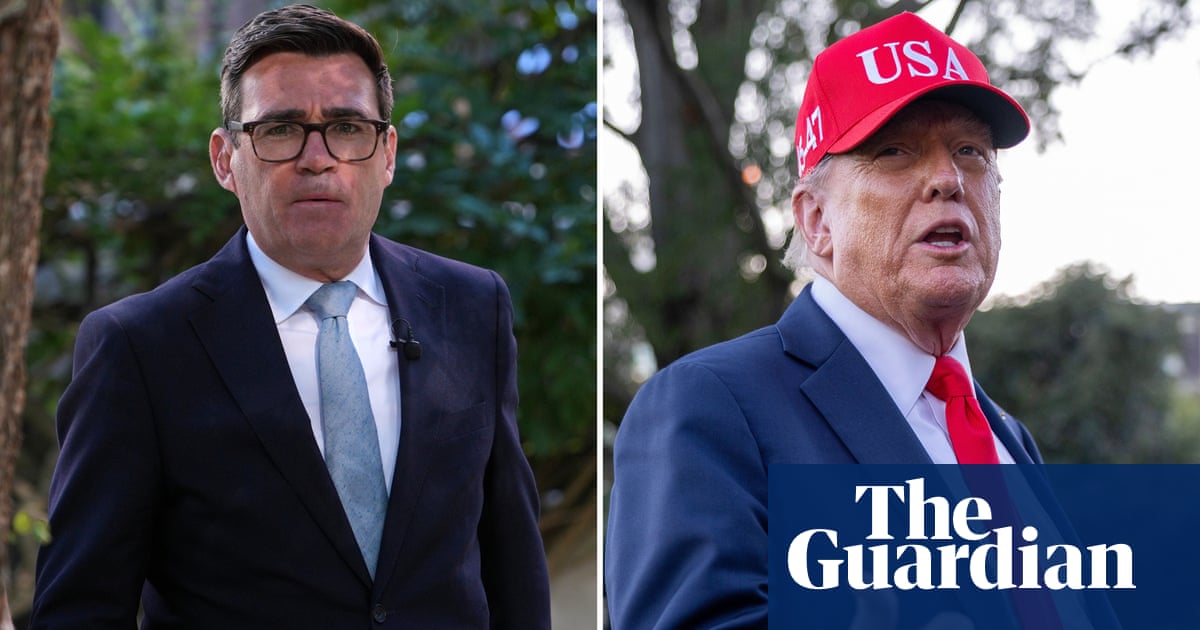
The diplomatic dimension of this situation adds another layer of complexity as Prime Minister Andy Burnham prepares to meet President Trump at the United Nations General Assembly summit in New York. The two leaders have already spoken twice by phone since Burnham took office, but their relationship is colored by past public exchanges. During his tenure as mayor of Greater Manchester, Burnham stated that Trump would not be welcome in the city and criticized UK politicians who indulged the American president, suggesting they should be ashamed of such behavior.
Phillipson sought to downplay the significance of these previous remarks, framing them as standard political posturing rather than a barrier to cooperation. She told Sky News that the US president understands the nature of politics and that expressing differing views on various topics is far from unique in international relations. According to Phillipson, such historical disagreements are no bar to maintaining a strong bilateral relationship, emphasizing that personal or past political friction does not necessarily translate into operational diplomatic failure.
The broader UK-US relationship is described as enduring despite differences in political outlook. Phillipson noted that the alliance has stood the test of time over many centuries, surviving various shifts in leadership and ideology on both sides of the Atlantic. She argued that what matters most is the British national interest, which Burnham is committed to delivering regardless of who holds office in Washington. This perspective suggests a pragmatic approach to diplomacy, where immediate economic and strategic needs outweigh personal or partisan animosities.
In addition to foreign policy challenges, the government is also addressing domestic criticism regarding immigration and taxation. Phillipson was dismissive of comments made by petrochemicals billionaire Jim Ratcliffe, who recently expressed a loss of confidence in the UK due to high levels of immigration and tax burdens. She noted that Ratcliffe is a tax resident in Monaco and suggested taking his criticisms with a pinch of salt. This response underscores the government’s willingness to challenge wealthy critics whose financial interests may not align with their public commentary on national policy.
As the budget date approaches, the focus remains on balancing these external pressures with internal economic management. The chancellor must account for the inflationary impact of global energy disruptions while trying to support households and businesses affected by rising costs. The government’s strategy appears to be one of cautious navigation, acknowledging the strength of certain economic indicators while preparing for the difficulties posed by an unstable international environment. The outcome of the Burnham-Trump meeting may offer some clarity on future cooperation, but the immediate fiscal challenges remain firmly rooted in current market realities.
The situation highlights the interconnectedness of global politics and domestic economics in the modern era. Even nations that choose not to participate directly in conflicts can feel the economic reverberations through supply chains and energy markets. For the UK, this means that foreign policy decisions made by allies like the United States have direct consequences for local budgetary planning. The government’s ability to mitigate these effects will be a key test of its economic management skills in the coming months.
Ultimately, the narrative emerging from Westminster is one of resilience in the face of external volatility. By maintaining a clear distinction between diplomatic engagement and military involvement, the UK aims to protect its national interests without being drawn into unnecessary conflicts. The upcoming budget will serve as a critical indicator of how effectively the government can address these challenges, providing insight into its priorities and strategies for navigating an increasingly uncertain global landscape.
Sources behind this briefing
Go to the original reporting
- The Guardian World↗UK minister warns of impact of Trump’s Iran war on next month’s budget

