The short version
- Genetic analysis confirms Asian hornet queens are surviving winter and establishing new colonies in Britain despite eradication efforts.
- Beekeepers warn that the invasive species creates pollinator deserts, posing risks to food security and biodiversity beyond just honey production.
- Officials are testing AI and radio tracking technologies while urging the public to report sightings via dedicated apps to aid nest location.
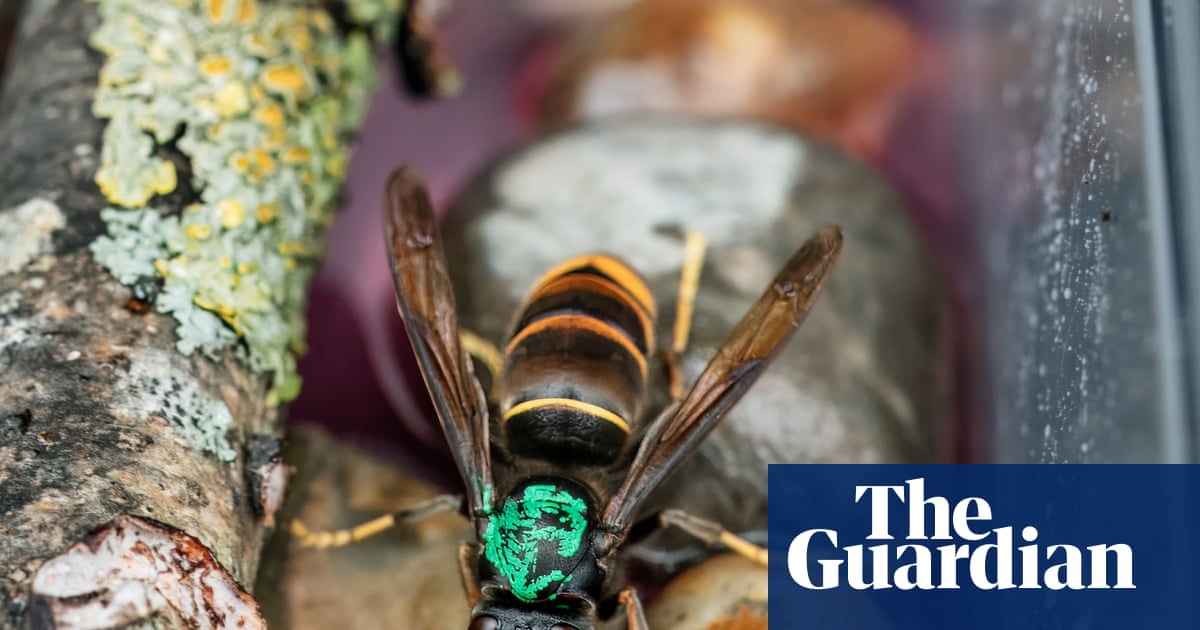
British beekeeping organizations are intensifying calls for a nationwide awareness campaign regarding the Asian hornet, an invasive species that experts warn is creating zones devoid of pollinators. The yellow-legged hornet, native to south-east Asia, first appeared in Europe around 2004 and has since expanded its range, likely aided by warmer seasonal temperatures. Industry leaders argue that the threat extends far beyond the immediate concerns of honey production, impacting broader agricultural stability and national biodiversity.
The end of summer represents a critical window for containment efforts in Britain. As hornet colonies mature and reach their peak size, they produce fertile queens that depart to mate and find hibernation sites. If these queens survive the winter, they establish new nests the following spring, expanding the geographical footprint of the infestation. Consequently, preventing this cycle is central to the government’s strategy, which focuses on destroying existing nests before they can spawn new generations.
Evidence suggests that despite aggressive intervention, the species is gaining a foothold. Genetic testing of nests discovered in 2024 confirmed that some queens had successfully mated, endured the winter months, and founded new colonies. This finding indicates that current eradication measures are not entirely effective at stopping establishment. The period when queens emerge from hibernation has therefore become a key target for intervention to break the reproductive cycle.
The official response relies heavily on public participation. The National Bee Unit, part of the government’s Animal and Plant Health Agency, depends on citizen reports to identify suspected hornets. Volunteer teams from the British Beekeepers Association assist in verifying sightings, tracking nests, and trapping queens during the spring. Once a nest is confirmed, the National Bee Unit takes responsibility for its destruction. In 2025, this collaborative effort led to the elimination of a record 161 nests.
Public engagement has been substantial, with nearly 30,000 reports submitted in 2024 alone, leading to the identification of 24 nests. Modeling indicates that rapid detection and response are essential for controlling the spread. However, beekeepers express concern that the issue is still perceived primarily as a niche problem affecting apiaries rather than a national biodiversity crisis. They argue that without broader public understanding, the scale of reporting may not be sufficient to keep pace with the hornets’ expansion.
To enhance capacity, authorities are integrating new technologies into their response framework. In 2025, the Animal and Plant Health Agency trialed radio transmitters attached to hornets to assist in locating nests more efficiently. Additionally, researchers are evaluating an artificial intelligence system designed to visually identify Asian hornets from images. These tools aim to streamline the verification process and reduce the burden on volunteer networks, though their long-term effectiveness remains under assessment.
The ecological and economic implications of a widespread infestation are significant. Experts note that yellow-legged hornets prey heavily on native pollinators, including honeybees, which can lead to localized areas where pollination services collapse. This phenomenon, described as creating pollinator deserts, poses serious risks to food security and the agricultural economy. The government has been aware of these potential impacts since a risk assessment in 2011, which led to the development of contingency plans by relevant departments.
Moving forward, beekeepers are advocating for a clear, multi-year commitment from successive governments to ensure eradication efforts continue without interruption. They emphasize that while the current response is effective, it cannot be sustained solely by volunteer enthusiasm and beekeeping communities. A coordinated national awareness campaign is seen as necessary to mobilize the wider public, ensuring that sightings are reported promptly and that the threat is recognized as a shared responsibility rather than a specialized concern.
Sources behind this briefing
Go to the original reporting
- The Guardian World↗Beekeepers warn of Asian hornet threat and call for UK awareness campaign

