The short version
- Uefa President Aleksander Ceferin delivered a sharp critique of Fifa’s leadership, citing recent controversies involving the FFE project and political interference as evidence of systemic governance failures.
- Fifa has accused Uefa of running a misinformation campaign and urged a US court to block document requests related to a planned criminal complaint against President Gianni Infantino.
- Nasser al-Khelaifi ruled himself out of the upcoming Fifa presidency race, instead focusing on expanding the European Football Clubs association into a global representative body.
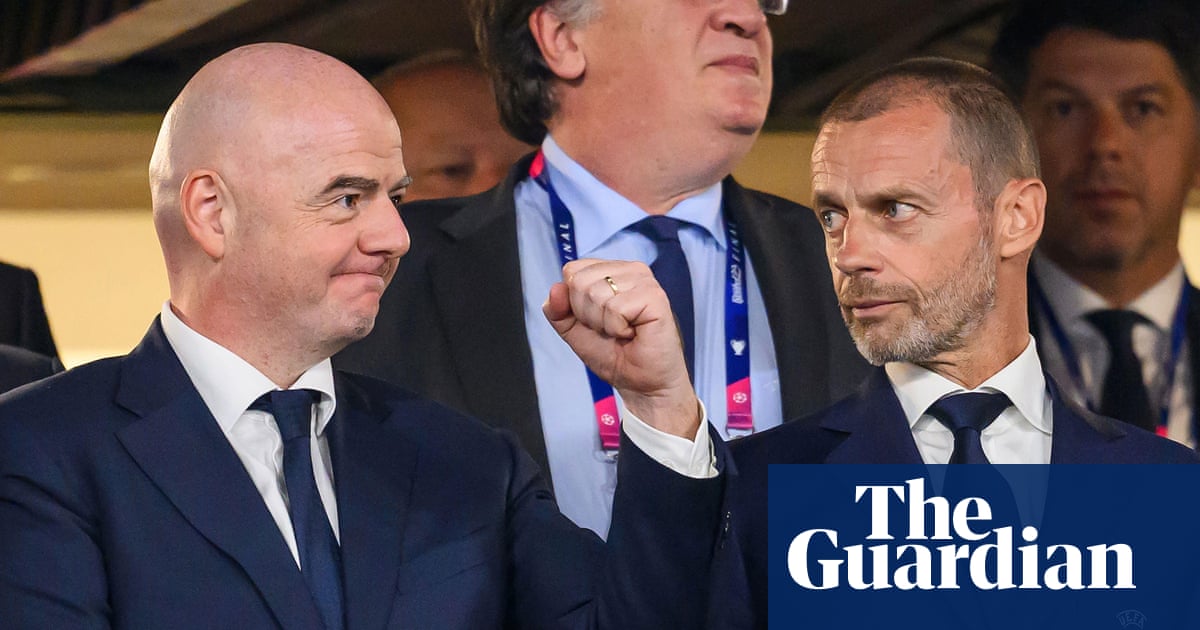
The public rift between Europe’s football governing body and its global counterpart has deepened significantly, with Uefa President Aleksander Ceferin delivering a pointed condemnation of Fifa’s current leadership during an address to club executives in Copenhagen. Speaking at the European Football Clubs general assembly, Ceferin utilized the setting to draw parallels with Hans Christian Andersen’s fable The Emperor’s New Clothes, suggesting that the world governing body’s leadership is operating without accountability or transparency. He argued that convenient rhetoric cannot mask uncomfortable realities regarding how football’s future is being managed.
Ceferin did not name Fifa President Gianni Infantino directly but made his targets clear through references to specific recent controversies. He highlighted the failed Fifa Forward Enterprise project, describing it as an attempt to sell off parts of football’s future under the guise of development. The Uefa president also alluded to the awarding of a peace prize to Donald Trump and the incident involving Folarin Balogun last summer, framing these events as examples of arbitrary decision-making that bypassed proper democratic processes within the organization.
In his remarks, Ceferin challenged the audience to consider how they would react if similar actions occurred within their own clubs. He posed a hypothetical scenario where a senior executive secretly negotiates away control of a club’s most valuable assets without board or fan knowledge. By drawing this comparison, he suggested that the behavior exhibited by Fifa’s leadership would be intolerable in any other professional sports organization. The underlying message was that no title or position grants immunity from basic standards of corporate governance and ethical conduct.
The verbal exchange between the two organizations has moved beyond rhetorical criticism into active legal confrontation. Earlier this week, Fifa accused Uefa of waging a misinformation campaign aimed at influencing the upcoming presidential election. The world governing body urged a United States court to reject Uefa’s request for documents that would be used in a planned criminal complaint against Infantino. This escalation indicates that the dispute is no longer confined to public statements but involves serious legal maneuvering regarding potential misconduct.
Amidst this turmoil, questions about leadership succession at Fifa remain unresolved. Senior figures within Uefa maintain that a credible candidate must emerge to challenge Infantino in the election scheduled for next March. The deadline for nominations is set for November 18, creating a tight window for organizing an opposition campaign. Despite speculation linking Nasser al-Khelaifi, chair of the European Football Clubs association, with a potential bid, he explicitly ruled himself out during his speech in Copenhagen.
Al-Khelaifi stated clearly that he has no interest or ambition to take on the Fifa presidency, emphasizing his satisfaction with his current role. Instead of pursuing global leadership, he outlined plans to expand the scope of his own organization. He proposed the creation of a World Football Clubs body, which would include representatives from outside Europe. This initiative aims to provide a broader platform for club interests globally, potentially shifting power dynamics within the sport’s administrative structure.
The tension between Uefa and Fifa reflects broader concerns about transparency and democracy in international sports governance. Ceferin’s comments underscore a growing frustration among European stakeholders with what they perceive as opaque decision-making processes at the global level. The reference to secrecy not equating to consultation highlights a fundamental disagreement over how major decisions should be made and communicated to member associations.
As the nomination deadline approaches, the focus will likely shift toward identifying who might step forward to challenge Infantino. The legal battle over document access could also play a significant role in shaping the narrative leading up to the election. Whether these disputes result in meaningful structural changes or merely further entrench existing divisions remains uncertain. However, the intensity of Ceferin’s critique suggests that European football leaders are prepared to continue pressing for accountability.
The situation illustrates the complex interplay between regional and global interests in modern sports administration. While Uefa seeks to protect its members’ interests and promote transparency, Fifa defends its actions against accusations of bias and misinformation. The outcome of these conflicts will have lasting implications for how football is governed worldwide. Stakeholders across the continent are watching closely to see if these challenges lead to reform or continued instability at the highest levels of the game.
For now, the standoff continues with both sides digging in their heels. Ceferin’s use of literary analogy serves as a powerful rhetorical tool, framing the issue not just as a political dispute but as a moral failing. As the election cycle progresses, the pressure on Infantino will likely intensify, particularly if legal proceedings yield damaging evidence. The coming months will be critical in determining whether the current leadership can withstand these mounting challenges or if a change at the top becomes inevitable.
Sources behind this briefing
Go to the original reporting
- The Guardian US↗‘The emperor is naked’: Uefa president Ceferin takes new swipe at Infantino