The short version
- Uefa insists its conditions for ending a potential boycott of major tournaments remain unmet despite Fifa's acknowledgment of procedural errors.
- The English FA withdrew support for President Gianni Infantino, joining European critics who view the aborted private investment plan as a breach of trust.
- Internal tensions at Fifa seem to have eased after a meeting in Morocco, with key officials reconciling while one executive remains absent and critical.
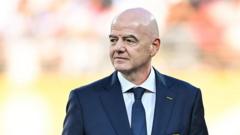
European football authorities are maintaining their stance that a boycott of major international competitions, including the World Cup, remains a viable option. The Union of European Football Associations (Uefa) stated that recent developments within Fifa have not altered its position, despite an apology from President Gianni Infantino regarding the controversial proposal to sell stakes in global tournaments to private investors. Uefa emphasized that two specific conditions must be satisfied: the complete withdrawal of the proposals and binding assurances that such attempts to alter the structure of the game will not recur.
The English Football Association has formally withdrawn its support for Infantino, citing the plan to utilize the Fifa Forward Enterprise subsidiary as a primary concern. This move underscores the growing rift between European governing bodies and the world football federation. Uefa had previously characterized the proposed deal as opaque and detrimental to the sport, expressing a loss of confidence in Infantino’s leadership. The organization argued that statements from individuals whose careers depend on Infantino’s favor do not constitute genuine accountability or resolution.
During a meeting in Rabat, Morocco, Fifa acknowledged mistakes in how the private investment initiative was handled. The federation stated that it was never intended to exclude member associations from the process and admitted that the procedure should have been managed differently. However, Uefa viewed this acknowledgment as insufficient, noting that the gathering consisted largely of employees loyal to Infantino rather than independent critics. European officials are seeking answers regarding who was involved in the decision-making process, whether a competitive tender occurred, and if any personal benefits were derived by those in power.
Infantino arrived at the meeting with a motorcade, projecting an image of continued authority rather than submission. He summoned members of the Fifa management board to discuss the recent turmoil, including secretary general Mattias Grafstrom, who had previously criticized the proposals in internal communications. Following the discussions, public appearances suggested a reconciliation between Infantino and Grafstrom, as they were seen smiling together at a women’s football match. This visible unity indicates that internal pressures may have been managed effectively by the president.
Not all senior officials participated in or endorsed this reconciliation. Kevin Lamour, Fifa’s chief operating officer, was notably excluded from the meeting in Morocco. Lamour had strongly condemned the private investment plan, describing it as a project driven by a single individual and urging political leaders within football to make decisive changes. He stated that he would accept losing his position if it meant maintaining integrity, though he has declined further comment since the meeting. His absence highlights the lingering divisions within Fifa’s executive ranks.
Support for Infantino remains strong in many parts of the world, complicating Uefa’s efforts to force a leadership change. Lamin Kaba Bajo, president of the Gambia Football Federation, praised Infantino’s courage and willingness to reverse course, indicating renewed support. Only Jordan has publicly declared it will not vote for Infantino’s re-election in March among nations that previously backed him. The Confederation of North, Central America and Caribbean Association Football (Concacaf) issued a statement but did not join the call for resignation, leaving European critics as an outlier in their demand for accountability.
The immediate test of Uefa’s resolve will come next month when the Fifa Women’s U20 World Cup begins in Poland. The European federation must decide whether to proceed with participation or enforce a boycott, balancing political pressure against sporting interests. Without clear answers to their questions about transparency and governance, Uefa officials have signaled they will not be satisfied. The situation remains unresolved, with Infantino retaining his position while facing sustained criticism from the continent that generates significant revenue for global football.
The controversy has exposed deep structural tensions within international football governance. While Fifa claims to have addressed concerns through dialogue and apology, European bodies insist on substantive changes rather than procedural adjustments. The lack of direct accountability for the failed proposal continues to fuel distrust. As the sporting calendar progresses, the standoff between Uefa and Fifa threatens to disrupt upcoming competitions unless a mutually acceptable path forward is established.
Sources behind this briefing
Go to the original reporting
- BBC World↗Uefa says boycott may still go ahead as FA withdraws Infantino support

