The short version
- The UAE intercepted an Iranian drone over its waters, denying claims that Dubai's Al Minhad Air Base was targeted while condemning the act as a violation of sovereignty.
- Global oil prices surged above $90 per barrel following renewed military exchanges between the U.S. and Iran, including strikes on Larak Island and retaliatory missile launches toward Jordan.
- Diplomatic efforts remain stalled as the U.S. intensifies economic pressure on Tehran, while Iranian officials insist they are not seeking war but will defend against aggression.
The United Arab Emirates reported intercepting an Iranian drone over its territorial waters on Monday, signaling a dangerous escalation in regional hostilities. The incident occurred shortly after the United States and Iran exchanged fire for the first time in a month, reigniting fears of a broader conflict in the Persian Gulf. UAE officials described the drone incursion as a blatant violation of national sovereignty and a direct threat to the safety of citizens and residents within the emirate.
The defense ministry issued statements confirming that it had dealt with the unmanned aircraft, which was detected approaching from Iran. Authorities explicitly denied Iranian claims that the Al Minhad Air Base in Dubai had been targeted, labeling such assertions as false. No reports of damage or casualties emerged from the interception itself, but the event underscores the expanding scope of military activity beyond direct U.S.-Iranian engagements.
This development follows a weekend of intense military action between Washington and Tehran. On Sunday night, U.S. forces struck Iranian rocket launchers on Larak Island in the Strait of Hormuz, an operation Central Command described as a limited and precise response to observed preparations for launching rockets equipped with sea mines. Iranian officials reported that two people were killed and several others wounded in the strike, prompting Tehran to launch retaliatory missiles at U.S. sites in Jordan, which were reportedly intercepted.
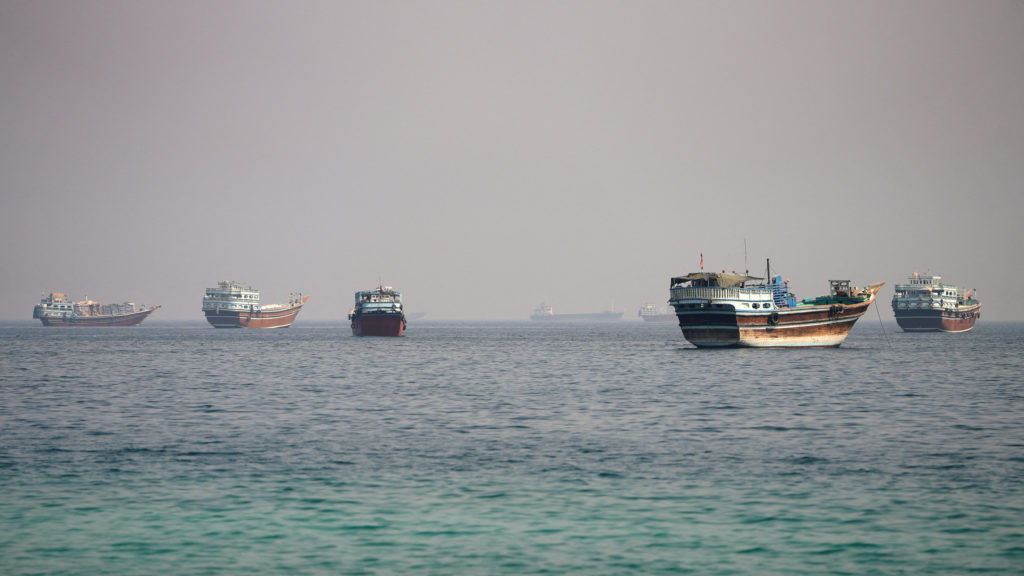
The resumption of hostilities has had immediate repercussions on global energy markets. Brent crude oil prices climbed above $90 per barrel, representing a roughly 25% increase from the start of the conflict. This surge presents significant economic challenges for the United States, particularly as President Donald Trump faces midterm elections. The volatility stems from Iran’s earlier establishment of a chokehold on the Strait of Hormuz, through which approximately one-fifth of the world’s traded oil passes during peacetime.
Since U.S. and Israeli attacks on Iran in late February, Tehran has slowed shipping traffic in the strait to a trickle, roiling the global economy and raising prices for energy and other goods worldwide. The U.S. military stated last week that it had completed clearing sea mines from international shipping routes in the waterway, aiming to restore normal navigation. However, the recent drone incident and ongoing tensions suggest that stability remains fragile.
In response to the escalating violence, Anwar Gargash, a diplomatic adviser to the UAE president, emphasized on social media that the current state of neither war nor peace is unsustainable. He called for a political solution that would return normal navigation to the Strait of Hormuz, criticizing the June memorandum of understanding between Iran and the U.S. as failing to outline a practical roadmap. Gargash argued for a more realistic approach to resolving the crisis.
Meanwhile, Iranian President Masoud Pezeshkian, who has favored a negotiated end to the conflict, stressed that Iran is not seeking war but will respond decisively to aggressors. He made these remarks before attending the Shanghai Cooperation Organization summit in Kyrgyzstan, where he was scheduled to meet with Russian President Vladimir Putin and other global leaders. The summit brings together nations often viewed as a counterweight to U.S. influence, including China and India.
The United States is simultaneously ratcheting up economic pressure on Iran, hoping to force concessions from Tehran. Treasury Secretary Scott Bessent hosted meetings of G20 finance ministers in North Carolina, using the platform to urge other countries to help economically isolate Iran. Washington’s strategy centers on threatening punishment for any nation or entity that continues to conduct business with Tehran. Two weeks ago, the UAE suspended all trade with Iran, a move Bessent suggested was influenced by pressure from Washington.
Despite these efforts, recent appointments to Iran’s senior security leadership signal continued defiance in Tehran. The Islamic Republic has weathered decades of sanctions and maintains a low tolerance for domestic dissent. President Trump stated last week that he is not in a hurry to return Iran to the negotiating table, asserting that the Iranian leadership is on the ropes. However, the interception of the drone and the surge in oil prices indicate that the situation remains volatile and unpredictable.
As diplomatic channels struggle to find common ground, the risk of further miscalculation looms large. The UAE’s condemnation of the drone incident highlights the broader regional anxiety about being drawn into a wider conflict. With military bases and infrastructure in Gulf countries having been targeted by Iran since the war began, the stakes for neighboring nations are high. The coming days will likely reveal whether economic pressure can compel Tehran to de-escalate or if further military exchanges are inevitable.
Sources behind this briefing
Go to the original reporting
- PBS NewsHour↗United Arab Emirates says it has intercepted an Iranian drone over its territorial waters, calls attack 'dangerous escalation'

