The short version
- The White House suspended new sanctions on Russia's financial and energy sectors, citing national interest, despite bipartisan congressional support for the legislation.
- Ukrainian leadership argues the pause rewards aggression and coincides with severe Russian attacks on power plants ahead of winter.
- Confusion persists over sudden speed restrictions on military-grade satellite internet services used by Ukrainian drone operators.
The United States has paused the implementation of significant new sanctions against Russia, a decision that has intensified concerns in Kyiv about American commitment to Ukraine’s defense. President Donald Trump signed an executive order suspending the restrictions just two days before they were scheduled to take effect under the Lindsey Graham Act. The legislation, passed by both chambers of Congress, aimed to impose severe economic penalties on Russian officials, banks, and the shadow fleet of tankers facilitating energy exports. Trump stated the pause served national interests but provided no further details regarding the strategic rationale behind the reversal.
Ukrainian President Volodymyr Zelenskyy responded to the development with public appeals for continued support while avoiding direct criticism of the U.S. president. In social media statements, he described the decision as unfortunate and warned that easing pressure on Moscow would only encourage further aggression. He emphasized that the suspended measures were designed to apply effective financial strain on Russia’s war machine. Zelenskyy urged American citizens and lawmakers to advocate for the bill’s eventual enforcement, arguing that limiting Ukraine’s ability to retaliate financially or militarily does not contribute to peace.
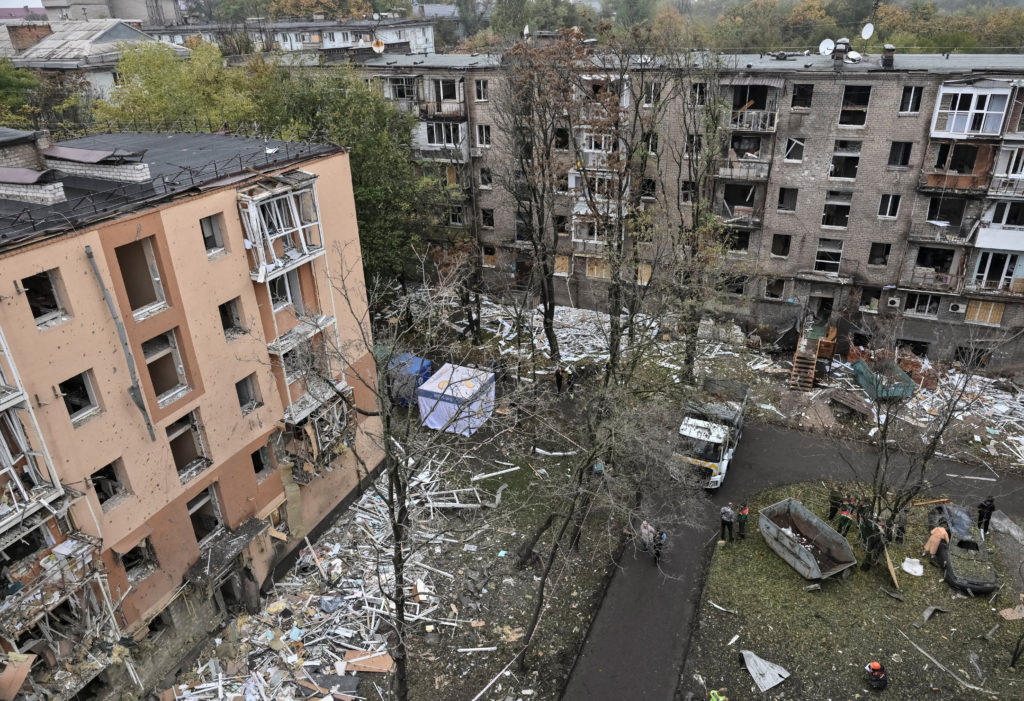
The timing of the sanctions pause coincides with a sharp escalation in Russian military activity. Overnight strikes targeted Ukrainian energy infrastructure, killing at least four people, including an ambulance driver, and wounding dozens more. Moscow appears to be executing a strategy aimed at making Ukrainian cities unlivable before the onset of winter. Zelenskyy characterized the U.S. decision as a reward for Vladimir Putin, suggesting it signals Western weakness. He expressed concern that this is merely the first step in a broader rollback of penalties, pointing to recent agreements involving U.S. purchases of Russian diesel as evidence of shifting priorities.
Congressional reaction to the executive order has been swift and critical. Senator Richard Blumenthal, who co-drafted the legislation, accused the administration of abandoning American allies and ignoring the will of Congress. He argued that the waivers have no basis in national security and instead serve to appease the Kremlin. The backlash highlights a growing divide between the White House and legislative leaders from both parties regarding the appropriate level of pressure on Russia. Meanwhile, Russian envoy Kirill Dmitriev hailed the suspension as a historic moment, signaling Moscow’s perception of diplomatic victory.
Compounding tensions is a separate dispute over military communications technology. Ukrainian forces reported sudden speed restrictions on Starshield terminals, the military-grade version of SpaceX’s satellite internet service. These devices are critical for coordinating drone operations and maintaining command links. The restrictions limited data connections when terminals moved faster than 100 miles per hour, effectively slowing drones and making them more vulnerable to Russian air defenses. Zelenskyy stated that investigations revealed these limits applied only within Ukraine, not in European Union countries, leading him to conclude the throttling was a deliberate operation intended to hinder Ukrainian defense capabilities.
Responsibility for the satellite restrictions remains unclear. Elon Musk, CEO of SpaceX, indicated that the U.S. government controls the system and that usage decisions rest with the military and the president. Trump denied ordering any such restrictions and expressed doubt that Musk was responsible. The Pentagon has not responded to inquiries regarding the technical changes. This ambiguity adds another layer of friction to an already strained relationship between Kyiv and Washington, as Ukrainian officials seek clarity on whether the limitations are accidental, administrative, or politically motivated.
Diplomatic efforts continue amid these operational challenges. Zelenskyy confirmed that Ukraine’s lead negotiator met with Jared Kushner, a presidential envoy, to discuss potential pathways forward. Reports suggest the U.S. is working toward a three-way meeting involving Trump, Zelenskyy, and Putin, potentially hosted in the Middle East, Europe, or the United States. However, the immediate focus remains on the battlefield, where Russian forces have intensified attacks on power plants. The combination of suspended sanctions, restricted communications tools, and ongoing bombardment has left Ukrainian leadership anxious about the sustainability of their defense efforts through the coming months.
The broader implications of these developments extend beyond Ukraine. The U.S. decision to purchase diesel from Russia, announced shortly before the sanctions pause, was intended to lower global energy prices. Critics argue this move undermines Western pressure on Moscow without significantly impacting fuel costs, which are largely driven by other geopolitical factors. As winter approaches, the effectiveness of Ukraine’s defense will depend heavily on continued international support and the resolution of internal U.S. policy conflicts. The coming weeks will likely reveal whether the current pause is a temporary tactical adjustment or a fundamental shift in American foreign policy toward Russia.
Sources behind this briefing
Go to the original reporting
- PBS NewsHour↗Zelenskyy urges support for new U.S. sanctions on Russia put on hold by Trump
- The Guardian World↗Trump’s pause on Russia sanctions is ‘reward’ for Putin, Zelenskyy says