The short version
- Prosecutors argue Duane Davis masterminded the 1996 shooting that killed Tupac Shakur, citing a memoir in which Davis described his involvement.
- Defense attorneys contend the case relies on flawed police work and unreliable witnesses, noting no arrests were made for nearly thirty years.
- The trial highlights historical tensions between street gangs and law enforcement, as well as the cultural impact of East Coast versus West Coast hip-hop rivalries.
A Las Vegas jury has begun hearing evidence in the long-delayed murder trial of rapper Tupac Shakur, with prosecutors asserting that former gang leader Duane 'Keffe D' Davis orchestrated the drive-by shooting that killed the musician in September 1996. Chief Deputy District Attorney Binu Palal told jurors that although Davis did not personally fire the weapon, he planned the retaliation attack following a physical altercation between Shakur and Davis’s nephew, Orlando Anderson. The prosecution’s narrative centers on the idea that Davis viewed the assault on his relative as an unacceptable slight that required a violent response.
Central to the state’s case is a 2019 memoir co-authored by Davis, in which he detailed events surrounding the night of the shooting. Prosecutors highlighted passages where Davis claimed to be a passenger in the vehicle that fired into Shakur’s car and stated he provided the gun used in the attack to Anderson. While Davis’s legal team has characterized the book as largely fictionalized for commercial appeal, a judge ruled the memoir admissible as evidence. The defense argues that the text should not carry weight in a criminal proceeding given its disputed authorship and creative liberties.
Defense attorneys have mounted a vigorous challenge to the prosecution’s timeline and methodology, describing the case as a product of decades of investigative failure. Michael Sanft, one of Davis’s lawyers, questioned why no arrests had been made for nearly thirty years and pointed to a lack of corroboration from other witnesses. The defense team argued that police work was biased, sloppy, and incomplete, citing missing reports and disputed evidence. They further suggested that potential witnesses may have altered their accounts due to financial incentives, media pressure, or influence from investigators.
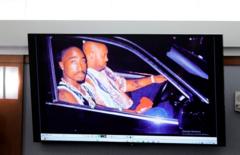
The first witness called by the prosecution was Garry Dale, a Las Vegas Metropolitan Police Department officer who responded to the scene in 1996. Dale testified that he rode in an ambulance with Shakur after the shooting and recalled the rapper refusing to provide information about his attackers. According to Dale, Shakur stated that his associates would handle the situation. This testimony underscores the historical lack of cooperation from those close to the victim, a factor police have long cited as a major obstacle in solving the case.
The trial has also brought attention to the broader cultural and social context of the mid-1990s, a period marked by intense rivalries between East Coast and West Coast hip-hop artists and deep-seated distrust between communities and law enforcement. Prosecutors explained that the environment was dominated by gang activity, where silence was often viewed as a matter of survival. This dynamic contributed to a lack of witness cooperation, leading to dead ends in the initial investigation. Members of Shakur’s entourage have previously accused authorities of treating them as suspects rather than victims’ allies and failing to pursue critical leads.
Davis, who pleaded not guilty to the charges, sat with his defense team during opening statements. He has consistently denied allegations that he planned or participated in the murder. His attorneys emphasized the passage of time and the degradation of evidence, arguing that relying on statements made years after the fact is unreliable. They also pointed out inconsistencies in witness testimonies over the decades, suggesting that memories may have been shaped by external factors rather than factual recollection.
As the trial progresses, jurors are expected to hear from additional witnesses, experts, and investigators. The prosecution alleges that Davis organized two vehicles for the attack, including a white Cadillac carrying three other men. The defense continues to argue that the state’s case is built on speculation and unreliable sources rather than concrete facts. The outcome of this trial could provide long-awaited closure for Shakur’s family and fans, while also shedding light on the complexities of prosecuting cold cases from an era defined by gang violence and cultural division.
The proceedings highlight the challenges of bringing justice in cases where key evidence is lost or disputed and where witnesses have changed their stories over time. Both sides are expected to present conflicting accounts of what transpired that night, with the jury tasked with determining credibility. The trial serves as a rare legal examination of one of the most famous unsolved crimes in music history, offering a detailed look at the events surrounding Shakur’s death and the subsequent decades-long investigation.
Sources behind this briefing
Go to the original reporting
- BBC World↗Tupac murder trial: 'All hell broke loose' night of rapper's shooting, witness says

