The short version
- President Trump threatened to bomb Oman if it interferes with US negotiations regarding Iran, marking an escalation in rhetoric toward a longstanding strategic partner.
- A sixty-day memorandum of understanding between Washington and Tehran expired without a breakthrough, though Iranian officials reported progress on shipping routes through the Strait of Hormuz.
- The president claimed direct backchannel communications with Iran’s Islamic Revolutionary Guard Corps, a assertion denied by Iranian military spokespeople who dismissed the claims as delusional.
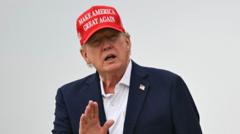
President Donald Trump has issued a stark warning to Oman, a traditional United States ally in the Gulf region, stating that the nation would face military bombardment if it obstructs American diplomatic efforts concerning Iran. The threat emerged during a televised interview on Monday, coinciding with the expiration of a critical sixty-day window for negotiations between Washington and Tehran. This development underscores the intensifying pressure on regional partners as the administration seeks to conclude a conflict that has persisted since February.
The immediate context involves the collapse of a Memorandum of Understanding signed in June at the Palace of Versailles. That agreement was designed to pause hostilities and establish a framework for resolving disputes over sanctions, nuclear programs, and other contentious issues. The sixty-day period concluded on Monday without a finalized deal, leaving the diplomatic status quo unresolved. Despite the lack of a comprehensive settlement, Iranian officials indicated that progress had been made in specific areas, particularly regarding maritime transit.
Iran’s foreign ministry reported that an understanding had been reached with Oman concerning shipping routes through the Strait of Hormuz. This waterway is vital to global energy markets, typically carrying approximately one-fifth of the world’s seaborne oil and liquefied natural gas supplies. Since the onset of hostilities between the US-Israel coalition and Iran, Tehran has largely blocked the strait. Reopening these channels has become a central objective for Washington, which views the restoration of free navigation as essential to stabilizing regional trade.
Oman’s role in these negotiations is complex. The Sultanate has positioned itself as a neutral mediator, facilitating dialogue between opposing sides despite having suffered strikes from Iranian forces during the conflict. Its geographic position south of the strait, opposite Iran, makes it a key player in any agreement regarding maritime control. Trump’s threat to bomb Oman if it “gets in the way” represents a significant departure from standard diplomatic engagement with a nation that has long served as a backchannel between Washington and Tehran.
In the same interview, President Trump claimed that the United States maintains a direct backchannel with Iran’s Islamic Revolutionary Guard Corps. He characterized the IRGC leadership as skilled negotiators who are nevertheless weakening under the pressure of the war. However, an IRGC spokesman explicitly denied these allegations, telling Tasnim News Agency that no such talks were occurring. The Iranian military official dismissed the president’s claims as fantasies born of desperation and defeat, rejecting the notion that Washington had established direct contact with the group.
The administration’s stance on the duration of the conflict appears contradictory. While Trump emphasized that preventing Iran from acquiring nuclear weapons remains the paramount goal, he also stated that he is not in a hurry to conclude the war. He dismissed concerns about the depletion of US military stockpiles, asserting that the munitions used so far represent only a small fraction of available reserves. This comment contrasts with earlier warnings from defense analysts who had expressed concern over the rapid drawdown of advanced weapons systems.
Tensions in the broader region remain high as diplomatic efforts stall. In Lebanon, United Nations peacekeepers have condemned the planting of Israeli flags on coastal highways in the south, describing the act as a violation of security council resolutions. The UN Interim Force in Lebanon has urged all parties to avoid provocative actions that could destabilize the fragile security zone established after the war with Hezbollah. These developments highlight the interconnected nature of regional conflicts and the challenges facing international mediation efforts.
As the immediate diplomatic window closes, the path forward remains unclear. Iran has previously indicated that a full reopening of the strait depends on receiving compensation from the United States for alleged violations of the earlier memorandum. Reports suggest Tehran is seeking fees based on a percentage of cargo values for vessels transiting the waterway. With no final agreement in sight and rhetoric escalating, the risk of further military engagement or economic disruption persists, leaving global markets and regional stability in a state of uncertainty.
Sources behind this briefing
Go to the original reporting
- BBC News↗Trump threatens to bomb Oman if it 'gets in the way' over Iran issue
- The Guardian World↗Trump threatens to bomb Oman if it ‘gets in the way’ of Iran deal as Kushner meets Netanyahu – Middle East crisis live
- The Guardian US↗Donald Trump threatens to bomb Oman if it ‘gets in the way’ of ending Iran war

