The short version
- President Trump issued a demand for a $5 billion payout or retraction regarding a report on National Guard deployments.
- The Center for American Progress refused to withdraw its findings that the military presence did not reduce violent crime.
- Legal experts characterize the threat as an attempt to silence criticism rather than a viable legal claim.
President Donald Trump has escalated his conflict with a prominent policy research organization by threatening a massive defamation lawsuit. The administration sent a formal letter to the Center for American Progress, a Washington-based think tank, demanding that it retract a recent report analyzing the impact of National Guard deployments on urban crime rates. The correspondence gave the nonprofit until the end of business on Friday to comply with the demand or face legal action seeking five billion dollars in damages.
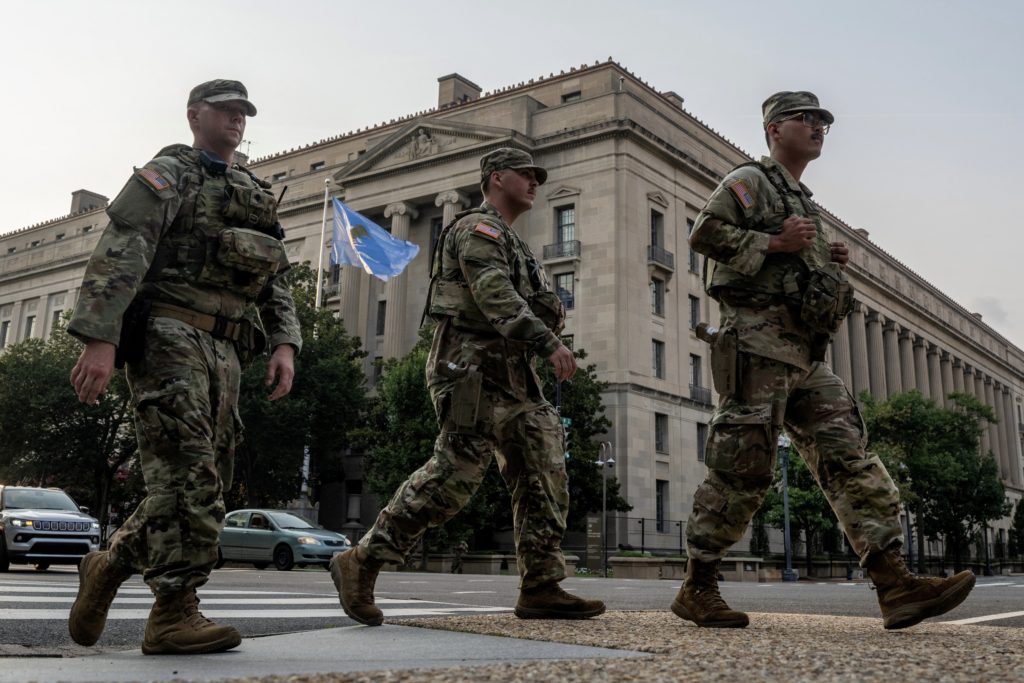
The dispute centers on a study published by the Center for American Progress in July. That analysis concluded that the administration’s strategy of deploying National Guard troops to various cities had no measurable effect on violent crime trends. The report argued that the decline in violence observed in those areas was already underway before the military interventions began. It further suggested that the White House was exploiting this pre-existing downward trend to claim credit for policies that did not drive the results.
Trump’s legal team, led by attorney Alejandro Brito, characterized the findings as false, malicious, and defamatory. The letter specifically objected to language in the report stating that the president was falsely claiming his policies reduced crime by exploiting existing declines in murder and violent offenses. Brito warned that failure to retract these statements would leave the president with no choice but to seek remedies for what he described as overwhelming financial and reputational harm.
The Center for American Progress declined to issue a retraction. Neera Tanden, the organization’s president and chief executive, responded by calling the lawsuit threat a transparent attempt to silence legitimate analysis. She emphasized that the group would not cower or bend in the face of such pressure. Tanden maintained that the report was based on rigorous analysis of crime data and that the findings were simply inconvenient for the current administration.
Kevin Metz, the general counsel for the nonprofit, issued a separate response challenging the legal basis of the threat. He described the defamation allegation as absurd, noting that truth cannot constitute defamation under established legal standards. Metz pointed out that First Amendment protections are clear and well-established in cases involving factual reporting and policy analysis. The organization’s stance reflects a broader commitment to defending its right to publish data-driven critiques of government performance.
Legal observers note that threatening litigation against critics is a recurring tactic in Trump’s political playbook. At the start of his second term, he similarly pressured numerous law firms to cut off access to federal government work unless they met specific demands. Some firms capitulated to these pressures, while others resisted. Experts suggest these threats are often designed to push opponents into submission rather than to secure actual compensation for alleged harms.
Kevin Goldberg, a First Amendment expert at the Freedom Forum, described such legal threats as tools for intimidation. He noted that the primary purpose is often to force compliance through fear of costly litigation, regardless of the merits of the underlying claims. This pattern raises concerns about the chilling effect on independent research and media coverage when powerful figures use legal threats to suppress unfavorable reporting.
The conflict occurs against a backdrop of ongoing debates about the effectiveness and cost of military deployments in domestic settings. Congress recently grappled with extending National Guard funding, including a $1.4 billion extension through 2029. As the administration continues to highlight these deployments as key components of its public safety strategy, disputes over their actual impact are likely to intensify. The refusal of the Center for American Progress to back down signals that policy research groups may increasingly resist such pressure.
Attempts to reach Alejandro Brito for further comment on Friday were unsuccessful. The situation remains unresolved as the deadline passes, setting the stage for potential legal proceedings. Whether the administration follows through with a lawsuit will depend on its broader strategy regarding free speech and political opposition. For now, the standoff highlights the tension between executive power and independent analysis in modern American politics.
This incident underscores the growing polarization surrounding data interpretation and policy evaluation. As government actions face increased scrutiny, the methods used to challenge critical reports may become as significant as the reports themselves. The outcome of this dispute could influence how other organizations respond to similar pressures from political leaders seeking to control the narrative around their achievements.
Sources behind this briefing
Go to the original reporting
- PBS NewsHour↗Trump threatens lawsuit against nonprofit that questioned whether National Guard plan lessened crime

