The short version
- The Supreme Court faces an emergency request to allow construction of a $400 million White House ballroom to continue despite a lower court order halting work pending congressional approval.
- Government lawyers contend the structure is an integrated military complex essential for security, whereas preservationists and judges argue the project bypassed required legal reviews and legislative consent.
- A decision on the stay petition must be made before August 21, when the appeals court’s injunction against aboveground construction is scheduled to take effect.
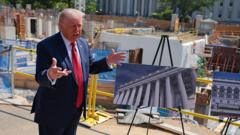
The Trump administration has filed an emergency application with the U.S. Supreme Court seeking permission to resume construction on a controversial $400 million ballroom at the White House. The request comes in response to a recent ruling by the U.S. Court of Appeals for the District of Columbia Circuit, which ordered a halt to aboveground work until Congress grants formal approval for the project. Solicitor General D. John Sauer argued that the lower court’s injunction is unlawful and dangerous, asking justices to suspend the decision while the government prepares a full appeal.
The legal dispute centers on whether the president possesses unilateral authority to alter the historic East Wing of the White House without legislative consent. The appeals court panel ruled 2-1 against the administration, siding with the National Trust for Historic Preservation, which sued last year alleging that the project bypassed mandatory review processes. These procedures typically include public comment periods and approval from bodies such as the National Capital Planning Commission. The majority opinion stated that Trump does not have the power to build a 90,000-square-foot structure on the site of the demolished East Wing without congressional authorization.
Government attorneys have framed the ballroom not merely as an event space but as a critical component of national security infrastructure. In filings, Sauer described the project as an integrated military complex that includes bomb shelters and medical treatment centers beneath the main structure. He argued that every part of the building is designed to shield these underground facilities, making the entire construction vital for protecting the president and staff. The administration contends that halting work would compromise safety measures that are already 65 percent complete.
A key point of contention involves the funding source for the renovation. The White House maintains that the project is fully financed by private corporate donations rather than taxpayer money, which it argues exempts it from certain congressional oversight requirements. Critics and the lower court judges rejected this distinction, emphasizing that the physical alteration of federal property and historic landmarks requires statutory approval regardless of who writes the checks. The administration has characterized the need for legislative permission as giving Congress dangerous leverage over executive security decisions.
The appeals court’s decision does not take effect immediately. Judges paused the ruling for two weeks to allow the administration time to lodge its appeal with the Supreme Court. If the high court denies the emergency stay, construction on the aboveground portions of the ballroom must cease by August 21. However, the lower court allowed work on the underground security structures to continue, acknowledging the administration’s claims regarding immediate safety needs while blocking further expansion of the visible footprint.
This case is part of a broader pattern of legal challenges facing the Trump administration regarding its urban development initiatives in Washington. The ballroom project follows the demolition of the East Wing last October and aligns with other planned changes, including renovations to the Lincoln Memorial Reflecting Pool and a proposed monument styled after the Arc de Triomphe. In each instance, opponents have accused the White House of sidestepping required environmental and historic reviews, allegations that President Trump has consistently denied.
The political stakes extend beyond the physical structure itself. The administration has touted the ballroom as a gift to the American people and a necessary upgrade for hosting large events with enhanced security. Conversely, critics view it as a vanity project that disregards democratic processes and historic preservation laws. The Supreme Court’s decision on the stay will determine whether the construction continues during the appeal process or if the site remains frozen in its current state of partial completion.
Legal experts note that the outcome could set significant precedents for presidential authority over federal property and historic sites. If the Supreme Court grants the stay, it would signal deference to executive claims of national security necessity over procedural requirements. A denial would reinforce the judiciary’s role in enforcing statutory review processes even when the president cites urgent operational needs. The case highlights ongoing tensions between the branches of government regarding oversight of high-profile infrastructure projects.
As the deadline approaches, attention remains fixed on whether the justices will intervene to keep the cranes running. The administration argues that forcing a stop would amount to construction-by-injunction, creating an inequitable situation where legal maneuvering dictates physical reality. Preservationists maintain that allowing the project to proceed without proper approval undermines the rule of law and sets a dangerous precedent for future alterations to national landmarks. The coming days will reveal how the highest court balances security claims against legislative authority.
The broader implications of this dispute may influence other pending legal battles involving the administration’s policies. Recent appeals have also targeted injunctions related to voting regulations, suggesting a coordinated strategy to challenge lower court rulings that restrict executive actions. The ballroom case serves as a focal point for these larger constitutional questions, testing the limits of presidential power in the face of judicial and legislative checks.
Sources behind this briefing
Go to the original reporting
- BBC News↗Trump asks Supreme Court to allow ballroom work to continue
- The Guardian US Politics↗Trump asks US supreme court to allow construction of White House ballroom
- PBS NewsHour↗Trump asks Supreme Court to let White House resume ballroom construction during appeal

