The short version
- President Trump has replaced earlier hostile rhetoric with praise for President Xi Jinping, culminating in a state dinner and reciprocal visits.
- Analysts attribute the shift to the failure of high tariffs and export restrictions, which China countered using its monopoly on rare earth minerals.
- The administration’s isolationist stance has weakened traditional alliances, allowing Beijing to position itself as a stable partner for European and Asian nations.
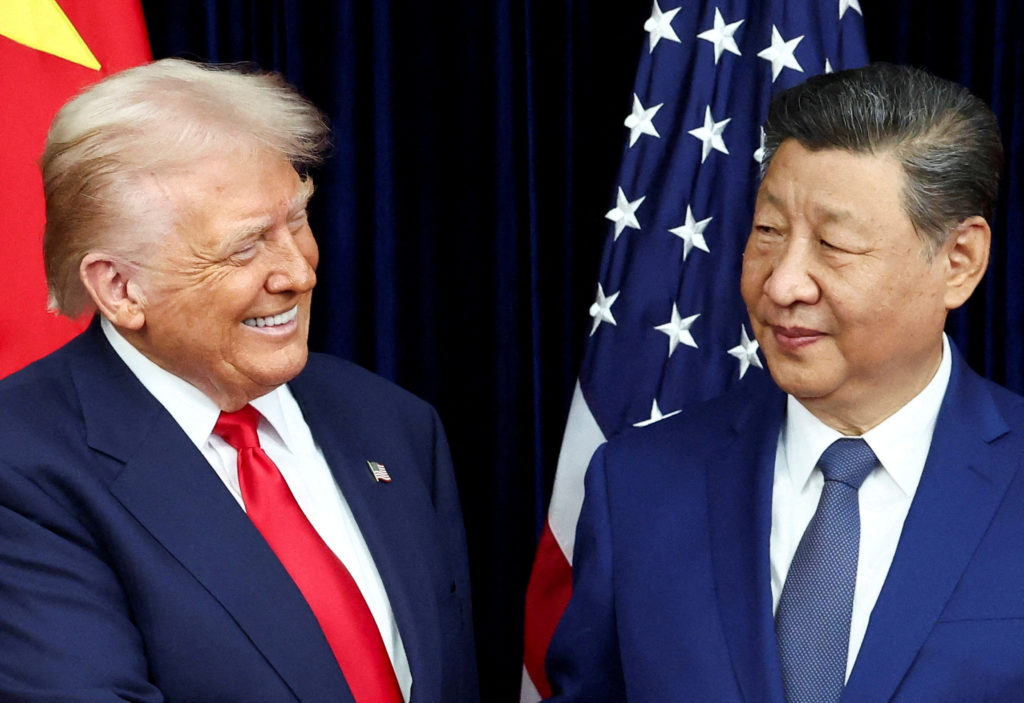
President Donald Trump is preparing to host Chinese President Xi Jinping for a state dinner at the White House, marking a stark departure from the confrontational tone that defined his early political career. A decade ago, Trump campaigned on the premise that China was dismantling American manufacturing and harming the middle class. Today, however, he describes Xi as a great gentleman with whom he shares a strong personal and trading relationship. This diplomatic warmth includes preparations for multiple meetings this year, including a helipad installation on the South Lawn to facilitate Xi’s arrival.
The pivot toward hospitality appears driven by the ineffectiveness of previous economic pressure tactics. Last year, the administration imposed steep tariffs and export restrictions intended to curb Chinese influence. These measures failed to alter Beijing’s behavior or shrink its manufacturing sector. Instead, China leveraged its dominance in rare earth minerals, critical components for electronics, to force a trade armistice. Experts note that Xi emerged victorious in this contest of leverage, prompting Trump to abandon the aggressive trade war strategy.
Michael Kovrig, a senior adviser at the International Crisis Group and former Canadian diplomat detained by China during Trump’s first term, argues that the president is now executing Beijing’s wedge tactics. By undermining traditional economic and national security alliances, Trump has created opportunities for Xi to portray China as a more stable and responsible global power. This dynamic has encouraged Western leaders from Germany, Italy, France, South Korea, and Japan to visit Beijing and seek improved relations, allowing them to focus on domestic issues while distancing themselves from U.S. unpredictability.
The erosion of these alliances is evident in Trump’s treatment of key partners. He has mocked French President Emmanuel Macron and expressed inconsistent support for NATO, particularly after some members withheld full backing for his decision to engage militarily with Iran. Additionally, he has initiated a severe trade dispute with Canada, a longtime ally, while simultaneously fostering closer ties with Beijing. This realignment challenges the post-World War II international order and shifts the balance of diplomatic influence in favor of China.
Despite the warmer rhetoric, significant economic tensions remain. Census Bureau data indicates that the U.S. trade imbalance with China has decreased compared to the same period in 2025. However, this improvement may be illusory, as Chinese exporters are increasingly routing goods through third countries like Vietnam to avoid tariffs. China continues to expand its global market share, achieving a $1.2 trillion trade surplus last year. Its low-cost electric vehicles and advanced manufacturing capabilities continue to undercut competitors in Europe and Asia.
Both nations are using the current truce to strengthen their respective strategic positions. China is advancing its military and artificial intelligence capabilities despite restrictions on access to advanced computer chips. Meanwhile, the Trump administration is pursuing partnerships to develop domestic rare earth supply chains and accelerating AI development. Trump has argued that slowing AI progress would benefit China, describing the technology as a historic economic engine surpassing oil or gold in importance.
The diplomatic thaw does not resolve underlying geopolitical conflicts. Xi has warned that the U.S. and China could clash over Taiwan, highlighting persistent areas of friction. While Trump claims the United States remains ahead in the global leadership contest, his reliance on symbolic gestures like state visits suggests an acknowledgment of limited leverage. The administration’s focus has shifted from containment to coexistence, betting on American technological superiority rather than economic coercion.
This new approach carries risks for U.S. allies and domestic industries. The retreat from aggressive trade policies may embolden China to continue expanding its influence in critical technologies. At the same time, the lack of coordinated Western pressure reduces the incentives for Beijing to change its behavior regarding human rights or intellectual property. As Trump prepares to fete Xi, the long-term implications of this diplomatic shift remain uncertain, with experts warning that it may ultimately strengthen China’s position in the global order.
The contrast between Trump’s past and present rhetoric underscores the complexity of managing relations with a geopolitical rival. While he once framed China as an existential threat to American prosperity, he now emphasizes personal rapport and mutual benefit. This evolution reflects a pragmatic adjustment to the realities of international power dynamics, where economic interdependence and strategic competition coexist. The success of this strategy will depend on whether it can sustain U.S. interests without ceding ground to Chinese ambitions.
As the state dinner approaches, the focus remains on what this diplomatic engagement signifies for future U.S.-China relations. The administration’s willingness to engage personally with Xi suggests a belief that direct communication can mitigate conflicts. However, without concrete policy changes or renewed alliance cooperation, the impact of these gestures may be limited. The coming months will reveal whether this softer approach yields tangible benefits or merely masks deeper structural challenges in the bilateral relationship.
Sources behind this briefing
Go to the original reporting
- PBS NewsHour↗Why Trump is rolling out the red carpet for Xi after years of slamming China

