The short version
- President Trump suggested the proposed arch would be dedicated to veterans, despite ongoing lawsuits from military families and Kennedy relatives.
- A federal judge has issued a temporary restraining order halting construction for two weeks as legal challenges mount.
- New promotional materials describe the structure with militaristic features, including drone launch capabilities and sniper positions.
President Donald Trump shifted the narrative surrounding his proposed triumphal arch on Veterans Day, suggesting the monument would serve as a dedication to U.S. military veterans rather than solely a personal tribute. Speaking at an annual ceremony at Arlington National Cemetery, Trump claimed that veterans had long desired such a structure in the capital, stating they had been waiting for it for two centuries. This framing contrasts with earlier assertions that the 250-foot arch, inspired by Paris’s Arc de Triomphe, might be named the 'Arc de Trump' and built in his honor.
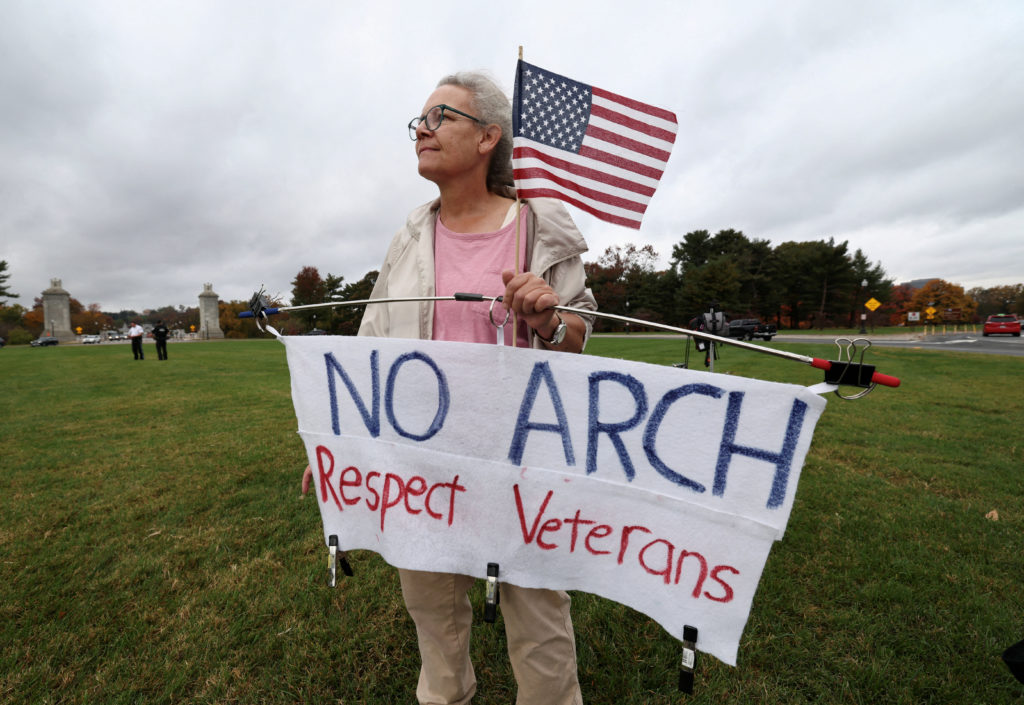
The repositioning of the project comes as legal opposition intensifies. Three veterans have filed suit to stop the construction, joining other groups that have criticized the plan. Additionally, nine members of the Kennedy family are seeking to block the arch, arguing that its proximity to Arlington National Cemetery would cast a shadow over their relatives’ gravesites. A federal court has temporarily sided with the challengers, with U.S. District Judge Tanya Chutkan issuing a restraining order that prohibits any work on the site for fourteen days.
Despite the judicial pause and growing political headwinds, the White House continues to promote the initiative. A newly launched website highlights the project as the 'United States Military Triumphal Arch,' describing it as long overdue and sought after by the military community. The site prominently features Trump’s image and quotes, utilizing gold cursive script reminiscent of branding associated with his Mar-a-Lago estate. This aesthetic choice aligns with broader renovations to the White House interior, including changes to the Oval Office and West Wing.
The design details revealed on the promotional platform present a stark departure from traditional memorial architecture. Plans indicate that the arch’s columns would store munitions, while specific areas on the pedestal and observation deck are designated for sniper nests. The base is designed to facilitate drone launches. The website characterizes the monument as highly secretive yet lethal, claiming it represents a type of structure never before seen in the United States. These militaristic features have drawn criticism from some military leaders, with one retired general describing the proposal as sacrilegious.
Financial transparency remains a significant gap in the administration’s presentation. The promotional materials do not disclose the project’s cost or funding sources. Independent estimates suggest the price tag could reach $100 million. Without clear information on how the monument will be financed, questions persist regarding the allocation of public resources and the potential burden on taxpayers.
The political landscape surrounding the arch is shifting rapidly. Democrats secured significant victories in recent midterm elections, positioning them to take control of Congress. This change in legislative power is expected to bring increased scrutiny to Trump’s renovation projects, including the arch, the renaming of the Kennedy Center, and alterations to public golf courses. Lawmakers may face pressure to investigate the legal and financial implications of these initiatives.
Support for the arch remains divided within military circles. While some groups have expressed approval, many others have joined efforts to halt construction. The lawsuit filed by veterans underscores a deep rift in how different segments of the military community view the project. The temporary court order provides a brief window for legal arguments to be developed before any further action can be taken on the ground.
The controversy highlights broader tensions over the use of public space and historical memory in Washington, D.C. Critics argue that the arch’s design and purpose conflict with the solemn nature of nearby memorials. The administration’s insistence on proceeding despite legal challenges suggests a determination to complete the project regardless of opposition. The coming weeks will likely see intensified debate as the temporary restraining order expires and political scrutiny deepens.
As the legal battle continues, the arch remains a symbol of the current administration’s approach to public monuments and presidential legacy. The combination of personal branding, militaristic design elements, and lack of financial clarity has fueled criticism from multiple quarters. The outcome of the lawsuits and the response from the newly empowered Congress will determine whether the project moves forward or is permanently halted.
The situation illustrates the complex interplay between executive ambition, judicial oversight, and legislative check-and-balance mechanisms. With the midterm elections concluded, the political dynamics surrounding Trump’s infrastructure projects are poised to change. The arch serves as a focal point for these broader questions about governance, transparency, and the role of monuments in American public life.
Sources behind this briefing
Go to the original reporting
- PBS NewsHour↗Trump says the towering arch he wants to be build might be dedicated to military veterans