The short version
- President Trump announced plans to substantially reduce joint military exercises with South Korea, explicitly linking the decision to Seoul's refusal to join US operations in Iran.
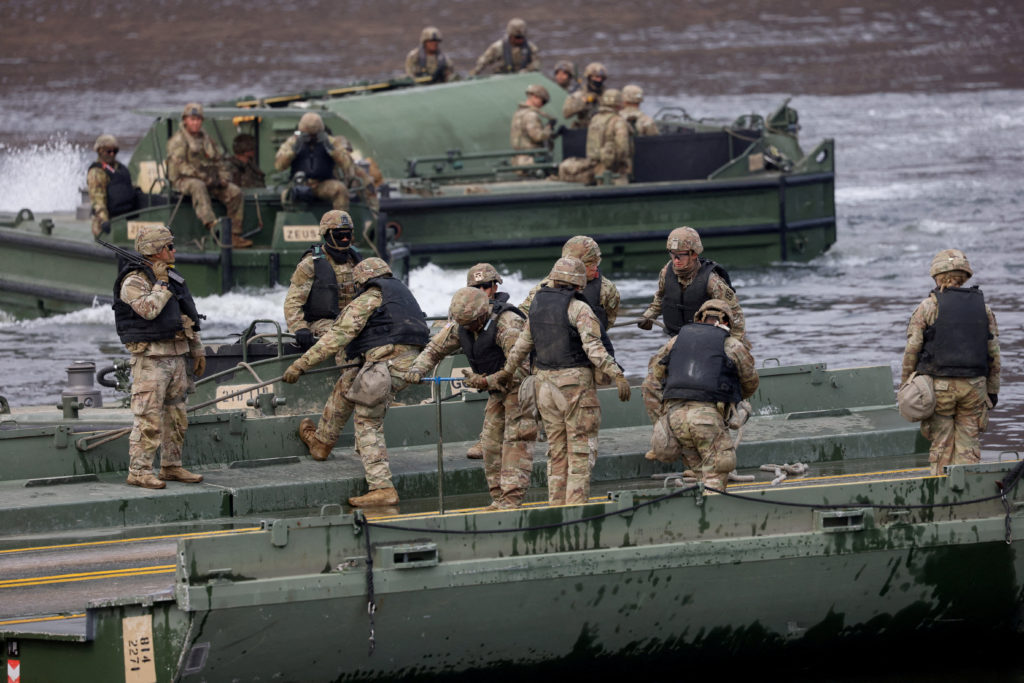
- Despite the demand for scaled-back activities, annual drills began on schedule Monday, involving thousands of troops from both nations amid ongoing North Korean missile tests.
- Experts warn that reducing these exercises could weaken alliance coordination and deterrence capabilities, offering minimal financial savings while potentially damaging diplomatic stability in the region.
President Donald Trump has declared an intention to significantly curtail joint military exercises between the United States and South Korea, framing the move as a response to Seoul’s recent decision not to participate in American-led operations targeting Iran. The announcement creates a complex diplomatic situation, as the annual drills commenced on schedule despite the president’s demands for their reduction. Trump characterized the ongoing war games as unnecessarily provocative toward North Korean leader Kim Jong Un and argued that they send an inappropriate signal of hostility, even as he highlighted his personal rapport with the North Korean leader.
The president explicitly connected the proposed cuts to South Korea’s diplomatic stance on Iran in statements made from the Oval Office. He expressed frustration that Seoul would not assist in what he described as a straightforward military operation in the Middle East, despite the presence of approximately 39,000 US troops stationed in South Korea to guard against threats from Pyongyang. Trump noted that while the two issues are somewhat unrelated, the refusal to contribute to the Iran effort was surprising given the security umbrella provided by Washington.
South Korean officials responded with a measured approach, stating they were reviewing the president’s comments while maintaining that the drills would proceed as originally planned. The Blue House indicated it would continue diplomatic consultations regarding military cooperation, including discussions on the Strait of Hormuz and the specifics of joint training. Seoul expressed hope that improved relations between Washington and Pyongyang could eventually lead to meaningful talks, viewing Trump’s social media posts about his friendship with Kim as a potential opening for diplomacy.
The timing of these developments coincides with heightened tensions on the Korean Peninsula. North Korea recently conducted ballistic missile tests that violate United Nations bans, marking an acceleration in its nuclear and missile programs since the collapse of high-level diplomacy in 2019. US military leaders have noted that current training accounts for emerging threats, including reports of North Korean troops deployed to support Russia’s war in Ukraine. The joint exercises, known as Ulchi Freedom Shield, involve roughly 18,000 South Korean soldiers and are designed to maintain readiness against such evolving security challenges.
Military experts caution that scaling back these essential drills could carry significant strategic costs with little tangible benefit. Leif-Eric Easley, a professor at Ewha University in Seoul, argued that combined defense exercises are critical for maintaining alliance coordination and ensuring forces are capable of executing their duties. He suggested that reducing the scope of training might slow South Korea’s transition toward greater responsibility for its own defense and weaken deterrence against potential conflicts in Asia.
The financial arguments presented by the White House have also faced scrutiny. Trump claimed that much of the cost for these exercises is borne by the United States, implying that reductions would yield substantial savings. However, analysts point out that the actual cost savings from downsizing drills are marginal compared to the potential diplomatic and security risks. The decision echoes previous actions taken during Trump’s first term, when he suspended exercises in 2018 to facilitate denuclearization talks with Kim and scaled them back again in 2020 due to the pandemic.
North Korea has condemned the joint military drills as rehearsals for aggressive war, reflecting Pyongyang’s consistent opposition to US-South Korean military cooperation. The foreign ministry’s criticism underscores the delicate balance Washington seeks to maintain between deterring North Korean aggression and managing diplomatic relations with its ally in Seoul. Trump’s mixed messaging—praising Kim while criticizing Seoul—has created uncertainty regarding the future trajectory of trilateral dynamics involving the US, South Korea, and North Korea.
Looking ahead, the situation remains fluid as both nations navigate these competing priorities. While the drills continue for now, the threat of further reductions looms if diplomatic consultations do not yield a compromise. The broader implications extend beyond the Korean Peninsula, as Trump has also expressed displeasure with other allies, including Japan, France, and the UK, for their hesitance to engage in the conflict in Iran. This pattern suggests a broader shift in how the administration views alliance obligations and collective security responsibilities.
Sources behind this briefing
Go to the original reporting
- PBS NewsHour↗Trump lashes out at South Korea over its refusal to join Iran war
- BBC World↗Trump says US to reduce military drills with South Korea after it stayed out of Iran war

