The short version
- President Trump begins an intensive travel schedule for the midterm elections with a rally in Montgomery, Alabama, targeting Republican enthusiasm in deep red states before moving to competitive battlegrounds.
- Recent polling indicates only about 30 percent of U.S. adults approve of his job performance, with many blaming him for rising prices and criticizing his ongoing military engagement in Iran.
- The campaign focuses on supporting candidates like Sen. Tommy Tuberville and Rep. Rhett Marques, while also highlighting infrastructure achievements such as the newly approved Mobile River Bridge project.
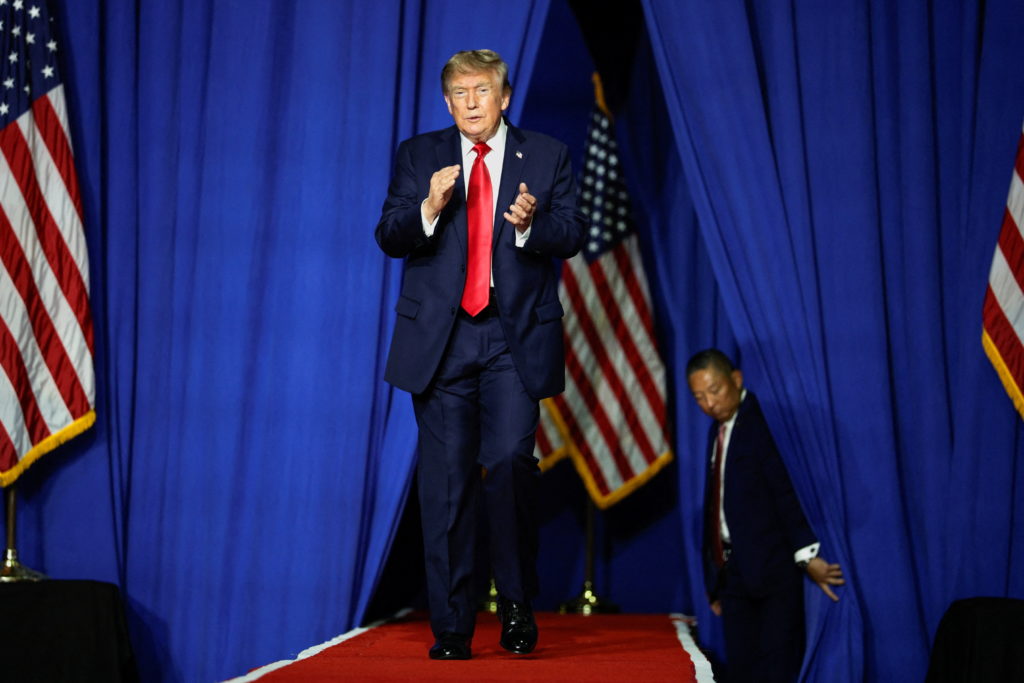
President Donald Trump has initiated an aggressive campaign schedule for the upcoming midterm elections, beginning with a rally in Montgomery, Alabama. The event marks the start of a tour that White House officials describe as nearly daily until Election Day on November 3. By choosing to launch this effort in a state that has historically voted Republican, the administration appears to be prioritizing base mobilization over immediate persuasion in swing states. This strategic move comes as party leaders express growing concern about their ability to retain control of both the House and Senate.
The Alabama stop holds symbolic significance for the president, who previously drew one of his first massive crowds in Mobile more than a decade ago during the 2016 primary cycle. That earlier gathering helped establish his viability as a candidate with significant grassroots support. Returning to this region allows Trump to reconnect with loyal constituents while providing Republican candidates with high-profile visibility. The rally is scheduled for 7 p.m. EDT and features appearances by several key political figures, including Senator Tommy Tuberville and Representative Barry Moore.
Despite the energetic optics of large crowds, the president faces challenging polling data. A recent survey by the Associated Press-NORC Center for Public Affairs Research reveals that only approximately three in ten U.S. adults approve of his job performance. Economic concerns are a primary driver of this dissatisfaction, with many respondents blaming the administration for high prices. Additionally, the ongoing military conflict in Iran has drawn criticism, further complicating the political landscape as voters weigh their options ahead of November.
The campaign is actively supporting specific Republican candidates in Alabama, including Tuberville, who is running for governor against former Democratic Senator Doug Jones. Another focus is Representative Rhett Marques, who is seeking to flip the newly redrawn 2nd Congressional District. This district was reshaped following a Supreme Court ruling that weakened the Voting Rights Act, shifting its demographic composition to favor Republicans. The redistricting effort aims to help the party maintain its majority in the U.S. House, although Democratic incumbent Shomari Figures remains a formidable opponent.
Infrastructure achievements are also being highlighted as part of the campaign narrative. Earlier in the day, Transportation Secretary Sean Duffy and Governor Kay Ivey attended a groundbreaking ceremony for the $3.2 billion Mobile River Bridge and Bayway project. Officials describe this initiative as the largest transportation undertaking in Alabama history, intended to support economic growth in the Gulf Coast region. By linking political rallies with tangible government projects, the administration seeks to demonstrate effective governance despite broader criticisms.
The strategic choice to begin in deep red states underscores the challenges facing the Republican Party. While these areas provide reliable support and enthusiastic crowds, they do not directly influence the outcome of competitive races in swing states like Ohio and Texas, which are slated for later visits on the tour. Party officials hope that energizing the base in Alabama will create momentum that can be carried into more uncertain electoral environments. However, the disconnect between loyal supporter turnout and broader public approval remains a significant hurdle.
White House Chief of Staff Susie Wiles recently informed GOP senators that the president would campaign aggressively until the final day of voting. This intensive schedule reflects an effort to counteract pessimism within the party regarding their chances of holding onto congressional majorities. The administration is leveraging Trump’s ability to draw large audiences as a tool for boosting morale and voter turnout among Republicans. Whether this strategy will translate into electoral success in competitive districts remains uncertain.
The political landscape in Alabama has shifted due to recent redistricting efforts, which have altered the balance of power in several congressional seats. The 2nd District, now more Republican-leaning, represents a key target for the party’s efforts to expand its influence. However, the presence of established Democratic representatives like Figures indicates that these changes do not guarantee easy victories. The upcoming election will test whether the administration’s focus on base mobilization and infrastructure highlights can overcome broader dissatisfaction with economic conditions and foreign policy.
As the campaign progresses, the contrast between rally enthusiasm and polling data will likely remain a central theme. While Trump maintains strong support among his core base, the wider electorate expresses significant concern about inflation and military engagements. The success of this midterm push will depend on whether the administration can convert loyalist energy into votes in critical swing states while mitigating the negative impact of low approval ratings. The coming weeks will reveal if this aggressive strategy yields the desired results for Republican candidates nationwide.
The rally in Alabama serves as both a homecoming and a strategic launchpad for the remainder of the election cycle. By emphasizing local achievements and connecting with long-time supporters, the president aims to build momentum for the final stretch of campaigning. However, the underlying challenges of economic dissatisfaction and foreign policy controversies persist, posing significant risks to Republican electoral prospects. The outcome of these midterms will hinge on how effectively the party can address these concerns while maintaining voter enthusiasm.
Sources behind this briefing
Go to the original reporting
- PBS NewsHour↗WATCH LIVE: Trump holds rally in Alabama as he tries to boost midterm enthusiasm