The short version
- The administration is attempting to circumvent a recent Supreme Court decision by redefining which non-citizen parents are ineligible for conferring citizenship to their children.
- New measures target individuals linked to foreign governments or terrorist groups, while also imposing stricter visa restrictions on those suspected of traveling specifically to give birth.
- Legal experts and advocacy groups are expected to challenge the orders immediately, arguing they conflict with the Fourteenth Amendment despite the president's claims of constitutional authority.
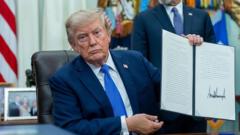
President Donald Trump signed two executive orders on Thursday aimed at restricting birthright citizenship, marking a renewed effort to alter long-standing immigration policy just weeks after the Supreme Court rejected his previous attempt. The directives seek to expand the categories of non-citizen parents whose children will not automatically receive U.S. citizenship and impose new penalties on individuals accused of engaging in birth tourism. This move signals the administration’s determination to continue its immigration crackdown despite significant judicial pushback.
The first order broadens existing exceptions to the Fourteenth Amendment’s citizenship clause. It denies automatic citizenship to children born to non-citizen parents if one parent is a member of a foreign terrorist organization, an employee of a foreign government, or has attempted to obtain citizenship through fraudulent means. The directive also excludes births occurring in U.S. territories where federal statute does not confer citizenship, a category that currently includes only American Samoa. Historical exceptions have previously covered children of diplomats, occupying forces, and Native Americans, but this order attempts to extend those limitations further.
Stephen Miller, the White House deputy chief of staff for policy, defended the measures as necessary corrections to what he described as an abuse of the system. He argued that the orders prevent individuals from exploiting temporary visa categories to secure permanent residency through their children. Miller asserted that the president has the authority under the Immigration and Nationality Act to set limitations on entry and eligibility, framing the actions as a safeguard against malign foreign actors attempting to infiltrate the country.
The second executive order targets birth tourism by increasing restrictions on visitors seeking visas with the intent to give birth in the United States. The administration claims that operators use deceptive advertisements to entice foreign nationals to travel for this purpose, allowing them to establish a foothold in the country. While entering the U.S. under the guise of tourism while intending to give birth is already considered visa fraud, the new order seeks to strengthen enforcement and penalize those involved in these schemes more severely.
These actions come shortly after a 6-3 Supreme Court decision in June that struck down Trump’s earlier executive order attempting to end birthright citizenship entirely. The high court ruled that the previous policy violated the Constitution, affirming that nearly all people born on U.S. soil are American citizens. Legal observers noted that the narrow margin of the vote left many advocates concerned about the stability of this constitutional guarantee, prompting the administration to seek alternative legal avenues to achieve similar policy goals.
President Trump criticized the Supreme Court’s ruling from the Oval Office, calling it unfair and harmful to the nation. He claimed that hundreds of thousands of babies are born annually through birth tourism, a figure that contrasts sharply with independent estimates. The Migration Policy Institute, a nonpartisan research group, cited census-based data suggesting between 22,000 and 26,000 such births occur each year. Government records for 2024 showed approximately 9,600 births to mothers with foreign addresses, representing less than one percent of all births in the country.
Legal challenges are expected to follow swiftly, as opponents argue that the new orders effectively rewrite the Fourteenth Amendment without congressional approval. The amendment, adopted after the Civil War, has historically guaranteed citizenship to anyone born in the United States, with very limited exceptions. Critics contend that expanding these exceptions through executive action undermines the rule of law and sets a dangerous precedent for future administrations.
The administration maintains that its latest actions are constitutional and necessary to protect national security and prevent fraud. Trump stated that his previous efforts were blocked by judicial overreach and that this new approach offers a viable path forward. However, the precise scope of who falls under the new definitions of ineligible parents remains unclear, particularly regarding those who lobby or act on behalf of foreign governments. This ambiguity may further complicate legal battles and implementation efforts.
As the administration moves forward with these directives, the focus shifts to how federal agencies will enforce the new restrictions and how courts will interpret their constitutionality. The tension between executive authority and constitutional guarantees continues to define the political landscape, with significant implications for immigration policy and civil rights. Observers are closely watching the next steps in this ongoing legal and political struggle.
The broader context of these orders reflects a sustained effort by the Trump administration to reshape U.S. immigration law. Despite setbacks in the judiciary, the executive branch is leveraging its powers to test the boundaries of presidential authority over citizenship and entry. The outcome of these challenges will likely influence future debates on national identity, sovereignty, and the rights of individuals born within American borders.
Sources behind this briefing
Go to the original reporting
- BBC News↗Trump again tries to limit US birthright citizenship with new executive orders
- The Guardian US Politics↗Trump signs new orders targeting birthright citizenship
- NPR↗Trump signs 2 immigration actions to curb 'birth tourism,' limit birthright citizenship
- PBS NewsHour↗WATCH: Trump signs executive orders imposing new limits on birthright citizenship

