The short version
- President Trump presented National Medals of Science and Technology to six tech leaders, including Elon Musk and Jensen Huang, during a summit focused on innovation.
- The event highlighted tensions between the administration's pro-business stance and recent policy moves, such as Microsoft's suspension from a foreign worker sponsorship program.
- Critics argue the ceremony reflects a disconnect with ordinary voters facing cost-of-living challenges, while supporters view it as recognition of American technological prowess.
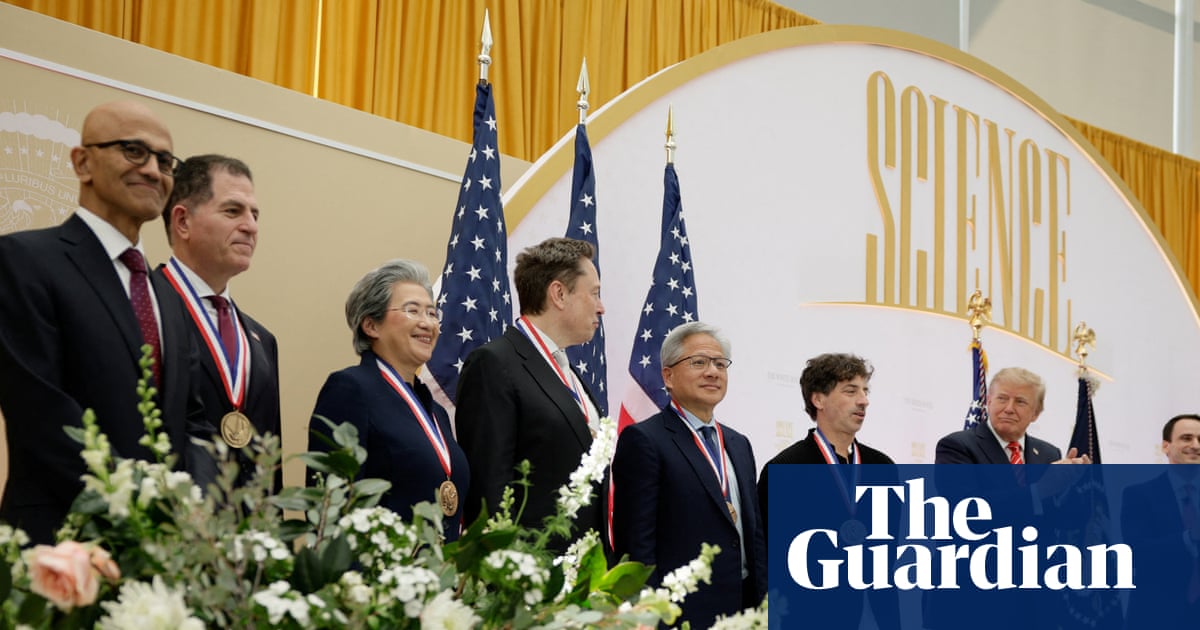
With midterm elections approaching in less than a month, President Donald Trump hosted a high-profile awards ceremony in Washington, D.C., aimed at celebrating achievements in science and technology. The event, titled the Golden Age of American Innovation summit, took place at the Donald J Trump Institute of Peace and drew approximately 300 invited guests. The gathering served as a platform for the president to honor prominent figures in the tech industry, reinforcing his administration's focus on technological advancement despite ongoing political headwinds.
Among those recognized were several global technology leaders who received the National Medal of Science or the National Medal of Technology and Innovation. Elon Musk, chief executive of SpaceX, was awarded the National Medal of Science, as were Google co-founder Sergey Brin, Nvidia CEO Jensen Huang, and AMD CEO Lisa Su. Microsoft CEO Satya Nadella and Dell Technologies CEO Michael Dell received the National Medal of Technology and Innovation. Notably, five of the six honorees are immigrants, a detail that underscores the international nature of the American tech sector even as the president champions an America-first agenda.
The relationship between Trump and Musk has been characterized by volatility. Musk played a significant role in supporting Trump’s 2024 election campaign and later utilized his influence to advocate for reductions in federal agencies that had investigated his companies. However, their alliance faced strain when Musk publicly suggested that Trump was implicated in the Epstein files, leading to a temporary rift. Vice President JD Vance reportedly helped broker a reconciliation, allowing the two to appear together at the summit. During the ceremony, Trump praised Musk as an industrial titan and modern-day Thomas Edison, signaling a renewed, if cautious, partnership.
In addition to honoring industry leaders, the event included a personal tribute to Trump’s late uncle, Dr. John Trump, an electrical engineer who received the National Medal of Science in 1983. Michael Kratsios, director of the White House Office of Science and Technology Policy, presented the president with his uncle’s medal in a framed display. The ceremony featured a video highlighting Dr. Trump’s contributions to radar technology and medical research, although some claims regarding the impact of his work have been subject to scrutiny. This moment allowed Trump to connect his family legacy to the broader narrative of scientific achievement.
The summit occurred against a backdrop of significant policy shifts affecting the tech industry. Hours before the awards ceremony, Vice President Vance announced that Microsoft had been suspended from a program allowing companies to sponsor foreign workers for green cards. This move appeared to contradict the administration’s simultaneous celebration of immigrant tech leaders like Satya Nadella and Sergey Brin. The juxtaposition of honoring these executives while restricting their ability to hire international talent highlighted the complex and sometimes contradictory nature of current immigration and technology policies.
Critics of the administration have pointed to the event as evidence of a disconnect between the president and ordinary Americans facing economic hardships. With a cost-of-living crisis affecting many households, the lavish nature of the summit and its focus on billionaires has drawn scrutiny. Opponents argue that the administration is prioritizing the interests of wealthy elites over the needs of working-class voters who supported Trump’s rise to power. The president’s remarks during the ceremony, which included references to artificial superintelligence but avoided discussing the environmental and social impacts of data center expansion, further fueled these criticisms.
Political analysts note that the timing of the event is strategic, coming just weeks before the midterm elections. Trump’s approval ratings have been under pressure, and the summit may be an attempt to bolster his image as a champion of innovation and economic growth. By aligning himself with successful tech leaders, the president aims to demonstrate his commitment to American competitiveness on the global stage. However, the effectiveness of this strategy remains uncertain, particularly given the divided public opinion on issues related to technology regulation and immigration.
The reactions to the summit were mixed, with supporters praising the recognition of technological achievements and critics condemning the perceived elitism. The event underscored the ongoing tension between the administration’s pro-business policies and its populist rhetoric. As the midterm elections approach, the president’s ability to balance these competing priorities will likely be a key factor in determining his political trajectory. The summit served as a snapshot of the current political landscape, where alliances with industry leaders are both a source of strength and a point of contention.
Looking ahead, the implications of the awards ceremony extend beyond the immediate political cycle. The recognition of immigrant tech leaders may influence future immigration policies, while the suspension of Microsoft from the green card sponsorship program could set a precedent for other companies. The relationship between Trump and Musk, in particular, will continue to evolve as both navigate their respective interests and public perceptions. The summit highlighted the intricate dynamics between government and industry, setting the stage for further developments in the coming months.
Sources behind this briefing
Go to the original reporting
- The Guardian US Politics↗Trump hosts awards party for tech billionaires, almost as if he doesn’t care about ordinary Americans