The short version
- President Trump signed an order declaring the Oval Office a national monument to protect his recent renovations from future administrations.
- The decree does not prevent subsequent presidents from changing furniture or decor, as existing laws already allow such operational modifications.
- Legal scholars and preservationists argue the move is largely symbolic and potentially contradictory given the administration's broader record on historic site protections.
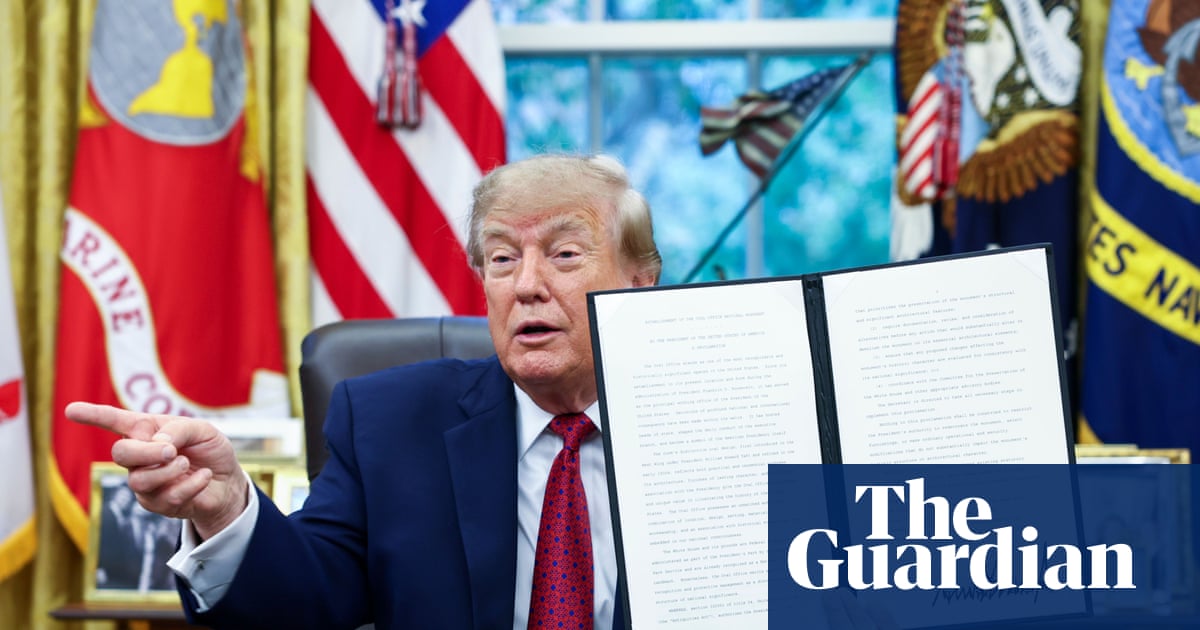
President Donald Trump signed an executive order on Thursday designating the Oval Office and Cabinet Room as national monuments, a move intended to shield his extensive renovations from alteration by future administrations. The proclamation asserts that these spaces should be preserved in their current state, reflecting what the president described as necessary repairs and enhancements to areas he characterized as previously damaged. By invoking this designation, Trump aims to create a legal barrier against any attempts to dismantle or significantly modify the architectural character of the rooms.
The redesign has introduced prominent gold accents, statuettes, and portraits retrieved from storage, alongside a copy of the Declaration of Independence displayed on the wall. These changes have sparked criticism from political opponents, including former President Barack Obama, who mocked the aesthetic as resembling a luxury restaurant owned by a dictator. Despite the backlash, Trump defended the alterations to reporters, stating that world leaders had complimented the new look and emphasizing that the White House symbolizes national greatness.
However, the legal scope of the order is limited. The document explicitly states that it does not restrict a president’s authority to redecorate, select furnishings, or make ordinary operational and security modifications that do not substantially impair the historic structure. This means that while the physical architecture may be protected, future occupants can still change the interior decor, furniture, and layout within reasonable bounds. The order calls for the National Park Service to maintain the space in a manner that protects its historic character and association with the presidency.
Legal experts suggest that the practical impact of this designation may be minimal. Greg Werkheiser, a specialist in historic preservation law, noted that temporary alterations such as furniture and decor are already within the president’s discretion under existing frameworks. He argued that as long as permanent art and architecture are not damaged, presidents generally have wide latitude to modify the space. The White House grounds are already designated as a National Historic Landmark, which provides some protection against sudden changes, though Congress has carved out exemptions to allow necessary updates.
The timing of this order follows months of controversy surrounding Trump’s broader renovation projects at the White House. Notably, the administration tore down the entire East Wing without congressional approval, facing legal challenges as construction continued to transform the space into a new ballroom. Critics point to this pattern as evidence of a disregard for established preservation laws. Werkheiser described the Oval Office order as hypocritical, contrasting it with the administration’s efforts to undermine preservation statutes elsewhere in Washington, including plans for a new triumphal arch that have been temporarily halted by a federal judge.
Trump claimed that the Oval Office and surrounding areas were in poor condition before his tenure, citing broken windows, cracked walls, and damaged stone. He argued that the renovations were essential repairs rather than mere cosmetic upgrades. However, many observers view the changes as primarily aesthetic, including the addition of a large gold plaque outside the office, paving over parts of the Rose Garden, and installing a new helicopter pad. The president insisted that the order would make it impossible for anyone to destroy what he called an incredible space.
It remains unclear whether this executive action can be easily reversed by a future administration or challenged in court. Most executive orders can be overturned, and Trump himself reduced the size of two national monuments in Utah during his first term. However, the legal precedent for revoking a national monument designation has not been thoroughly tested. The order notes existing protections but argues that the Oval Office merits specific recognition as a discrete historic structure of national significance.
The current Oval Office layout dates back to the early 1930s, following its conception by President Franklin D. Roosevelt. While presidents have historically made changes to the White House, large-scale projects typically require congressional permission. Trump’s approach bypasses this norm, relying on executive authority to enforce preservation standards. This strategy highlights a growing tension between presidential discretion and legislative oversight in managing federal historic properties.
As the debate continues, the order serves as both a political statement and a legal experiment. Supporters view it as a way to honor national heritage by preserving a symbol of American leadership. Critics see it as an attempt to cement personal legacy through administrative fiat, potentially setting a precedent for future presidents to manipulate historic designations for political gain. The outcome will likely depend on how courts interpret the balance between executive power and preservation law.
In the immediate term, the National Park Service is tasked with overseeing the maintenance of the Oval Office under the new designation. This adds another layer of bureaucratic involvement in the daily operations of the White House. Whether this leads to increased scrutiny or simply formalizes existing practices remains to be seen. The controversy underscores the complex interplay between history, politics, and property rights in one of the world’s most watched residences.
Sources behind this briefing
Go to the original reporting
- The Guardian US Politics↗Trump signs order to make gold-decorated Oval Office a national monument – video
- BBC World↗Trump signs order to preserve Oval Office as national monument