The short version
- President Trump confirmed he secretly switched aircraft while departing Turkey for the Nato summit, citing advice from Secret Service and military officials regarding a potential threat.
- Reports indicate the president was moved from Air Force One to a C-32A jet via an elevated catering truck, leaving journalists and staff on the original plane unaware of his departure.
- The maneuver occurred shortly after the United States resumed military strikes against Iran following failed negotiations, with officials describing the threat as credible.
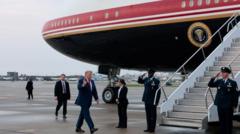
President Donald Trump has publicly confirmed that he executed a clandestine change of aircraft while departing Turkey last month, acting on urgent advice from security personnel who identified a potential danger. Speaking to reporters recently, the president stated that he followed the directives of the Secret Service and military leadership, emphasizing his reliance on their professional judgment during the incident. This admission clarifies earlier reports suggesting an unusual departure sequence at Ankara airport, where visual evidence showed the president boarding the presidential jet before disappearing from view.
The operational details of the switch reveal a complex logistical effort designed to maintain the appearance of normalcy while ensuring the president's safety. According to reporting from The Washington Post, Trump initially boarded Air Force One in full view of television cameras and press personnel. However, he subsequently slipped off the aircraft onto a catering truck that had been raised to match the plane's height on the opposite side. This vehicle then transported him discreetly to a smaller C-32A military aircraft, a modified Boeing 757 frequently utilized by the vice president for travel.
Security officials coordinated the movement carefully to avoid detection by those remaining on Air Force One. Defense Secretary Pete Hegseth boarded the replacement jet separately using external stairs, a move intended to reinforce the illusion that the flight was proceeding as scheduled. Meanwhile, journalists and certain White House staff members who had already boarded Air Force One were instructed to close their window shades. These individuals remained unaware that the president was no longer on board, effectively serving as part of a decoy operation meant to mislead potential adversaries.
The decision to alter travel plans stemmed from intelligence assessments indicating a credible threat from Iran. Officials told CBS News that US agencies had detected signs suggesting Iran might attempt to fire a missile at the presidential aircraft. This security concern arose against a backdrop of heightened tensions between Washington and Tehran, with the United States having renewed military strikes on Iran just one day prior to Trump's departure. The breakdown of negotiations aimed at ending the conflict contributed to an environment where such threats were considered plausible and actionable.
Trump had arrived in Turkey aboard a newer Boeing 747-8 donated by Qatar but announced his intention to depart on the older Air Force One model, citing nostalgia as the reason for this choice. This public statement likely served to lower expectations regarding any deviation from standard protocol. By appearing to board the familiar aircraft, the president created a predictable scenario that security teams could then subvert when necessary. The use of a catering truck as a transfer mechanism highlights the lengths to which protective services will go to maintain operational secrecy in high-risk environments.
The incident has sparked questions about the safety of those left on the decoy plane. While Trump maintained that the military jet he ultimately boarded faced greater risk, critics have pointed out the potential danger posed to journalists and staff who were kept in the dark about the president's absence. The elaborate nature of the ruse underscores the severity with which US security apparatuses treat threats from state actors like Iran. It also illustrates the challenges of balancing transparency with operational security during international summits.
Trump has previously characterized himself as a primary target for Iranian retaliation during his time in Ankara. This self-assessment aligns with the heightened security measures observed during his departure. The confirmation of the plane swap provides insight into the internal decision-making processes that guide presidential travel under threat conditions. It demonstrates how quickly protocols can shift when new intelligence emerges, even after public appearances have been made and media coverage is underway.
As details continue to emerge, the focus remains on the effectiveness of the security response rather than assigning blame for the initial threat assessment. The successful execution of the swap suggests that contingency plans were in place and ready for deployment. However, the incident also raises broader questions about communication within the White House and with随行 media personnel. Future travel arrangements may need to account for similar scenarios, ensuring that all parties are adequately informed without compromising security objectives.
The revelation adds another layer to the ongoing narrative of US-Iran relations, which have deteriorated significantly in recent months. With negotiations stalled and military actions resumed, the risk of direct confrontation remains elevated. The plane swap serves as a tangible example of how geopolitical tensions translate into immediate physical security concerns for top officials. It also highlights the role of allied nations, such as Qatar, in facilitating diplomatic engagements through contributions like aircraft donations.
Looking ahead, the incident may influence how future presidential travels are managed, particularly in regions with active conflicts or hostile actors. Security teams will likely review their procedures to ensure that similar situations can be handled efficiently while minimizing confusion among staff and media. The public confirmation by Trump himself marks a rare instance of transparency regarding specific security operations, offering a glimpse into the behind-the-scenes efforts required to protect national leaders abroad.
Sources behind this briefing
Go to the original reporting
- BBC World↗Trump says he switched planes after Nato summit because of possible threat

