The short version
- Trump referred to Abdul El-Sayed as a 'jihadist' and suggested Congress would need metal detectors if he were elected.
- He praised Haley Stevens for endorsing Mike Rogers, inviting her to join the Republican Party.
- The comments aim to influence the Michigan Senate race, which is crucial for Senate control.
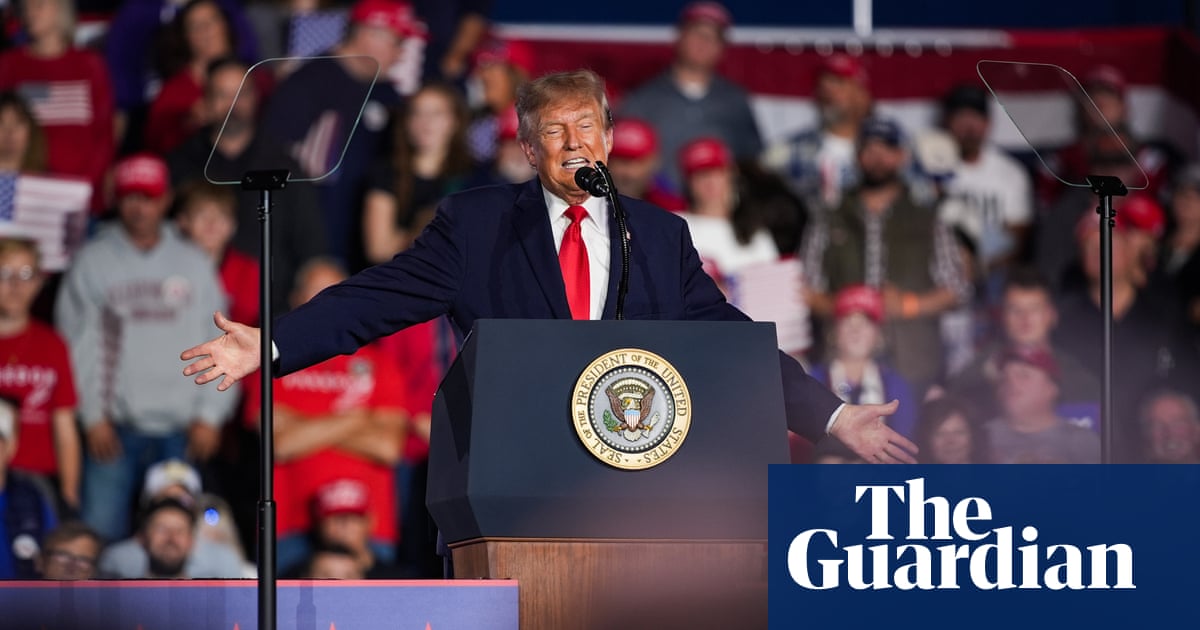
President Donald Trump launched a sharp critique of Abdul El-Sayed, the Democratic nominee for Senate in Michigan, during a campaign rally in Iowa on Sunday. Repeatedly referring to El-Sayed as a “jihadist,” Trump sought to frame the progressive candidate as a threat to national security and social stability. The comments were part of a broader effort to influence the outcome of the Michigan race, which is viewed as pivotal in determining which party will control the Senate after the midterm elections.
Trump’s remarks included brazenly racist undertones, suggesting that if El-Sayed were elected, Congress would need to install a “special metal detector” for him. He urged voters not to support what he described as a “lunatic” who wanted to destroy the country. These attacks come amid heightened scrutiny of the Michigan contest, where El-Sayed has faced significant opposition from both Republicans and some Democrats following his primary victory over Haley Stevens.
The president also took time to praise Haley Stevens for her recent decision to endorse Republican Mike Rogers. Trump described Stevens’ defection as an “incredible thing” and expressed hope that she might join the Republican Party. He contrasted Rogers favorably with El-Sayed, using metaphorical language to describe the Republican candidate as “apple pie.” Trump argued that the country needed more of what Rogers represented and less of what he characterized as communist or jihadist influences.
Trump’s intervention in the Michigan race underscores the national significance of the contest. With the Senate control hanging in the balance, every endorsement and attack carries weight. The president’s comments aim to mobilize Republican voters while discouraging support for El-Sayed among independents and moderate Democrats. His characterization of El-Sayed as a “jihadist” aligns with broader rhetoric used by some conservative figures to discredit Muslim candidates.
The timing of Trump’s remarks coincides with Stevens’ high-profile endorsement of Rogers, which has drawn condemnation from Democratic leaders. Senate Minority Leader Chuck Schumer criticized Stevens’ decision, highlighting the unusual nature of a Democrat supporting a Republican opponent so close to an election. Trump, however, embraced the move, seeing it as an opportunity to weaken the Democratic ticket in a key state.
Trump’s rally in Iowa also served as a platform for him to emphasize his own influence on the elections. He noted that he had been traveling extensively for campaign events rather than watching football, joking that voters should “pretend I’m on the ballot.” This statement reflects his ongoing role as a central figure in Republican politics, even though he is not running for office himself.
The Michigan race has become a flashpoint for broader ideological battles within American politics. Issues such as foreign policy, particularly regarding Israel and Gaza, have played a significant role in shaping voter perceptions. Stevens’ demand that El-Sayed disavow an ad linking inflation to US support for Israel highlighted these divisions. Trump’s comments amplify these tensions, framing the election as a choice between safety and chaos.
As the election approaches, the impact of Trump’s attacks on El-Sayed remains uncertain. While his rhetoric may energize Republican bases, it could also galvanize Democratic voters who view such language as divisive or inflammatory. The Michigan Senate race continues to draw national attention, with both sides working to secure every possible advantage in the final days before voting.
Trump’s involvement in the contest illustrates the interconnectedness of local and national politics. His ability to shape narratives across state lines demonstrates his enduring influence on the Republican Party. Whether his comments will sway undecided voters or harden existing positions remains to be seen, but they have undoubtedly added another layer of complexity to an already contentious race.
Sources behind this briefing
Go to the original reporting
- The Guardian US Politics↗Trump launches racist diatribe against Abdul El-Sayed at Iowa rally