The short version
- The agreement formalizes an expanded U.S. military footprint in Greenland to bolster NATO defenses in the North Atlantic and Arctic regions.
- Denmark asserts the pact benefits international security while maintaining Greenland’s status as part of the Danish realm, countering fears of a forced annexation.
- U.S. officials plan to construct two major new bases, significantly increasing troop levels from the current small contingent at Pituffik Space Base.
A newly signed security agreement among the United States, Denmark, and Greenland has emerged as a diplomatic resolution to months of heightened tension regarding the strategic Arctic territory. The pact, finalized last week, aims to reinforce defense capabilities across the North Atlantic and NATO’s northern flank while explicitly preserving Greenland’s political affiliation with Denmark. Danish officials have framed the arrangement as a stabilizing measure that addresses American security concerns without compromising the sovereignty or self-determination of the island’s population.
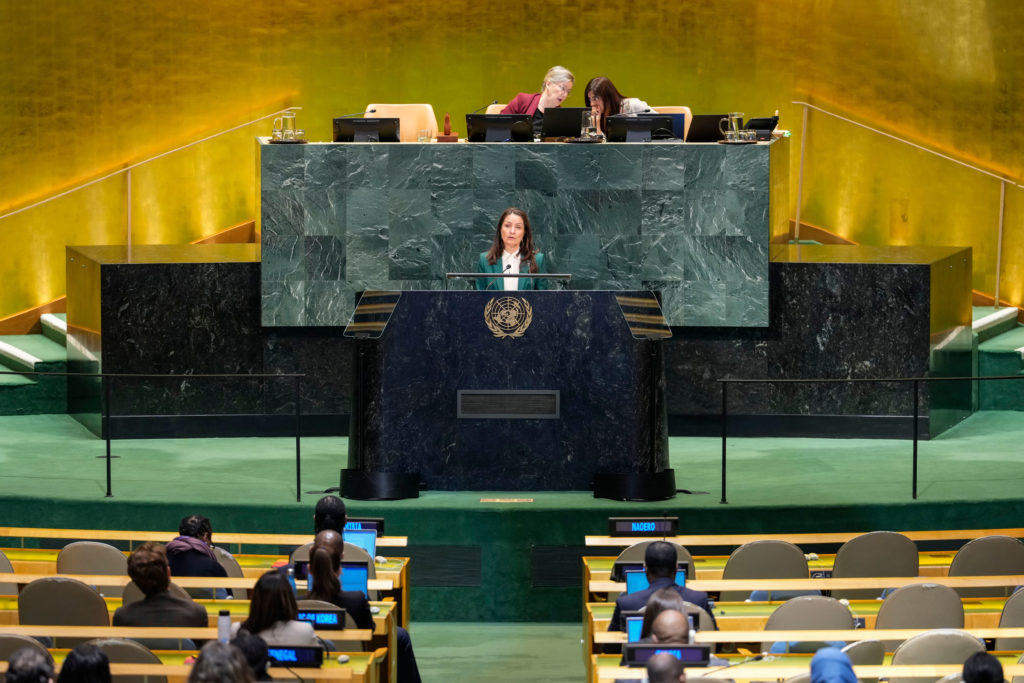
Christina Lassen, Denmark’s ambassador to the United Nations, addressed world leaders at the annual General Assembly gathering to highlight the broader implications of the deal. She characterized the agreement as beneficial for Greenland, Denmark, the United States, and the wider European security architecture. According to Lassen, the pact strengthens international peace by solidifying the defense perimeter in a region increasingly viewed as critical to global stability. Her remarks suggested that diplomatic consultation remains a viable path forward even amid complex geopolitical pressures.
The agreement directly responds to persistent pressure from the White House regarding U.S. access to Greenland’s resources and strategic location. President Donald Trump has repeatedly expressed interest in acquiring the territory, arguing that American control is necessary to prevent rival powers such as Russia or China from establishing a foothold. During his second term, these statements escalated into threats of seizure, which alarmed Danish Prime Minister Mette Frederiksen. She warned that a forced takeover would effectively dismantle the Atlantic alliance, citing the fundamental incompatibility between NATO’s cooperative framework and unilateral annexation.
Negotiations behind closed doors involved representatives from all three parties and focused on balancing U.S. military objectives with Greenlandic autonomy. The resulting compromise allows for an expanded American presence while keeping the island within the Danish realm. Importantly, the terms of the agreement are designed to remain valid even if Greenland eventually pursues full independence. This provision offers a layer of continuity that may reassure local leaders and residents who have expressed anxiety over potential resource exploitation or cultural erosion under direct U.S. administration.
The United States has maintained a military presence in Greenland since 1945, following World War II. However, the scale of operations has diminished significantly over the decades. What was once a network of seventeen bases hosting thousands of personnel has been consolidated into a single remote installation known as Pituffik Space Base in the northwest. Today, approximately two hundred soldiers operate from this site, supporting critical functions including missile warning systems, missile defense coordination, and space surveillance for both American and NATO forces.
Under the new framework, the U.S. military footprint is set to grow substantially. President Trump announced plans to immediately initiate the development of a large-scale presence in appropriate locations across the island. This includes the construction of two major military bases, marking a significant departure from the current minimalist operational model. The expansion reflects a strategic shift toward hardening Arctic defenses against emerging threats, though it also raises questions about the environmental and social impact on local communities.
Despite the diplomatic breakthrough, uncertainty remains regarding the long-term political trajectory of Greenland. While the agreement eases immediate tensions over sovereignty, it does not resolve underlying debates about self-governance and resource management. Local residents, numbering roughly 56,000, have voiced concerns about becoming a target for foreign extraction interests. The pact attempts to mitigate these fears by anchoring U.S. involvement in defense rather than economic acquisition, but the distinction may blur as infrastructure projects proceed.
The international community has watched these developments closely, recognizing Greenland’s growing importance in Arctic geopolitics. By securing a multilateral agreement, the United States and Denmark have avoided a potential rift within NATO that could have weakened collective security arrangements. The deal demonstrates that even contentious disputes can be managed through negotiation, provided all parties prioritize alliance cohesion over unilateral ambition. As construction begins on new facilities, the focus will shift to implementation and monitoring compliance with agreed-upon terms.
Looking ahead, the success of this arrangement will depend on sustained cooperation between Washington, Copenhagen, and Nuuk. The agreement provides a temporary reprieve from acquisition rhetoric but does not eliminate strategic competition in the Arctic. Other nations may view the expanded U.S. presence as a provocation, potentially accelerating their own military preparations. For now, however, the pact stands as a testament to diplomatic resilience in an era of heightened great-power rivalry.
The resolution also sets a precedent for handling territorial disputes within allied frameworks. By integrating Greenland’s interests into the security calculus, the parties have acknowledged that local consent matters even in matters of national defense. This approach may influence future negotiations involving other semi-autonomous regions or contested zones. As the world adapts to shifting power dynamics, the Greenland pact offers a model for balancing security needs with respect for political autonomy.
Sources behind this briefing
Go to the original reporting
- PBS NewsHour↗At UN, Denmark says Greenland pact benefits all parties involved