The short version
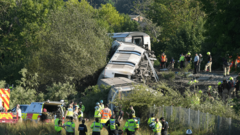
- A passenger train carrying approximately 150 people derailed near Lewes in East Sussex on Thursday afternoon, resulting in two serious injuries and numerous minor ones.
- Emergency services declared a major incident as three carriages overturned, requiring technical rescue teams to evacuate trapped passengers from the wreckage.
- Rail services across several routes remain suspended while investigators assess the scene, causing significant delays for travelers heading to Gatwick Airport and other destinations.
A passenger train operating between London Victoria and Eastbourne derailed in East Sussex on Thursday afternoon, prompting a large-scale emergency response and the declaration of a major incident. The accident occurred shortly before 4:00 p.m. local time near Lewes railway station, involving a Southern Rail service that was carrying approximately 150 people at the time of the crash. British Transport Police confirmed that all passengers have been safely evacuated from the train, though the event has caused substantial disruption to rail networks in the region.
Initial reports indicate that two individuals sustained serious injuries and were transported to major trauma centers for treatment. A further eighteen to nineteen passengers suffered less severe injuries, with many receiving medical attention at the scene before being moved to a local community center or nearby hospitals. The South East Coast Ambulance Service coordinated the triage efforts, while University Hospitals Sussex NHS confirmed it was responding to the emergency. Passengers described chaotic conditions inside the carriages, noting that some individuals were initially trapped as the train came to rest.
Witnesses recounted a sudden and violent sequence of events leading up to the derailment. Several passengers reported feeling the train rock violently before jumping vertically, followed by the deployment of emergency brakes that threw occupants forward. One passenger described seeing smoke and dust pouring into their carriage after the train skidded to a halt. Images from the scene showed three of the eight carriages lying on their sides, with some having tumbled down an embankment into adjacent fields. Others remained upright but were damaged, forcing passengers to climb onto the roofs or exit through broken windows to escape.
The physical aftermath presented significant challenges for rescue teams. East Sussex Fire and Rescue Service dispatched ten fire engines, command support units, and technical rescue specialists to the site. Emergency workers assisted passengers who were disoriented or injured, helping them navigate away from the tracks toward safety. Local residents also joined the effort, with some nearby homeowners guiding shocked travelers to community hubs. The atmosphere was described as tense but cooperative, with passengers checking on one another while awaiting official assistance.
Network Rail and Southern Rail have suspended all train services through the affected area, including routes connecting Brighton, Haywards Heath, Seaford, and Eastbourne to Lewes. Commuters were advised to avoid the region entirely or allow for extended travel times. For those traveling to Gatwick Airport, operators recommended adding at least 150 minutes to journey plans or seeking alternative transportation methods. Rail replacement buses were requested for key stations, but capacity constraints meant many travelers had to rely on personal vehicles or other transit options.
The cause of the derailment remains unknown as investigators begin their work. The Rail Accident Investigation Branch has launched a formal inquiry into the incident, with representatives already on site to examine the wreckage and gather evidence. Network Rail stated it would be inappropriate to speculate on the reasons behind the accident before the investigation concludes. British Transport Police emphasized that they are supporting the inquiry process and will release further details only when verified information becomes available.
Political figures have expressed concern over the incident. Heidi Alexander, the transport secretary, acknowledged the severity of the situation and thanked emergency responders for their swift action. James MacCleary, the Member of Parliament for Lewes, stated he was in contact with authorities to monitor developments and support those affected. He urged anyone worried about missing persons to reach out to emergency services directly rather than waiting for public updates.
Travelers in the region face continued uncertainty as cleanup operations proceed. Network Rail indicated that major disruptions would likely persist until at least 10:00 p.m., with no immediate timeline for full service restoration. The incident underscores the complexity of managing rail emergencies, particularly when multiple carriages are involved and passenger evacuation requires specialized equipment. As investigations continue, authorities aim to balance transparency with the need to preserve evidence for determining the root cause of the derailment.
The broader implications for regional transit remain unclear until the inquiry findings are published. Until then, passengers are encouraged to check official channels for real-time updates on service resumption. The incident has highlighted the importance of robust emergency protocols and coordination between rail operators, police, ambulance services, and fire departments. While no fatalities were reported, the serious injuries sustained by two individuals underscore the potential dangers inherent in high-speed rail travel when mechanical or track failures occur.
In the coming days, attention will shift from immediate rescue efforts to long-term recovery and accountability. The Rail Accident Investigation Branch typically takes months to complete its analysis, during which time technical data, witness statements, and physical evidence will be scrutinized. For now, the focus remains on supporting injured passengers and their families while ensuring that rail infrastructure is safe for future use. The incident serves as a stark reminder of the vulnerabilities within transportation systems and the critical role of emergency preparedness.
Sources behind this briefing
Go to the original reporting
- BBC News↗Two seriously hurt as passenger train derails in East Sussex
- The Guardian World↗Two seriously injured after passenger train derails near Lewes in East Sussex

