The short version
- Governor Greg Abbott has ordered a temporary halt on new data center connections to the Texas power grid to assess potential risks to reliability and local communities.
- The Electric Reliability Council of Texas reports an interconnection queue containing over 1,800 projects, with data centers accounting for roughly 90 percent of these requests.
- The directive mandates detailed audits regarding electricity consumption, water usage, financial incentives, and community impacts, though it excludes projects generating their own on-site power.
Governor Greg Abbott has issued a directive pausing new data center connections to the Texas electrical grid, marking a significant shift in the state’s aggressive pursuit of artificial intelligence infrastructure. The order, announced in early August, instructs regulators at the Public Utility Commission of Texas and grid operators at the Electric Reliability Council of Texas (ERCOT) to conduct a comprehensive verification and audit of all data center projects currently advancing through the interconnection process. This move comes less than a year after Abbott declared Texas the epicenter of AI development, signaling a recalibration of priorities as the state confronts the physical limits of its energy infrastructure.
The pause is designed to remain in effect until developers provide detailed information regarding their projects’ potential impacts on both the grid and surrounding communities. ERCOT, which operates an independent power grid serving most of Texas, faces an unprecedented backlog. The current interconnection queue includes more than 1,800 projects representing over 474 gigawatts of requested capacity. This volume exceeds five times the state’s record peak electricity demand. Approximately 90 percent of these connection requests originate from data centers, creating a scenario where paper-based demand threatens to overwhelm actual grid capabilities.
Abbott’s office stated that such unprecedented load growth could endanger the reliability and stability of the Texas electric grid. While many projects in the queue may never materialize due to various logistical or financial hurdles, ERCOT forecasts suggest that data center demand, combined with other factors, could drive statewide electricity consumption to double current records by 2032. The state has long courted data center development through cheap land, abundant energy resources, tax breaks, and fewer regulations, positioning Texas to surpass Virginia as the largest U.S. data center market. However, the sheer scale of recent AI-driven investment has introduced new vulnerabilities.
The new directive requires audits that delve into specific operational details of each project. Developers must disclose how much their facilities depend on the ERCOT grid for power, alongside projections for annual and peak electricity consumption. The order also demands transparency regarding the extent to which individual projects rely on state financial assistance, as well as details about ownership and controlling interests. This scrutiny aims to ensure that public resources are not disproportionately supporting private ventures without adequate oversight or community benefit.
Water usage has emerged as a critical concern in the governor’s directive. Abbott directed regulators to investigate how data center cooling systems and water consumption draw upon local supplies needed by residents. Communities like Corpus Christi have already struggled with prolonged droughts, exacerbated by climate change and industrial operations. A Sierra Club report analyzing federal data revealed that while Texas data centers directly used 8 billion gallons of water for cooling in 2024, the broader energy sector consumed significantly more. Natural gas plants used 56 billion gallons, coal plants 34 billion gallons, and nuclear plants 26 billion gallons. Researchers note that data centers often rely on water-intensive power generation sources, meaning their indirect water footprint may be far larger than direct cooling usage suggests.
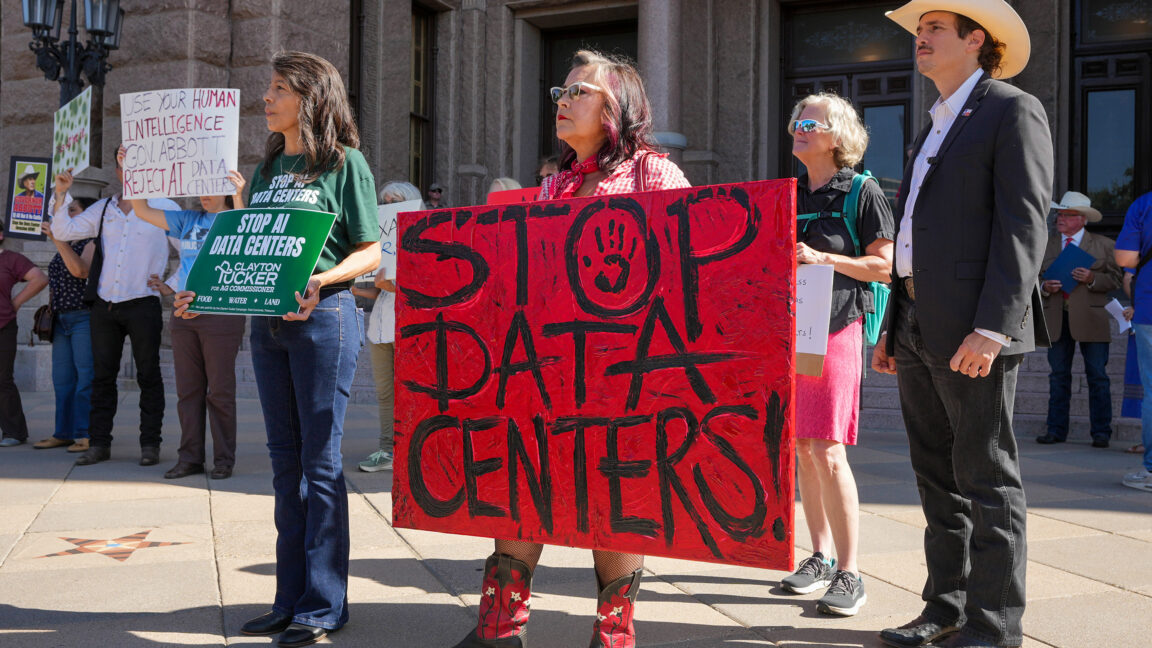
The directive also seeks to increase scrutiny of measures taken by data centers to mitigate impacts on neighboring property owners and communities. This includes requirements for noise mitigation, light controls, setbacks, traffic improvements, and emergency response coordination. These provisions aim to address local quality-of-life concerns that have arisen as large-scale facilities are built near residential areas. However, the order notably omits mention of local air pollution and greenhouse gas emissions associated with data center operations.
Critics point out that AI companies have utilized a local permit loophole in Texas to install gas-powered turbines and backup diesel generators on-site at new data center campuses. These installations often bypass extensive environmental reviews or community outreach, as reported by nonprofit newsroom Floodlight. The absence of emissions scrutiny in Abbott’s directive leaves a gap in the regulatory response, particularly given the environmental costs of powering these facilities. The pause does not apply to data center projects that are building their own on-site power generation, allowing those entities to proceed without interruption.
The financial implications of the data center boom are also significant. A tax break originally passed with bipartisan support in 2014 has ballooned into more than $1 billion in annual tax breaks for data center developers. The Texas Tribune reported that the state government estimates it could lose $3.2 billion in sales tax revenue over the next two years due to these exemptions. As the state navigates this pause, officials must balance the economic benefits of attracting AI investment with the need to maintain grid stability and protect local resources.
What comes next remains uncertain as regulators begin the audit process. The comprehensive verification will likely take time, potentially delaying projects that have already invested heavily in planning and construction. Developers will need to provide robust data on their energy needs, water usage, and community impacts to resume progress. For Texas, this pause represents a critical juncture in managing the rapid expansion of AI infrastructure, forcing a reckoning with the physical and social costs of technological growth.
The situation underscores the broader challenges facing regions hosting large-scale data center developments. As demand for computing power surges, the strain on local infrastructure becomes increasingly apparent. Texas’ experience may serve as a cautionary tale for other states considering similar incentives. The outcome of this audit process will influence not only the trajectory of AI development in Texas but also how other jurisdictions approach the intersection of technology, energy, and community welfare.
Sources behind this briefing
Go to the original reporting
- Ars Technica↗Texas halts data center connections to power grid amid overwhelming demand
