The short version
- Justin Pearson won the Democratic primary for Tennessee's ninth congressional district, positioning himself as a progressive challenger to established political norms.
- His campaign platform connects opposition to billionaire-owned datacenters with broader critiques of war profiteering and systemic inequality in Memphis.
- The victory occurs amid heightened tensions regarding federal law enforcement presence in the city and ongoing legal battles over environmental pollution.
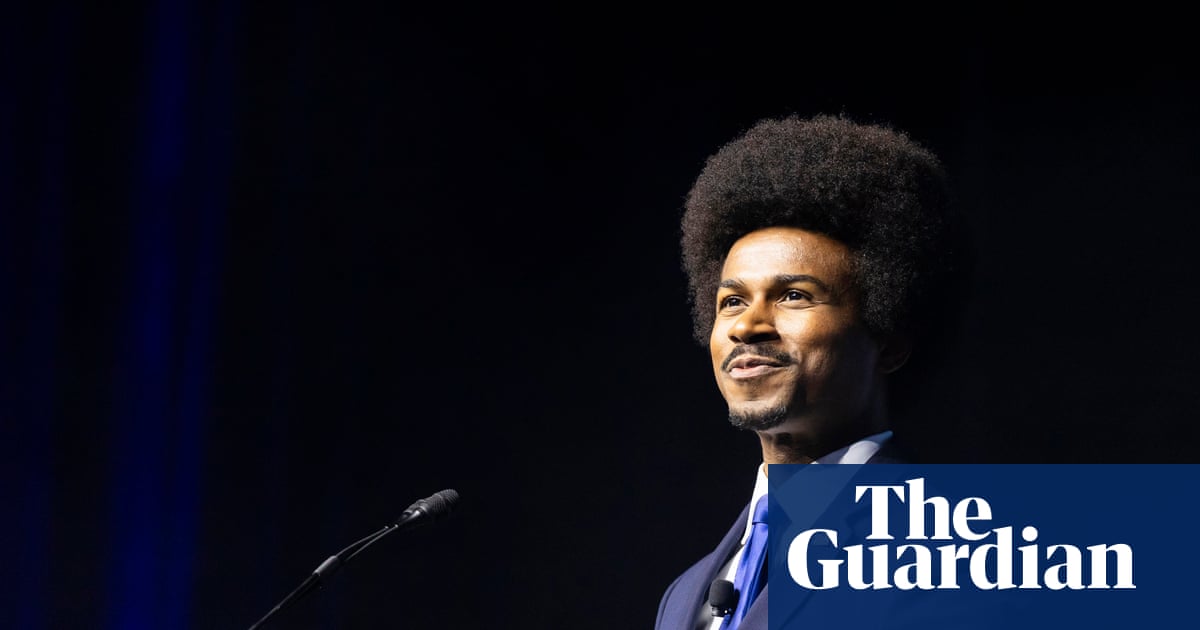
Justin Pearson has secured the Democratic nomination for a pivotal congressional seat in Tennessee, emerging victorious in a primary that highlighted growing voter appetite for progressive populism. At thirty-one years old, Pearson represents a new wave of candidates who have built their political careers on direct community organizing and confrontational stances against corporate power and federal authority. His win places him in the general election contest for a district that has undergone significant demographic and political shifts following recent redistricting efforts.
Pearson’s rise to national prominence began three years ago when he was expelled from the state legislature alongside two other lawmakers, collectively known as the Tennessee Three. They were removed from the capitol during a protest demanding stricter gun control measures in the wake of a deadly school shooting. Rather than diminishing his political standing, the expulsion galvanized support among constituents who viewed the action as a necessary stand for public safety and democratic accountability. This history of civil disobedience has become a central pillar of his current campaign narrative.
The core of Pearson’s platform addresses what he describes as an intersection between environmental degradation and military-industrial complex profits. He argues that the same entities benefiting from war also profit from polluting communities through infrastructure projects like datacenters. Specifically, Pearson has led local opposition to facilities built by Elon Musk’s xAI in south Memphis. These centers rely on soot-producing turbines located in neighborhoods already burdened with environmental hazards, raising concerns about air quality and public health among residents.
Legal challenges to these datacenters have faced significant hurdles. While the NAACP and various environmental advocacy groups have pursued court orders to halt turbine usage, the Department of Justice has intervened to support the projects. Officials cited national security needs related to Operation Epic Fury as justification for allowing the facilities to operate despite local opposition. This federal intervention has fueled Pearson’s argument that democratic processes are being overridden by executive priorities that disregard community well-being.
Tensions in Memphis have escalated further due to increased federal law enforcement presence. Last September, the Trump administration established a taskforce involving thirteen federal agencies, deploying hundreds of agents into the city under the premise of combating violent crime. Critics point out that local police had recently reported crime rates hitting a twenty-five-year low, contradicting the administration’s characterization of the situation. In the ten months since the deployment began, four Black men were killed by federal agents, sparking outrage and large-scale rallies.
Pearson has positioned himself at the forefront of resistance to these federal actions. A July rally in support of his campaign drew over a thousand attendees and featured appearances from prominent progressive lawmakers including Alexandria Ocasio-Cortez, Summer Lee, and Ayanna Pressley. The event underscored the national attention Pearson’s local struggles have garnered, framing his candidacy as part of a broader movement against what supporters describe as systemic injustice and disproportionate policing in minority communities.
The district Pearson seeks to represent was historically Tennessee’s sole majority Black district before being fragmented by redistricting maps approved after the Supreme Court weakened key provisions of the Voting Rights Act. This restructuring is widely viewed as an effort to dilute Black voting power, particularly in Southern states, as part of a broader strategy to maintain congressional control. Pearson’s campaign emphasizes restoring political voice to communities that have been marginalized by these structural changes.
Financially, Pearson’s campaign mirrors the small-donor model popularized by recent progressive victories across the country. With an average donation of just thirty-one dollars, his fundraising strategy relies heavily on grassroots support rather than large institutional contributions. This approach aligns him with other young progressive candidates such as Abdul El-Sayed in Michigan and Darializa Avila Chevalier in New York, who are also challenging established Democratic leadership through robust organizing efforts.
Endorsements from figures like Bernie Sanders and the Justice Democrats organization highlight Pearson’s alignment with the left flank of the party. Supporters argue that voters are increasingly willing to challenge older political establishments in favor of candidates who demonstrate boldness on contentious issues. As the midterm election approaches, Pearson’s ability to unify disparate concerns around voting rights, environmental justice, and anti-war sentiment will be critical in determining whether this momentum translates into a general election victory.
Looking ahead, the campaign faces the complex task of navigating a polarized political landscape while addressing immediate local grievances. The interplay between federal policy decisions and community-level impacts continues to shape voter priorities in Tennessee. Pearson’s success in the primary suggests that his message resonates with a significant portion of the electorate, but the general election will test whether this support can withstand opposition from well-resourced incumbents and shifting national political dynamics.
Sources behind this briefing
Go to the original reporting
- The Guardian US Politics↗Tennessee’s Justin Pearson takes on America’s most contentious issues