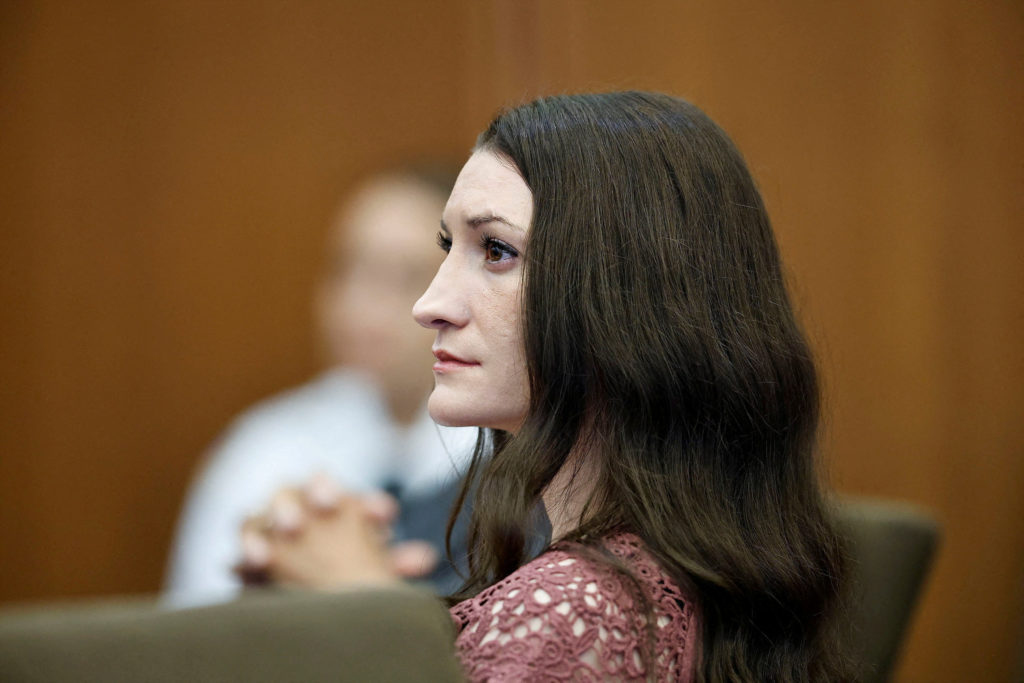
The short version
- Christa Pike is in critical condition at a hospital after surviving two lethal injections intended to execute her for a 1995 murder conviction.
- Tennessee Governor Bill Lee has paused all executions through the end of 2026 and launched an independent investigation into the botched procedure.
- Defense attorneys describe the event as cruel and torturous, citing multiple failed IV attempts and a lack of immediate medical intervention after the inmate remained conscious.
Tennessee has suspended all capital punishment for the remainder of the year following a failed execution attempt that left death row inmate Christa Pike alive and in critical condition. Governor Bill Lee announced the pause on Thursday, describing the events of Wednesday night as deeply disturbing and tragic. The state’s highest executive ordered an independent review to determine why the lethal injection protocol failed so catastrophically, noting that the public deserves answers regarding the breakdown in procedure.
Pike, 50, was convicted in 1996 for the 1995 murder of her classmate, Colleen Slemmer. She had spent three decades on death row and was scheduled to become the first woman executed in Tennessee in more than two centuries. The execution attempt proceeded only after the U.S. Supreme Court lifted a federal stay earlier that day, allowing the state to move forward despite last-minute legal challenges concerning whether Pike’s history of childhood sexual abuse was adequately considered during her original sentencing.
According to defense attorneys, the execution team struggled for approximately an hour to establish an intravenous line in Pike’s arm. Randy Spivey, one of Pike’s lawyers, reported that at least seven needles were used, with one appearing bent upon removal. After failing to secure a reliable vein, the team administered two separate doses of pentobarbital, a sedative typically used as the sole drug in Tennessee’s lethal injection protocol. Despite receiving double the intended dosage, Pike remained alive and breathing minutes later.
Witnesses described a chaotic scene behind closed curtains where observers were kept in darkness while medical professionals allegedly delayed providing life-saving care. Spivey stated that no one knew when or if medical assistance began after it became clear the inmate was still conscious. He characterized the ordeal as inefficient, cruel, and torturous, arguing that the state violated Pike’s constitutional right to be free from cruel and unusual punishment by subjecting her to unnecessary agony.
Pike was transported via ambulance to an off-site medical facility where she continues to receive life-saving treatment. Her legal team has not provided a detailed prognosis but confirmed she is alive. The attorneys are now seeking a commutation of her sentence, though they also indicated they are exploring other legal avenues. They emphasized the need for Pike to recover sufficiently to have input into her own legal strategy moving forward.
The Tennessee Department of Correction defended its actions, asserting that it followed every step of the state’s lawful execution protocol approved by the attorney general’s office. Officials stated that the chemical used has historically been effective and that their guidelines do not permit additional procedures beyond what was carried out. However, Robin Maher of the Death Penalty Information Center called the incident the worst botched execution in the modern era, attributing the failure to extreme secrecy and a refusal by officials to accept responsibility.
This event marks the second failed execution attempt in Tennessee this year. In May, officials aborted the lethal injection of Tony Carruthers after staff could not find a vein for over an hour. The political fallout from Pike’s survival is already intensifying, with Republican Senator Marsha Blackburn calling for a return to the electric chair as a more reliable method. Her Democratic opponent, Jerri Green, criticized that proposal and pledged to impose a moratorium on all future executions if elected governor.
Governor Lee has not yet identified who will lead the independent inquiry, stating only that the investigation will be thorough and take time. State lawmakers, including House Speaker Cameron Sexton, have also announced plans to investigate potential alternatives, such as changing medications or expanding execution methods. The pause in executions will affect at least one other scheduled case, that of Gary Sutton, whose planned December execution is now indefinitely delayed pending the outcome of the review.
Sources behind this briefing
Go to the original reporting
- BBC News↗Christa Pike in critical condition after surviving two lethal injections, lawyer says
- The Guardian World↗Tennessee suspends executions as Christa Pike’s lawyer says failed lethal injection leaves her in critical condition
- The Guardian US Politics↗Death row inmate Christa Pike survives two lethal injections in Tennessee - The Latest