The short version
- Christa Pike remains alive in critical condition after Tennessee's primary and secondary execution protocols failed to induce death.
- State contingency plans vary significantly, with some allowing multiple drug doses or alternative IV sites while others lack clear instructions for prolonged survival.
- Secrecy surrounding execution teams and drug procurement complicates public oversight, though media access remains a legal battleground in several jurisdictions.
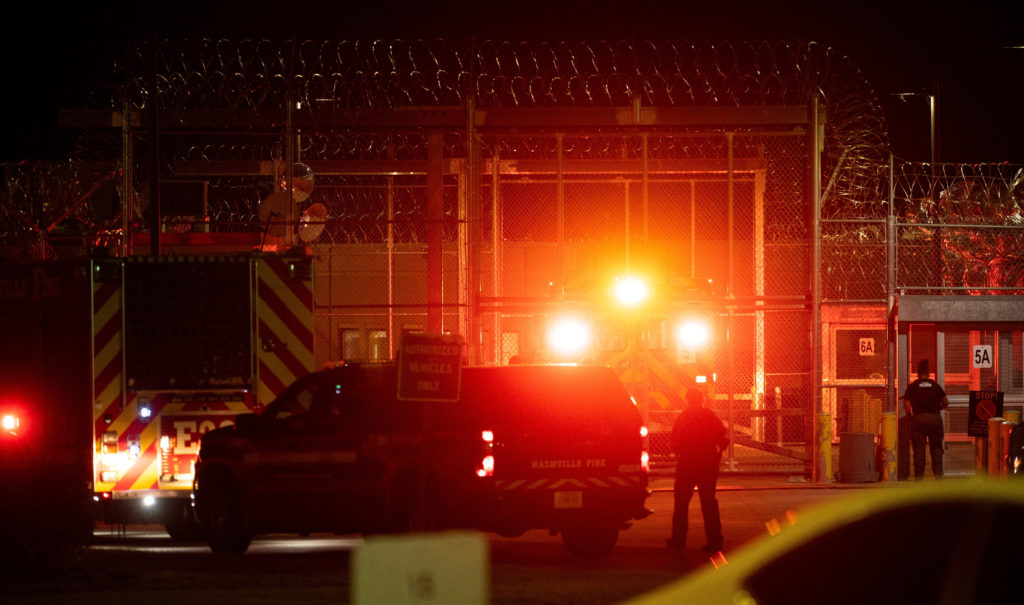
The administration of the death penalty in Tennessee has drawn renewed scrutiny following the failed execution attempt on Christa Pike. Despite prison officials reviewing and approving a detailed backup plan for the procedure, both the primary method and the contingency measures proved ineffective. As of Thursday, twenty-four hours after the initial attempt, Pike remained alive but was hospitalized in critical condition with an uncertain prognosis. The specific mechanical or medical reasons for the failure have not yet been determined by authorities.
Tennessee’s protocol includes two layers of redundancy designed to prevent such outcomes. Inmates are typically fitted with two intravenous lines, allowing execution teams to switch sites if the first fails. Medical personnel on site are also authorized to insert a central line into major blood vessels in the groin, neck, or armpit if peripheral access is compromised. Additionally, the state permits a second dose of pentobarbital if the condemned individual remains alive five minutes after the initial administration. Officials confirmed that a second dose was administered to Pike, though it remains unclear whether this was delivered through the primary or backup intravenous site.
Intravenous failures are not uncommon in execution procedures. Needles and catheters may become dislodged, fail to remain properly placed within veins, or cause vein rupture, leading to fluid leakage into surrounding tissue. These technical difficulties have led to aborted executions in Tennessee earlier this year when officials could not locate a suitable vein for a secondary line. Similar logistical challenges occurred in Idaho in 2024, where the execution of Thomas Eugene Creech was called off after eight unsuccessful attempts to establish viable intravenous access.
Contingency planning varies widely among the twenty-seven states that retain capital punishment. Alabama utilizes a three-drug protocol that allows for a backup dose of the sedative midazolam if unconsciousness is not achieved. However, its guidelines do not specify procedures for situations where an inmate survives the subsequent administration of rocuronium bromide and potassium chloride. In contrast, Idaho has developed extensive contingency plans covering nearly every step of the process, including allowances for up to three full doses of any approved drug cocktail. Idaho has also designated the firing squad as its primary execution method, with protocols allowing a second volley of shots if necessary.
Historical precedents illustrate the potential severity of procedural failures. In 2014, an execution in Arizona involving Joseph Rudolph Wood lasted nearly two hours and required fifteen injections of lethal drugs. Witnesses reported that Wood gasped more than six hundred times during the process. Such incidents highlight the risks inherent in complex medical procedures performed under high-pressure conditions with limited transparency.
Public understanding of these procedures is often hindered by strict secrecy laws governing capital punishment. In many states, the identities of execution team members, the sourcing of lethal drugs, and specific events within the death chamber are shielded from public view. While most death penalty states permit a small number of media representatives to witness executions and report on them, access is not universal. Indiana and Wyoming explicitly ban press presence in the witness room. A federal appellate court recently upheld Indiana’s ban despite a lawsuit filed by a coalition of news organizations seeking greater transparency.
Even in states that allow media witnesses, such as Idaho, journalists have pursued legal avenues to expand their access. News organizations have sued for the right to observe procedures via closed-circuit video or other means to ensure accurate reporting. The tension between state secrecy and public accountability remains a central issue in the ongoing debate over capital punishment. As states continue to refine their protocols, the gap between planned contingencies and actual outcomes persists.
The case of Christa Pike serves as a stark reminder of the complexities involved in carrying out the death penalty. While states invest in backup plans to ensure efficiency and minimize suffering, technical failures can still occur. The lack of standardized procedures across jurisdictions means that each state operates with different levels of redundancy and oversight. As legal challenges regarding media access continue, the public’s ability to fully understand how these ultimate punishments are administered remains limited.
Future developments in Pike’s case may provide further insight into the specific failures encountered by Tennessee officials. Until then, the incident underscores the broader challenges facing states that maintain capital punishment. The variability in protocols, combined with the inherent risks of medical procedures and the constraints of secrecy, creates a landscape where even well-planned contingencies can falter. This reality continues to fuel debates about the efficacy and ethics of state-sanctioned executions.
As other states review their own execution protocols, the lessons from Tennessee’s recent experience may influence policy adjustments. Whether through increased transparency, revised medical guidelines, or alternative methods, the goal remains consistent: to ensure that when the state carries out its most severe penalty, it does so with precision and accountability. The current situation highlights the need for rigorous examination of these processes to address both practical failures and public concerns.
Sources behind this briefing
Go to the original reporting
- PBS NewsHour↗Many states have backup execution plans, but failures still happen