The short version
- The tambaqui fish acts as a biological early-warning system for climate disruption in the Amazon basin.
- Laboratory simulations show that rising temperatures deplete oxygen levels, threatening fish physiology and forest seed dispersal.
- Val’s recognition with the Le Cren Medal marks a shift toward prioritizing tropical ecological research in global science.
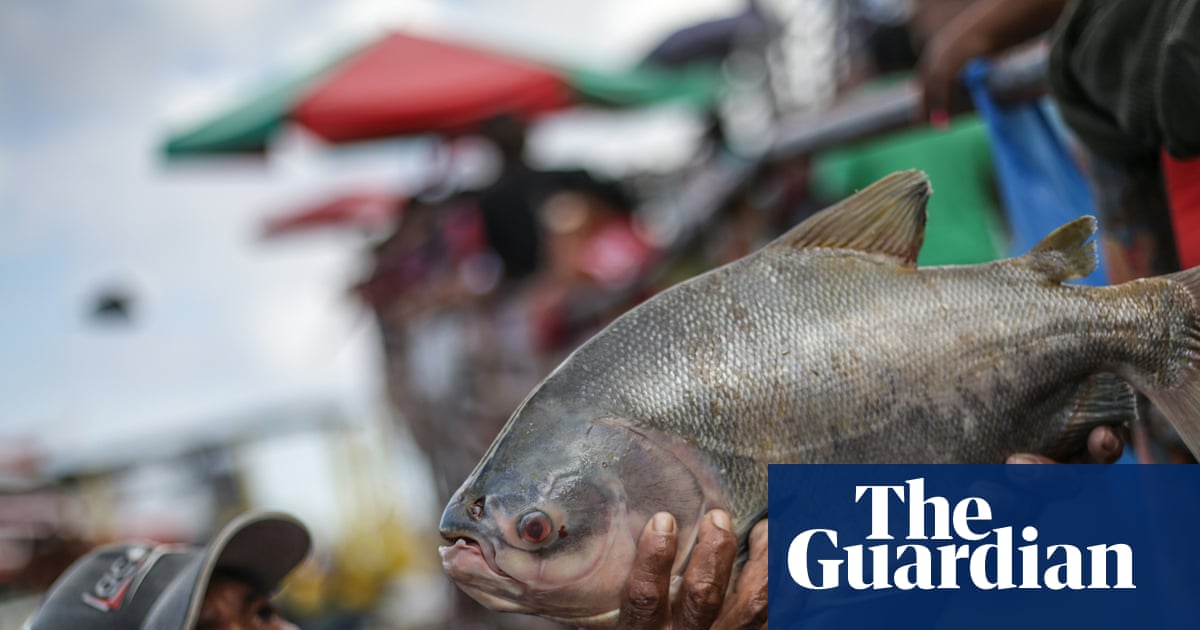
The Amazon rainforest is experiencing measurable shifts in its aquatic ecosystems, driven by rising temperatures and changing oxygen levels. Research led by Adalberto Luis Val, an ecophysiologist at the National Institute for Amazonian Studies, identifies the tambaqui fish as a critical indicator species for these changes. Much like canaries were used to detect toxic gases in coal mines, the behavior and health of this large freshwater fish provide early signals of environmental stress within the basin.
Val’s work stems from decades of observation in Manaus, where he has studied how tropical aquatic life responds to heat and chemical fluctuations. The tambaqui, scientifically known as Colossoma macropomum, possesses a unique evolutionary adaptation: it can breathe air directly from the surface when water oxygen levels drop. This trait allows the fish to survive conditions that would be lethal to other species, but its increasing reliance on this mechanism signals deteriorating water quality.
Historical climate data for the Amazon basin shows remarkable stability over millions of years, with predictable daily cycles of oxygen saturation. However, since the Industrial Revolution, these patterns have begun to fracture. Val notes that tropical fish are particularly sensitive to changes in heat, humidity, and chemical composition compared to their temperate counterparts. The combination of natural climate variability and human activities, such as deforestation and mining, has pushed many river species to the brink.
To quantify these impacts, Val’s team conducted controlled experiments simulating future climate scenarios projected by the Intergovernmental Panel on Climate Change for the year 2100. The study divided laboratory chambers into mild, medium, and extreme warming conditions, alongside a control group reflecting current baseline data from forest sensors. Results indicated that excessive warming significantly reduces dissolved oxygen in water, causing damage to the vascular systems and metabolism of the fish.
The implications extend beyond aquatic biodiversity. Tambaqui play a vital role in the rainforest’s ecological balance by transporting seeds along river courses. A decline in their population could hinder the forest’s ability to regenerate and recover from disturbances. Val emphasizes that the depletion of this species handicaps the broader resilience of the Amazon ecosystem, linking fish health directly to forest integrity.
Recognition of this research has grown internationally. In July 2026, Val received the Le Cren Medal from the Fisheries Society of the British Isles at the University of Southampton. This award is notable for being the first given to a scholar focusing on tropical aquatic science. It reflects a broader acknowledgment that much of previous climate change research has concentrated on North America and Northern Europe, leaving equatorial regions understudied despite their high biodiversity.
Collaborators note that the tropics face a convergence of threats, including population growth, pollution, and deforestation. Chris Wood, a biologist at the University of British Columbia who works with Val, describes this combination as a perfect storm for ecological disruption. The award serves as a global nod to the importance of studying these regions, where the battle to contain climate impacts is most intense.
Val’s career includes numerous accolades, such as Brazil’s Grand Cross of the National Order of Scientific Merit and the American Fisheries Society Award of Excellence. His extensive publication record, comprising 22 books and approximately 280 scientific articles, underscores the depth of his contribution to understanding tropical physiology. The focus now shifts to applying these findings to conservation strategies that protect both aquatic life and the rainforest canopy.
As climate models predict further warming, monitoring species like the tambaqui offers a practical method for gauging ecosystem health. The research highlights the need for continued investment in tropical science to better understand and mitigate the effects of global climate change on biodiversity hotspots. Val’s work provides a framework for assessing resilience in one of the planet’s most critical environments.
Future studies will likely expand on these findings, exploring how other species respond to similar stressors. The integration of real-time sensor data with biological observation offers a promising approach to tracking environmental changes. By understanding the limits of tropical aquatic life, scientists can better inform policies aimed at preserving the Amazon’s ecological functions for future generations.
Sources behind this briefing
Go to the original reporting
- The Guardian US↗The Amazon’s canary in the coalmine: what a tropical fish can tell us about climate upheaval


