The short version
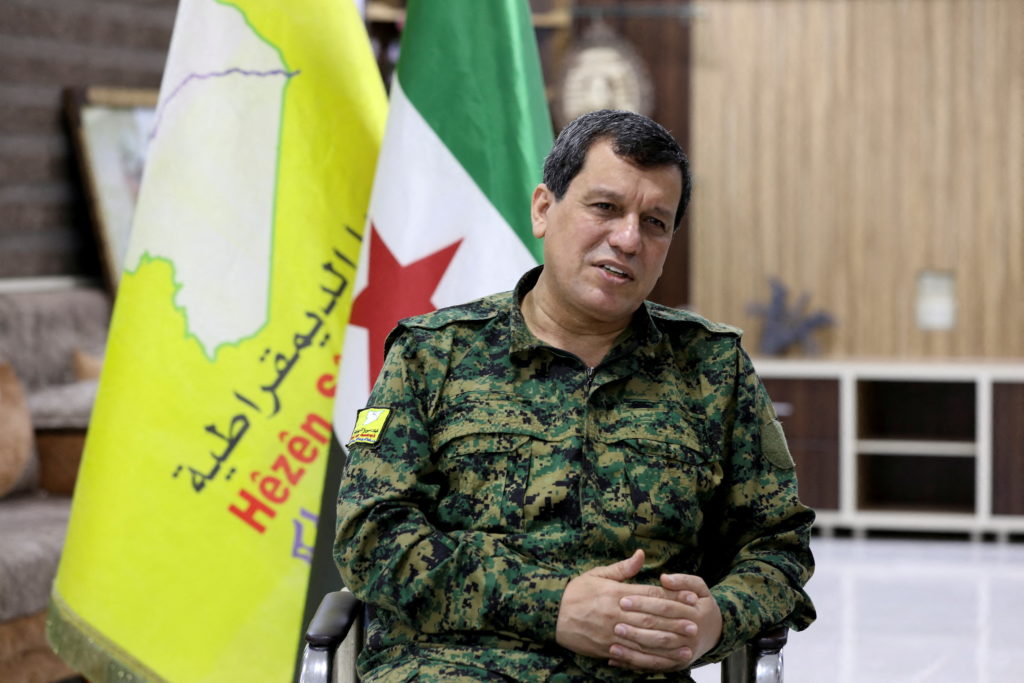
- Mazloum Abdi announced the official dissolution of the Syrian Democratic Forces during a press conference in Damascus.
- The merger follows a January government offensive that stripped the group of most of its territory in northeast Syria.
- Interim President Ahmad al-Sharaa has issued decrees restoring Kurdish citizenship and recognizing their language to facilitate integration.
The Syrian Democratic Forces, a Kurdish-led military coalition that once governed a large autonomous region in the country’s northeast, has officially ceased to exist as an independent entity. Mazloum Abdi, the commander of the group, made the announcement during a news conference at the presidential palace in Damascus on Tuesday. He stated that the organization had completed its merger with the Syrian national army and would no longer operate separately. This development marks the end of a distinct political and military structure that held significant power for over a decade.
The dissolution comes after a period of intense conflict and negotiation. In January, the Syrian government launched an offensive against SDF-held territories, resulting in the loss of most of the group’s control in the northeast. Following these military setbacks, the two sides signed an agreement to integrate the Kurdish forces into the national army. Abdi described the current moment as a transition toward peace and participation in rebuilding the nation, noting that the circumstances surrounding the country have fundamentally changed since the group’s formation.
The SDF previously served as the primary partner for the United States in its campaign against the Islamic State group. However, the geopolitical landscape shifted dramatically after the ouster of former President Bashar al-Assad in December 2024. Washington subsequently established close ties with the new interim government led by Ahmad al-Sharaa, a former leader of an Islamist insurgent group. This realignment reduced the strategic necessity for the SDF’s independent status and paved the way for its absorption into the state apparatus.
Historically, the Kurdish population in Syria faced significant marginalization under the Assad dynasty, which ruled for fifty years. Many Kurds were denied citizenship, and public celebrations of Nowruz, a traditional spring festival, were prohibited. When government forces withdrew from parts of the northeast during the 2011 uprising, Kurdish groups filled the resulting power vacuum. At its peak, the SDF controlled approximately twenty-five percent of Syrian territory, establishing a de facto autonomous zone that operated largely outside Damascus’s direct control.
The path to integration was not without hesitation. Initially, Kurdish leaders were wary of the new post-Assad authorities, particularly because some insurgent groups involved in ousting Assad had previously clashed with the SDF. Turkey, which considers the SDF a terrorist organization due to its links with the Kurdistan Workers’ Party, also viewed the group with hostility. These external pressures and internal doubts about representation complicated early negotiations between Kurdish leaders and the interim government.
To address these concerns and encourage cooperation, Interim President Ahmad al-Sharaa implemented several measures aimed at improving relations with the Kurdish community. During ceasefire talks in January, he issued a decree that strengthened Kurdish rights within the new political framework. This legislation recognized Kurdish as an official language alongside Arabic and designated Nowruz as a national holiday. Additionally, the government restored citizenship to tens of thousands of Kurds in the Hassakeh province who had been stripped of their status during a controversial census in 1962.
Abdi emphasized that al-Sharaa had committed to ensuring Kurds could receive education in their native language, a critical issue for cultural preservation and identity. These concessions appear to have played a role in facilitating the merger agreement. The dissolution of the SDF represents a significant step toward centralizing authority in Damascus, although questions remain about how effectively the new government will uphold these promises regarding representation and rights.
As the SDF ceases operations, the focus shifts to the practical implications of this integration for Syria’s stability. The end of the group’s independent mission removes a major source of fragmentation in the northeast, but it also raises concerns about the future of Kurdish autonomy and security. With a peace process underway and Turkey’s stance evolving, the region faces a complex transition period. The success of this merger will likely depend on whether the interim government can deliver on its commitments to inclusion and equal treatment for all ethnic groups.
The announcement in Damascus signals a definitive close to one chapter of Syria’s prolonged conflict. By merging with the national army, the former SDF fighters are expected to be integrated into the broader security structure under state command. This move aligns with the interim government’s goal of unifying the country after years of division. However, the long-term impact on intercommunal relations and regional dynamics will unfold over time as the new political order takes shape.
Observers will watch closely to see if the restored rights and language protections are implemented consistently across all regions. The dissolution of the SDF does not erase the historical grievances or the complex ethnic tensions that have defined Syria’s recent history. Instead, it places the burden on the Damascus government to demonstrate that its promises of participation and peace translate into tangible improvements for Kurdish citizens. The coming months will test the durability of this new arrangement.
Sources behind this briefing
Go to the original reporting
- PBS NewsHour↗Kurdish-led group in Syria says it has dissolved after merging with the army

