The short version
- Israeli forces struck a civilian vehicle in Beit Jinn, injuring several people and prompting Syria to declare the act a breach of international law.
- The United States criticized the operation as an unnecessary escalation that fails to promote stability in the region.
- Tensions remain high following a previous strike on an airbase near the Turkish border, with conflicting narratives regarding Turkish military involvement.
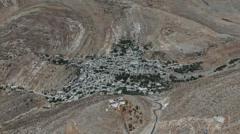
Syrian authorities have formally condemned a recent Israeli military operation targeting the village of Beit Jinn, located southwest of Damascus. Officials stated that the strike hit a civilian vehicle and resulted in injuries to multiple individuals. This incident marks the second known Israeli attack on Syrian territory within a seven-day period, intensifying diplomatic friction between the two nations. Damascus has characterized the action as a direct violation of its national sovereignty and established principles of international law.
The Israeli Defense Forces provided a different account of the engagement through social media channels. Military spokespeople asserted that the operation targeted an individual identified as a terrorist who was in the final stages of preparing attacks. According to this narrative, the target posed an immediate threat to Israeli soldiers, justifying the preemptive strike. This justification highlights the ongoing security concerns Israel maintains regarding activities along its borders and within Syrian territory it still occupies.
The United States has responded with notable criticism regarding the frequency and nature of these strikes. Washington issued a rare public rebuke, describing the actions as an unnecessary escalation that does not contribute to regional stability. This diplomatic pushback underscores American concerns about the potential for broader conflict in a region already grappling with significant political transitions. The US stance suggests a desire to de-escalate tensions rather than allow military incidents to spiral into wider hostilities.
Complicating the geopolitical landscape are comments from Tom Barrack, the US ambassador to Turkey. In a recent interview, Barrack suggested that Israel might be intentionally provoking Turkey to draw it into a conflict ahead of upcoming Israeli elections. This theory implies strategic maneuvering by Israeli leadership to influence domestic political outcomes through external military pressure. Such speculation has added another layer of complexity to an already volatile situation involving multiple regional powers.
Israeli officials have strongly rejected Barrack’s assessment. Israel Katz, the country’s defense minister, dismissed the ambassador’s account as inaccurate on social media platforms. Katz emphasized that Israeli military actions are based on clear intelligence regarding Turkish intentions rather than political baiting. This exchange reveals a significant divergence in perspective between US diplomatic assessments and Israeli strategic justifications, highlighting the delicate balance Washington must maintain among its allies.
The current crisis follows an earlier strike on the Abu al-Duhur airbase, situated near the Turkish border. The office of Prime Minister Benjamin Netanyahu stated that Syria was breaching a security status quo by allowing Turkish troops to deploy at this facility. However, Turkey has denied posing any threat and did not confirm whether its forces had moved to the base. The airbase itself has been inactive as a dedicated military field since 2013 and was captured by anti-Assad rebel forces in late 2024.
The broader context involves significant shifts in power dynamics following the overthrow of Bashar al-Assad’s government in 2024. Syria is currently engaged in rebuilding its military infrastructure, which suffered damage during the offensive that ended Assad’s rule. Meanwhile, Israel continues to occupy territory in southwest Syria seized after the regime change. These territorial realities create a persistent source of friction, as both nations navigate their new security arrangements.
Turkey has provided assistance to Syria since the fall of Assad, yet Israel views both Ankara and Damascus with deep suspicion. Despite these tensions, Syrian leadership under Ahmed al-Sharaa has sought closer ties with Western powers, including a historic visit to the White House in November 2025. This diplomatic outreach contrasts sharply with the military confrontations occurring on the ground, illustrating the complex interplay between political normalization and ongoing security disputes.
As Syria attempts to stabilize its post-conflict environment, the risk of miscalculation remains high. The recent strikes demonstrate how localized incidents can quickly escalate into broader regional concerns. With multiple actors involved, including Israel, Syria, Turkey, and the United States, the potential for unintended consequences is significant. Observers will be watching closely to see whether diplomatic channels can prevent further military engagements in the coming weeks.
The situation underscores the fragility of the current security architecture in the Levant. While political leaders engage in dialogue, military operations continue to challenge the notion of a stable status quo. The injuries sustained in Beit Jinn serve as a stark reminder of the human cost associated with these geopolitical maneuvers. Until a comprehensive security framework is established, sporadic violence and diplomatic disputes are likely to persist.
Sources behind this briefing
Go to the original reporting
- BBC News↗Syria says Israeli strike near Damascus violation of international law

