The short version
- Waverley library removed Adam Johnson's book after a Bondi attack survivor found the display distressing.
- Critics argue the move violates principles of free access and recent state legislation protecting libraries from ban campaigns.
- The council states the removal is for review to improve oversight, noting that book selection is outsourced.
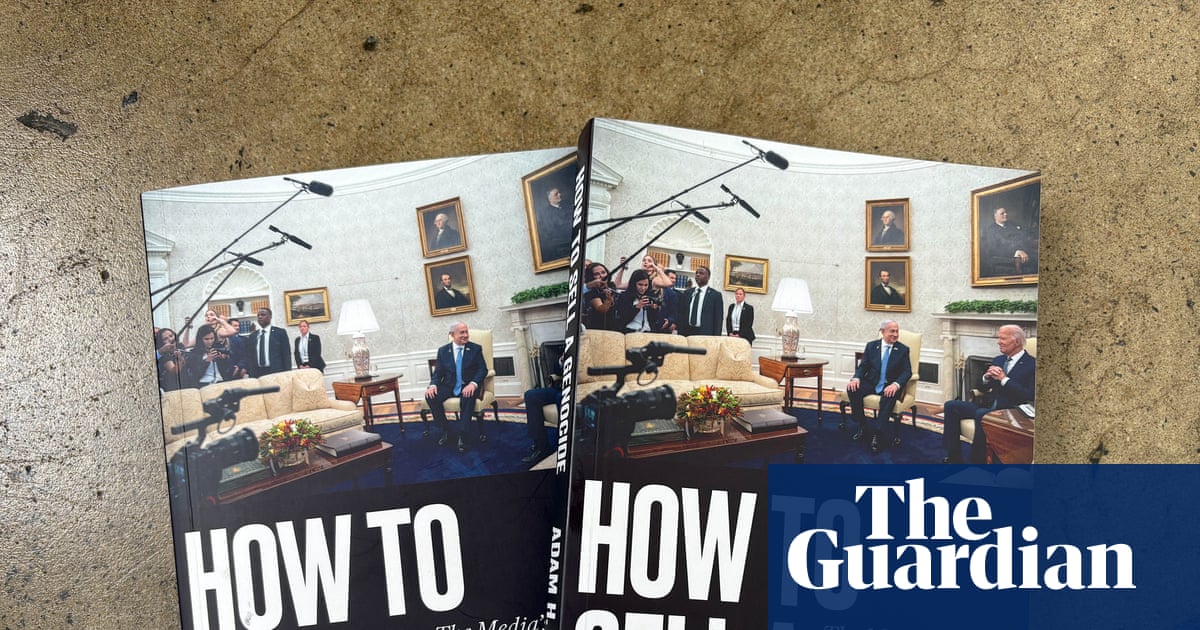
A public library in Sydney’s Waverley Council area has removed a book titled How to Sell a Genocide from its shelves, a decision that has ignited a dispute over censorship and the responsibilities of local government institutions. The volume, authored by Adam Johnson, critiques what it describes as the complicity of United States media in the destruction of Gaza. Its removal follows a complaint lodged by a survivor of the December terror attack at Bondi Beach, an incident that claimed fifteen lives and occurred within the same municipal jurisdiction as the library.
According to reports from Jewish news outlet JWire, the complainant encountered the book on a shelf designated for new releases and hot items. The individual expressed distress over the display via social media, stating it was painful for survivors and families of the deceased. While Guardian Australia could not independently verify the specific Facebook post, the Waverley Council confirmed that the item has been taken down pending a review. A council spokesperson emphasized that book curation, ordering, and purchasing are outsourced functions, meaning council officers do not directly select titles.
The council indicated that this incident will prompt a broader consideration of processes to ensure closer oversight of book selection practices. This administrative response comes amid heightened sensitivity in the region following the violent attack at Bondi Beach. The decision to remove the book for review has drawn sharp criticism from the author, who argued that labeling Israel’s actions in Gaza as genocide is not a fringe or radical position but rather an overwhelming consensus among human rights experts.
Johnson contended that while reality can be upsetting, it should not be suppressed because it causes discomfort. He questioned whether officials would similarly remove pro-Israel books if they upset community members, noting the significant loss of life in Gaza since October 2023. The publisher, Pluto Press, echoed these sentiments, with senior commissioning editor David Shulman describing Johnson’s analysis as rigorous and data-driven. Shulman argued that such works should be widely available through public libraries, which play an essential role in democratic society.
Local Jewish organizations have offered mixed responses to the situation. The Executive Council of Australian Jewry and the NSW Jewish Board of Deputies declined to comment on the matter. However, Bart Shteinman, an executive member of the progressive Jewish Council of Australia, described the removal as deeply alarming. He asserted that public libraries belong to everyone and should host a range of views, including those addressing Israel’s widely condemned war crimes.
Shteinman raised legal concerns regarding the potential permanent removal of the book. New South Wales passed legislation earlier this year amending the state’s Library Act to better protect institutions from campaigns aimed at banning books. Shteinman suggested that if the council decides to permanently remove the title, both Mayor Will Nemesh and Special Minister of State John Graham would need to explain how such a decision does not breach the law.
Support for the book’s availability also came from Palestinian advocacy groups. Nasser Mashni, president of the Australia Palestine Advocacy Network, stated that it is a library’s duty to provide access to a broad range of published works, even those that challenge or discomfort readers. He argued that the term genocide accurately describes the scale and intent of events in Gaza, citing engineered famine and the destruction of hospitals and universities.
Mashni warned against the dangers of book bans, noting that history has shown what happens when access to information is restricted. The incident highlights the tension between community sensitivities and the mandate of public libraries to provide diverse materials. As the council reviews its processes, the outcome may set a precedent for how local governments handle controversial content in the wake of recent state-level protections.
The Waverley mayor and the special minister of state were contacted for comment regarding the legal implications and future policy changes. The situation remains unresolved as the council weighs the balance between respecting the trauma of attack survivors and upholding the principles of free access to information. The debate underscores the complex role libraries play in mediating difficult historical and contemporary narratives within their communities.
This case reflects broader national conversations about censorship and the limits of public discourse. While the council maintains that the removal is procedural rather than punitive, critics view it as a capitulation to pressure campaigns. The outcome will likely influence how other Australian libraries manage similar complaints in the future, particularly given the new legislative framework designed to shield these institutions from external interference.
Sources behind this briefing
Go to the original reporting
- The Guardian World↗Bondi library removes book How to Sell a Genocide from shelves after complaint

