The short version
- Deputy Prime Minister Ebba Busch has publicly challenged the status of reindeer husbandry as a national interest, arguing it offers limited economic value compared to mineral extraction.
- The dispute centers on LKAB’s plan to expand iron ore mining near Kiruna, which threatens traditional herding routes and requires relocating parts of the town due to ground subsidence.
- Sami leaders warn that this political rhetoric signals a broader threat to Indigenous rights and cultural survival as Sweden seeks to reduce reliance on Chinese rare-earth imports.
The political landscape in northern Sweden has shifted sharply ahead of the September 13 general election, with government officials openly challenging the land rights of the Indigenous Sami people. Deputy Prime Minister and Energy Minister Ebba Busch has led a rhetorical campaign against reindeer husbandry, describing it as an industry that occupies vast territories while contributing little to the national economy. Her Christian Democrats party, a key component of the current center-right coalition, is advocating for reduced reindeer populations and the removal of legal protections that classify herding as a matter of national interest.
This aggressive stance aligns with a broader governmental strategy to unlock Sweden’s mineral resources. The state aims to decrease dependence on Chinese imports of rare-earth elements and expand nuclear power infrastructure by opening sparsely populated northern regions to industrial exploitation. Busch’s party manifesto explicitly calls for resolving conflicts between herding activities and industrial development, asserting that the state must reclaim responsibility for lands currently used by Sami communities. This policy shift marks a departure from previous administrations, which may have deprioritized Sami rights but avoided such direct public confrontation.
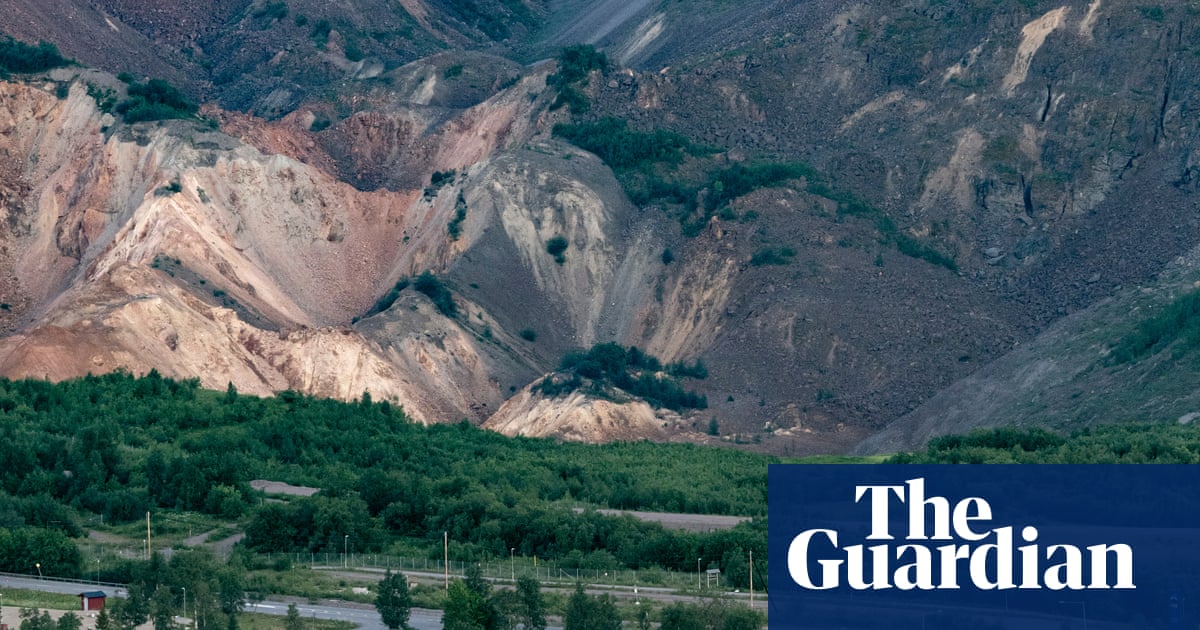
At the heart of this conflict is the expansion plan by LKAB, the state-owned mining giant, to develop the Per Geijer deposit near Kiruna. This site contains Europe’s largest known reserve of rare-earth elements and significant iron ore deposits. The project necessitates the relocation of Kiruna itself, a town already grappling with ground subsidence caused by existing mining operations. Last summer, global attention focused on the logistical feat of moving the town’s distinctive red wooden church, designed to resemble a traditional Sami hut, five kilometers to safer ground. However, for local Sami residents, the physical move is merely a precursor to deeper disruptions.
Sami leaders argue that the current political rhetoric isolates their community and frames them as adversaries of national progress. Åsa Larsson Blind, a Sami politician and board member of the Sami Parliament, described the deputy prime minister’s comments as astonishing in their scope. She noted that highlighting one group as an obstacle to development creates a difficult divide within Swedish society. According to Larsson Blind, while past governments may have neglected Sami interests, the current administration has crossed a line by making such exclusionary statements politically acceptable.
The Gabna community, whose traditional herding grounds are directly impacted by the Kiruna mine, expresses profound concern about the future of their livelihoods. Lars-Marcus Kuhmunen, head of the Gabna community, warned that expanding mining at Per Geijer would sever critical connections between calving grounds and forest regions. He views this project as a catalyst for increased industrialization across all Sami villages, placing an immense burden on Indigenous populations who feel their constitutional protections are being eroded.
Anna-Karin Niia, a Gabna herder, emphasized that the issue extends beyond simple resource management. She argued that reducing reindeer herds to secure electoral victories ignores the fundamental rights of Indigenous peoples as protectors of the land. For Niia, the balance between mineral extraction and environmental preservation is not zero-sum; she insists that local communities and nature hold equal importance alongside industrial goals. The fear among Sami populations is that prioritizing minerals will lead to a systematic dismantling of their cultural practices.
The political stakes are high as the Sweden Democrats, a far-right party potentially entering government for the first time, also target reindeer herders in their manifesto. They frame herding rights as conflicting with tourism and broader public interests. Meanwhile, Nils-Johan Labba, a Sami parliament member and craftsman, criticized the government for focusing on minority antagonism rather than addressing the practical crises facing Kiruna. He described the town as bleeding from transport and educational disruptions caused by the mine’s impact.
Despite the hardline rhetoric, some political figures acknowledge the complexity of the situation. Peter Kullgren, a board member of the Christian Democrats, stated that Sweden retains a responsibility to protect Sami rights. However, this assurance has done little to calm tensions as the election approaches. The debate over land use in northern Sweden has moved from local grievances to a central national issue, reflecting a broader tension between economic modernization and Indigenous sovereignty.
As voting day nears, the outcome could determine whether Sweden continues its current trajectory of prioritizing mineral extraction over traditional land rights. If the center-right coalition retains power or if the Sweden Democrats join the government, Sami communities fear further erosion of their legal standing. The conflict underscores a difficult question for modern democracies: how to balance strategic resource independence with the historical and constitutional rights of Indigenous populations.
The situation in Kiruna serves as a microcosm of larger European efforts to secure supply chains for critical minerals. While the EU seeks to reduce reliance on external suppliers, the social cost of this transition is being borne disproportionately by Sami communities. The coming months will reveal whether political promises of protection can withstand the pressure of industrial expansion and electoral competition.
Sources behind this briefing
Go to the original reporting
- The Guardian US↗Reindeer and rare-earth minerals: Swedish politicians take aim at Indigenous Sami in mining dispute

