The short version
- Attorneys for Mahmoud Khalil have petitioned the Supreme Court to review his deportation case, seeking to preserve federal court jurisdiction over detention challenges.
- The outcome could determine whether noncitizens can contest detention in independent federal courts or are forced into executive branch immigration proceedings.
- Conflicting appellate rulings on similar cases suggest the high court may need to resolve a circuit split regarding constitutional protections for detained immigrants.
A former Columbia University student has asked the Supreme Court to review his deportation case, initiating a legal battle that could redefine the rights of immigrants to challenge their detention in federal court. Mahmoud Khalil, a permanent resident born in a Palestinian refugee camp in Syria, was arrested at his university housing in March 2025. He became one of several foreign students and scholars targeted by the Trump administration for advocating Palestinian rights. After spending more than three months detained in an Immigration and Customs Enforcement facility in Louisiana, Khalil was released by a federal judge in New Jersey while his immigration proceedings continued.
The core legal dispute centers on whether district courts possess the authority to order the release of individuals held in immigration detention while their cases are pending. Government attorneys have relied on a little-known law from the McCarthy era to argue that Khalil’s pro-Palestinian expression threatened United States foreign policy objectives. They contend this justifies bypassing federal judicial review in favor of executive branch immigration courts. Khalil’s legal team argues that stripping district courts of this power would leave detainees with no recourse against potentially unconstitutional detention, forcing them to remain incarcerated for months or years based solely on executive decisions.
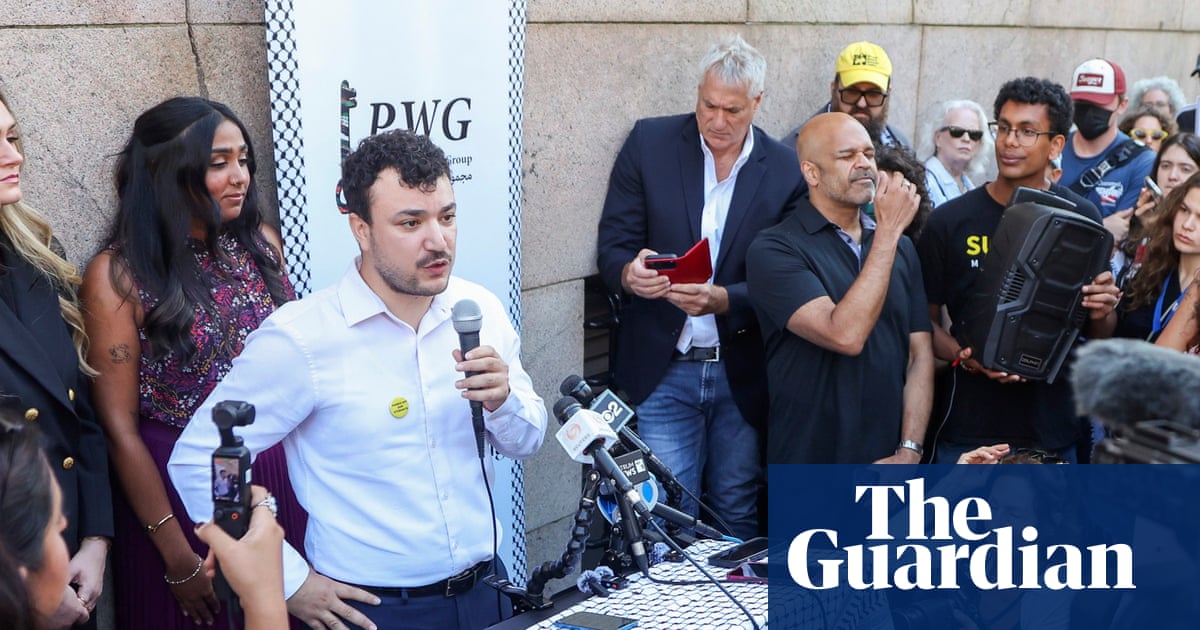
Khalil has framed the litigation as a broader defense of free speech and due process rights. During a recent press conference, he stated that the administration’s actions were designed to punish advocacy and avoid scrutiny in independent federal courts. His attorneys warn that if the Supreme Court rules against him, it would effectively insulate immigration detention from judicial oversight. This shift would move cases from federal courts, which are generally insulated from political interference, to immigration tribunals overseen by the executive branch. Critics describe this dynamic as allowing arbitrary executive action without meaningful checks.
The path to the Supreme Court has been marked by conflicting rulings and procedural reversals. A New Jersey judge initially ordered Khalil’s release, finding that his detention likely violated First Amendment protections because he was targeted for constitutionally protected speech. This aligns with a separate ruling by a federal judge in Boston, who determined last year that such protections extend to noncitizens. However, a federal appeals court in Pennsylvania reversed the New Jersey decision in January. An expanded panel upheld this reversal in a narrow 6-5 split, drawing sharp criticism from dissenting judges who argued the ruling ignored legal precedent and endangered civil liberties.
The uncertainty surrounding jurisdiction is compounded by divergent outcomes in related cases involving other detained scholars. Mohsen Mahdawi and Badar Khan Suri, both detained after Khalil, are also challenging their status through the federal court system. In Suri’s case, an appeals court in Virginia upheld a lower court’s order for his release, directly contradicting the Pennsylvania court’s decision regarding Khalil. The government has requested Supreme Court review of Suri’s case as well. Meanwhile, the Second Circuit Court of Appeals in New York initially sided with the government in Mahdawi’s case but later ordered a rehearing. These inconsistencies suggest the Supreme Court may need to intervene to establish a uniform standard.
Legal experts emphasize the high stakes for the broader immigrant community. If the high court declines to hear Khalil’s case or upholds the Third Circuit’s decision, he could face immediate redetention and deportation. He might then be forced to continue his legal fight from overseas, significantly limiting his ability to access counsel and evidence. Conversely, a ruling in favor of Khalil would reinforce the authority of federal judges to intervene in detention matters. This would preserve a critical check on executive power and ensure that detainees can challenge the legality of their confinement before independent tribunals.
Government agencies, including the Departments of State, Justice, and Homeland Security, did not respond to requests for comment regarding the petition. The administration’s strategy appears focused on channeling these cases into immigration courts where outcomes may be more predictable. Khalil’s legal team argues that this approach undermines constitutional safeguards. They contend that federal courts are better equipped to evaluate claims of unconstitutional detention and free speech violations. The dispute highlights a growing tension between national security priorities articulated by the executive branch and individual rights protected by the judiciary.
If the Supreme Court accepts the case, oral arguments are expected in the spring. A decision could take months or even years, depending on the complexity of the legal questions involved. In the interim, Khalil remains under the threat of detention if lower court protections are not upheld. The outcome will likely influence numerous other cases involving foreign nationals detained for political expression. It will also clarify the extent to which federal courts can serve as a barrier against executive overreach in immigration enforcement. For now, the legal community watches closely as this case moves toward its final chapter.
The broader implications extend beyond Khalil’s individual fate. The ruling could set a precedent affecting scores of people currently held in immigration detention. If district courts are stripped of jurisdiction, detainees may find themselves without a viable mechanism to challenge arbitrary or unlawful confinement. This would represent a significant shift in the balance of power between the branches of government. As the Supreme Court considers whether to take up the case, the question remains whether federal courts will retain their role as guardians of constitutional rights for noncitizens facing detention.
Sources behind this briefing
Go to the original reporting
- The Guardian US↗Mahmoud Khalil asks US supreme court to review his deportation case