The short version
- The Supreme Court temporarily lifted a lower court injunction blocking the Trump administration’s expanded use of the SAVE database for voter verification.
- Critics warn the system contains inaccuracies that could disenfranchise eligible citizens, while supporters argue it is necessary to prevent noncitizen voting.
- Federal law prohibits systematic purges of voter rolls within 90 days of an election, limiting the immediate practical effect of the ruling on the upcoming midterms.
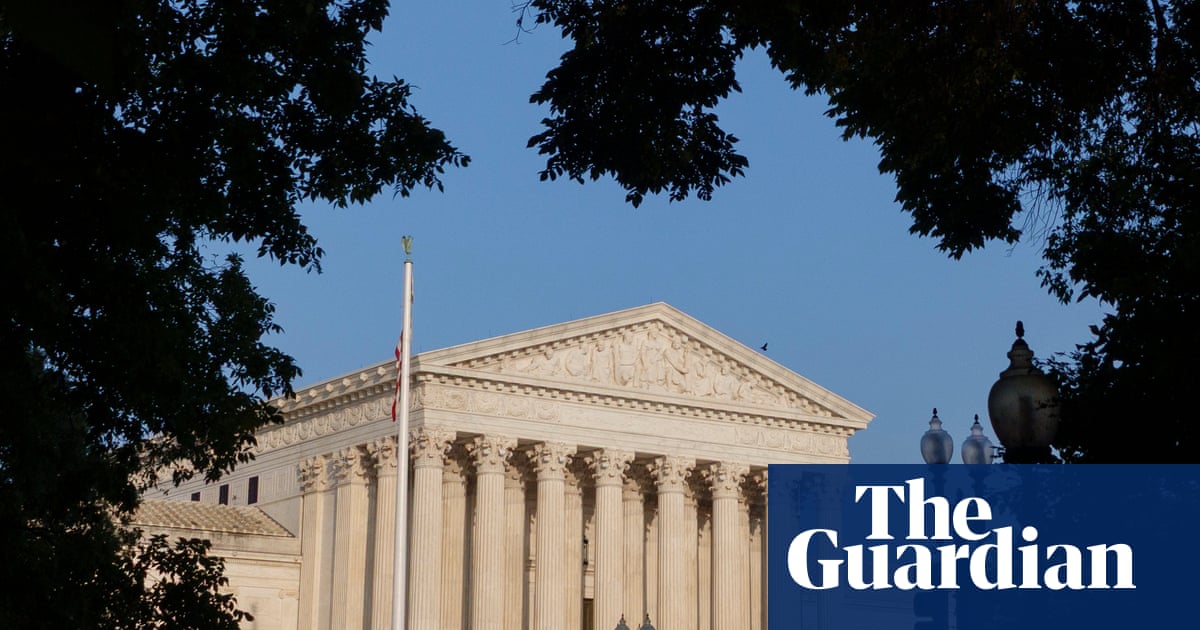
The US Supreme Court issued an emergency order on Friday lifting restrictions on a federal database used to verify voter citizenship, granting the Trump administration a temporary victory in its effort to combat alleged noncitizen voting. The decision sets aside a June ruling by US District Judge Sparkle L. Sooknanan, who had blocked the use of the revamped Systematic Alien Verification for Entitlements program, known as SAVE. Judge Sooknanan had determined that the administration’s expansion of the database violated multiple federal privacy laws and threatened the voting rights of eligible Americans. A federal appeals court had previously declined to pause her ruling, but the Supreme Court’s conservative majority intervened just weeks before the November midterm elections.
The SAVE program was originally established in 1986 to help agencies verify the immigration status of individuals applying for public benefits. Under an executive order issued in March 2025, the Trump administration significantly expanded the system’s capabilities, allowing bulk searches using sensitive data from Social Security rolls and other federal records. The administration argues that this tool is lawful and essential for enforcing laws that bar noncitizens from voting. Currently, 27 states utilize the system to check voter eligibility, although participation remains voluntary. The Supreme Court majority noted that a 1996 law explicitly permits the Department of Homeland Security to obtain citizenship information from other federal agencies and obligates the government to respond to state inquiries.
Despite the high court’s intervention, legal experts suggest the immediate impact on the upcoming elections may be limited. Federal law prohibits state election administrators from systematically removing individuals from voter rolls within 90 days of an election. David Becker, an election law expert at the Center for Election Innovation and Research, noted that while states can use the database to verify information, they cannot conduct broad purges during this protected period. The Supreme Court order itself acknowledged that all parties agree the federal government is prevented from using the modified SAVE program to conduct individualized inquiries that would violate this 90-day restriction. Consequently, the tool may serve more as a preparatory measure for future list maintenance rather than an immediate mechanism for removing voters before November.
Critics of the database have raised serious concerns about its accuracy and potential for disenfranchisement. The League of Women Voters, the Electronic Privacy Information Center, and other advocacy groups sued to block the program, arguing that it is riddled with errors and violates the Privacy Act, Social Security Act, and Administrative Procedure Act. They contend that using social security numbers obtained by DHS to vet voter registration eligibility puts millions of Americans at risk of being unlawfully targeted. In a prepared statement following the Supreme Court’s decision, the League of Women Voters called the ruling profoundly disappointing but vowed to continue fighting to ensure the district court’s original decision stands. The case has now been sent back to the DC Circuit Court of Appeals for further review.
Evidence of inaccuracies in the system has emerged from states that have already used it. In Travis County, Texas, officials investigated nearly 100 voters flagged by SAVE as apparent noncitizens and found that at least 10 percent—and potentially up to 21 percent—were actually US citizens. Since Texas began checking its voter rolls with the system last year, only three noncitizen voters have been charged with illegally voting, a figure far below the hundreds of thousands suggested by Trump administration officials. These discrepancies fuel concerns that the database may mistakenly revoke the voting rights of eligible citizens rather than effectively identifying illegal voting.
The Supreme Court’s decision was not unanimous. Justices Ketanji Brown Jackson, Elena Kagan, and Sonia Sotomayor dissented from the emergency order. Justice Jackson wrote that the harm caused by burdening or disenfranchising even a few lawful voters outweighs the nonexistent harm experienced by the government when prevented from taking an action it likely lacks the authority to take. She expressed concern that the database falls under federal privacy laws and poses real risks to legitimate voter registrations. The dissent highlighted the tension between the administration’s enforcement goals and the constitutional rights of citizens, emphasizing the potential for irreversible damage to electoral integrity.
Beyond the database itself, allegations have surfaced regarding how DHS has utilized related data. A whistleblower statement claimed that as part of an Unlawful Voter Initiative, federal agents may have impersonated voters to look up voter history on state websites using social security numbers and other information obtained through supplemental methods. This practice, if confirmed, could violate state laws governing access to voter records. US Senators Alex Padilla and Adam Schiff sent a letter to California Attorney General Rob Bonta requesting an investigation into how DHS obtained this data and whether it complied with legal standards. The senators noted that the Justice Department had been unsuccessful in compelling California to provide voter information, raising questions about the source of the data used by federal agents.
The controversy over the SAVE database is part of a broader effort by the Trump administration to reshape the US electoral system during his second term. Previous attempts to restrict mail-in ballots were rejected by the Supreme Court, but other initiatives continue to face legal challenges. While the White House did not immediately respond to requests for comment on the latest ruling, the administration maintains that its actions are necessary to protect election integrity. As the case moves forward in the DC Circuit Court of Appeals, the outcome will likely determine whether the expanded database can be used more broadly in future elections or if it will be permanently restricted due to privacy and accuracy concerns.
With the midterm elections approaching, the interplay between federal authority and state election administration remains a focal point of legal and political debate. The Supreme Court’s temporary stay allows states to access the data for verification purposes, but the 90-day purge restriction acts as a buffer against immediate changes to voter rolls. Advocacy groups are preparing to challenge any attempts to use the database in ways that violate federal law, while election officials monitor the situation closely. The final resolution of this case will have significant implications for how citizenship verification is conducted and the balance between preventing fraud and protecting the right to vote.
Sources behind this briefing
Go to the original reporting
- The Guardian US↗US supreme court lifts restrictions on controversial voter database
- BBC World↗Supreme Court allows Trump to use controversial database to check voter citizenship
- PBS NewsHour↗Supreme Court lets Trump administration use revamped federal voter eligibility database for now

