The short version
- The U.S. Supreme Court declined to block a Missouri state court order requiring the use of 2022 congressional districts for the upcoming general election.
- This decision creates an unusual scenario where voters may face different district boundaries in November than those used during August primaries.
- State officials face potential contempt proceedings for attempting to implement the rejected map, which was designed to shift one Democratic seat toward Republican control.
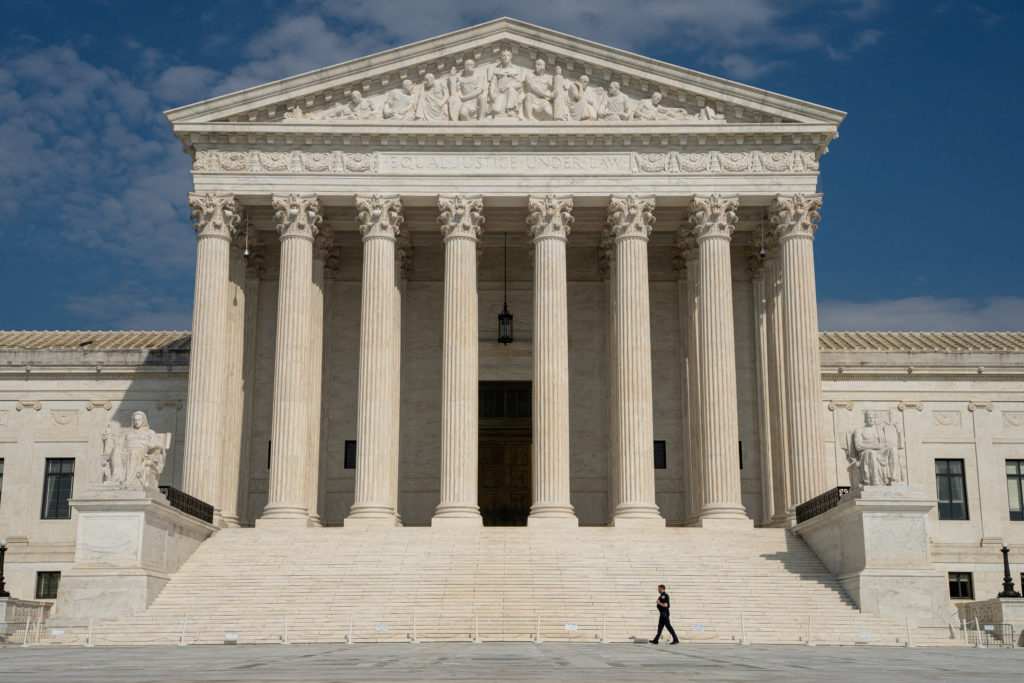
The United States Supreme Court has effectively ended a protracted legal conflict over Missouri’s congressional boundaries by refusing to intervene in a lower court ruling. The high court’s brief order, issued without public dissent or detailed reasoning, leaves intact a decision by the state’s highest judicial body. This outcome ensures that the 2022 legislative map will govern the November general election, rather than the newer districts backed by President Donald Trump and Republican state officials.
The ruling resolves immediate uncertainty for voters and election administrators who faced confusion in the weeks leading up to ballot distribution. For more than a year, competing court orders have created a chaotic environment regarding which district lines were legally valid. The federal judiciary’s refusal to step in signals that the state supreme court’s authority on this matter stands, clearing the path for local officials to finalize election logistics based on the older boundaries.
This development marks a significant setback for Republican efforts to maintain control of the House of Representatives in the pivotal midterm elections. The contested map was part of a broader strategy urged by the Trump administration to redraw districts in several states to gain political advantage. In Missouri, the revised lines specifically targeted a Kansas City-based seat held by Democratic Representative Emanuel Cleaver. By shedding parts of his district into neighboring areas and extending the remainder into rural Republican territory, the new map aimed to help Republicans secure seven of the state’s eight House seats.
The legal battle intensified recently when Secretary of State Denny Hoskins directed local election authorities to use the Trump-backed map, citing a conflicting order from a federal judge. This action directly contradicted the Missouri Supreme Court’s previous mandate. In response, state judges held a hearing to determine whether Hoskins should be held in contempt for defying their orders. Chief Justice W. Brent Powell described the situation as precarious, pressing legal representatives for clarity on next steps while urging the Secretary of State not to leave the capital city.
Hoskins remained silent during the proceedings and departed without addressing reporters. Republican Attorney General Catherine Hanaway also left without comment. Deputy Solicitor General William Seidleck informed the court that Hoskins was evaluating his options following the federal judge’s order. However, with the U.S. Supreme Court now rejecting the appeal to block the state court’s decision, the pressure on state officials to comply with the 2022 map has increased substantially.
The conflict originated from a referendum effort by opponents of the new districts. The group People Not Politicians Missouri collected hundreds of thousands of signatures to force a statewide vote on the redistricting changes. These signatures were submitted in December, but Hoskins waited until August—the same day as the primary election—to reject the petition. He argued that a referendum could not be used for congressional redistricting, a delay that allowed the new districts to be used in the primary.
The Missouri Supreme Court ruled last week that the new districts never became law and were suspended retroactively to the date of the petition submission. The court also ordered Hoskins to place the redistricting referendum on the November ballot, which he subsequently did. The state’s appeal to the U.S. Supreme Court sought to block this decision, but Justice Brett Kavanaugh rejected the request, barring Hoskins from using the new map.
The result is an unprecedented electoral situation in Missouri. Voters who participated in the August primary under one set of district lines may find themselves voting for different candidates or in different districts in November. There is no clear historical precedent for such a mid-cycle switch in congressional boundaries. While the White House did not immediately comment on the decision, the outcome underscores the limits of executive influence over state-level election administration when challenged by judicial review.
Supporters of the referendum celebrated the Supreme Court’s decision, emphasizing that the Missouri Constitution and state court rulings must be respected. The case highlights the ongoing tension between federal political strategies and state constitutional requirements. As ballots begin to go out, election officials must now navigate the logistical complexities of implementing a map change so close to Election Day, ensuring that voter confusion is minimized despite the late-stage legal resolution.
This event serves as a cautionary tale for other states considering similar redistricting maneuvers ahead of future elections. The interplay between federal appeals, state court mandates, and executive actions creates significant risks for electoral integrity and public trust. With the primary already concluded under different rules, the November election will test how well the system can adapt to sudden legal shifts without disenfranchising voters or undermining the legitimacy of the results.
Sources behind this briefing
Go to the original reporting
- PBS NewsHour↗Supreme Court again rejects push to use Trump-backed congressional map in Missouri

