The short version
- The Supreme Court declined to intervene in Missouri, allowing a state court ruling that suspends new congressional districts until voters decide on them in November.
- This decision undermines a broader Republican effort urged by President Trump to redraw maps in multiple states to protect incumbents ahead of the midterm elections.
- In New Hampshire, John E. Sununu defeated Scott Brown for the Senate nomination, positioning himself as a moderate alternative who has criticized key administration policies.
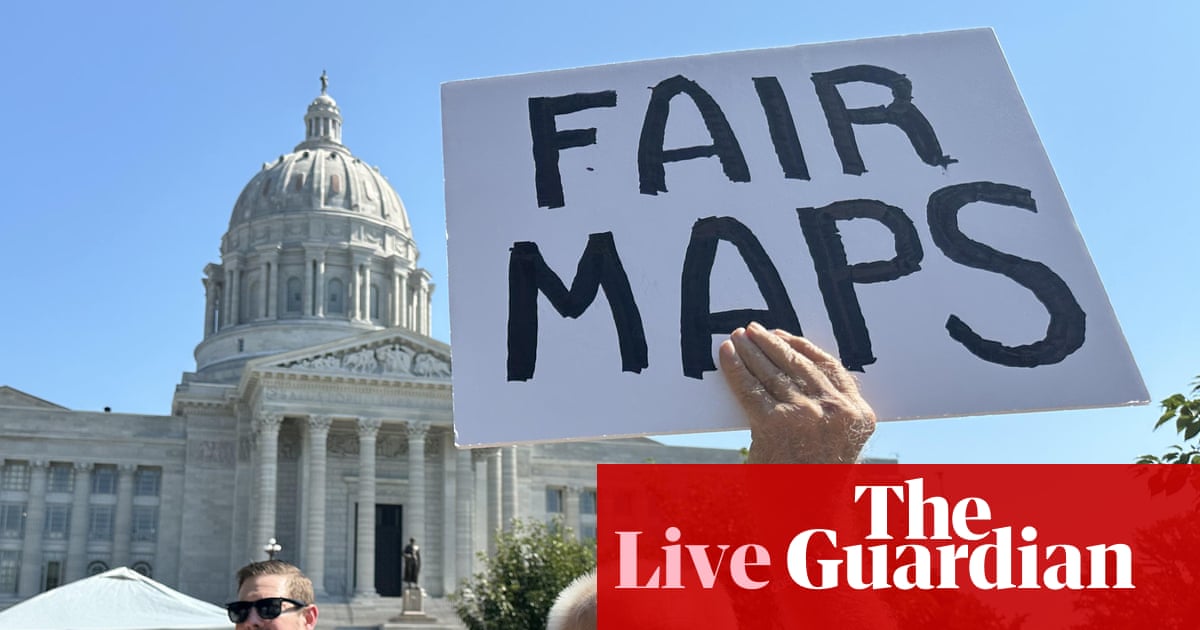
The Supreme Court delivered a significant setback to Republican redistricting efforts on Tuesday by refusing to hear an appeal from Missouri officials seeking to implement new congressional boundaries for the upcoming midterm elections. The justices allowed a decision by the Missouri Supreme Court to stand, which determined that the revised districts were automatically suspended pending a statewide vote. This ruling prevents the use of maps drawn under pressure from President Donald Trump, who had encouraged Republican leaders in several states to redraw lines to bolster their slim majority in the U.S. House.
Missouri state Attorney General Catherine Hanaway had argued that switching districts between the primary and general elections would violate federal rights and create voter confusion. However, the state’s highest court ruled that a citizen petition with thousands of signatures effectively froze the new districts retroactively to December, when the signatures were submitted. Consequently, the Secretary of State has placed the redistricting referendum on the November ballot as Proposition A, meaning voters will decide whether the new map becomes law.
The controversy centers on a special legislative session called last year by Governor Mike Kehoe at Trump’s urging. The resulting map targeted the 5th Congressional District, currently held by Democratic Representative Emanuel Cleaver. The revised boundaries reassigned parts of Kansas City to neighboring Republican-held districts and extended Cleaver’s district into rural areas with stronger Republican leanings. While Republican State Senator Rick Brattin won the primary in this reshaped district, the legal battle has now shifted the focus to a public referendum.
This development marks a rare defeat for Republicans in a nationwide redistricting initiative that began last year. Missouri was the second state, following Texas, to respond to Trump’s call for mid-cycle map changes. In total, Republican officials hoped to gain up to 16 additional House seats through new maps enacted in eight states, including North Carolina, Ohio, Florida, Tennessee, Louisiana, and Alabama. Democrats, facing their own challenges with counter-redistricting efforts, anticipate gaining up to six seats from new districts in California and Utah.
The political implications extend beyond Missouri. Historically, the party holding the presidency tends to lose congressional seats during midterm elections. Combined with President Trump’s low approval ratings, these factors present additional hurdles for Republican candidates relying on favorable district lines. The uncertainty surrounding the validity of these maps in multiple states adds a layer of complexity to the November election landscape, as legal challenges continue to unfold across the country.
In other primary developments, former Senator John E. Sununu secured the Republican nomination for the U.S. Senate in New Hampshire on Tuesday. Sununu, 61, defeated Scott Brown in what is expected to be a competitive race if Democrats aim to regain control of the upper chamber. Sununu previously served one term in the Senate from 2003 to 2009 and has positioned himself as a moderate voice within the party.
Sununu’s victory comes despite his past criticisms of Donald Trump, including an op-ed in which he labeled the president a “loser” and supported Nikki Haley in the previous presidential primary. Trump endorsed Sununu earlier this year, signaling a reconciliation between the former senator and the current administration. On the campaign trail, Sununu has attempted to distinguish himself from the White House by criticizing tariff policies and questioning military actions in Iran.
The New Hampshire race highlights the internal tensions within the Republican Party as it navigates the midterm elections. While Trump’s endorsement carries significant weight, candidates like Sununu are leveraging their independent records to appeal to moderate voters. The outcome of this primary sets the stage for a general election that will test the strength of both parties in key swing states.
As the November elections approach, the combination of legal battles over redistricting and competitive primary outcomes underscores the volatile nature of the current political environment. Voters in Missouri will soon weigh in on the congressional map, while New Hampshire prepares for a Senate contest that could influence the balance of power in Washington. The coming months will reveal whether these strategic moves yield the desired results for either party.
Analysts note that the Supreme Court’s refusal to intervene in Missouri may embolden similar legal challenges in other states where redistricting disputes remain unresolved. The precedent set by the state court’s acceptance of a referendum on congressional districts could influence future attempts to alter electoral boundaries outside of the standard decennial process. This evolving legal landscape adds another variable to an already uncertain election cycle.
Sources behind this briefing
Go to the original reporting
- The Guardian US Politics↗US supreme court rejects Missouri Republicans’ appeal to use Trump-backed congressional map in midterms – live
- PBS NewsHour↗Supreme Court rejects Missouri's push to use new Republican-drawn U.S. House map in November