The short version
- A large crowd gathered outside the courthouse to support Lindsay Clancy, emphasizing concerns about how women’s mental health crises are handled by medical systems.
- Defense attorneys argue Clancy was not criminally responsible due to postpartum psychosis and bipolar disorder, while prosecutors contend she planned the killings.
- Testimony from a hospital chaplain revealed Clancy expressed relief that her children were safe shortly after the incident, adding complexity to the legal proceedings.
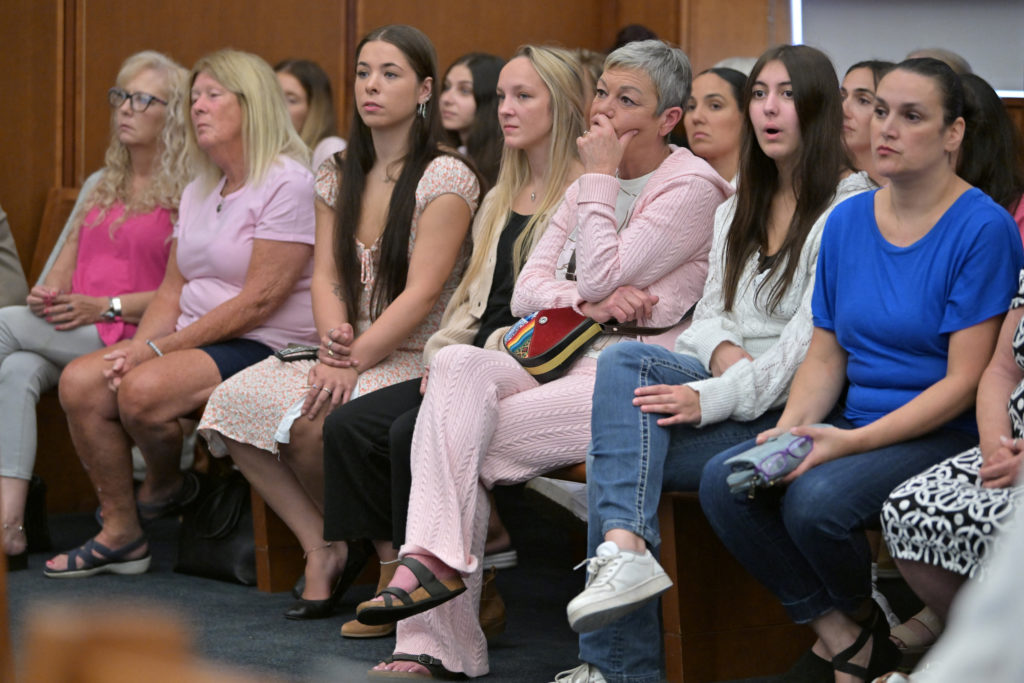
Hundreds of supporters gathered outside a Massachusetts courthouse on Thursday, marking the first significant public demonstration during the nearly month-long trial of Lindsay Clancy. The crowd, composed primarily of women wearing pink attire with messages advocating for belief and peace, stood in silence for over an hour before proceedings began. Many attendees stated that Clancy’s case resonated deeply with their own experiences or those of loved ones, highlighting a broader frustration with how the mental health system addresses women in crisis. The rally underscored a growing public interest in postpartum psychosis, a rare but severe condition linked to hormonal shifts and sleep deprivation following childbirth.
Clancy, a former labor and delivery nurse, faces murder charges for the deaths of her three young children in January 2023. Her legal team does not dispute that she caused the deaths but argues she should not be held criminally liable because she was suffering from severe mental illness at the time. Attorney Kevin Reddington has presented evidence that Clancy struggled with bipolar disorder and postpartum psychosis, conditions he says rendered her unable to understand the nature of her actions. He emphasized that Clancy had repeatedly sought help through outpatient providers, emergency rooms, and psychiatric hospitals before the tragedy occurred.
In contrast, prosecutors maintain that Clancy acted with premeditation. They argue she orchestrated the events by sending her husband away to pick up medication and dinner, thereby isolating herself with the children. The prosecution has also challenged the severity of Clancy’s subsequent suicide attempt, noting inconsistencies in her adherence to prescribed medications and questioning whether her actions were part of a calculated plan rather than a psychotic break. This fundamental disagreement over intent and mental state remains central to the trial’s outcome.
Testimony from Sheila Cavanaugh, a chaplain at Brigham and Women’s Hospital, provided insight into Clancy’s condition in the days following the incident. Cavanaugh testified that when she first visited Clancy, the defendant was unconscious. By late January, Clancy was conscious and no longer required ventilation, though her emotional demeanor was described as flat. Cavanaugh recalled Clancy expressing relief that her children were safe, a statement that prosecutors questioned regarding its implications for Clancy’s awareness of their deaths. The chaplain noted that Clancy alluded to hearing voices that commanded her actions under threat of harm.
The trial has drawn significant attention online, with livestreamed proceedings sparking widespread discussion about maternal mental health. Supporters at the rally held flags from various countries, indicating international interest in the case. Organizers urged attendees to trust the defense team’s efforts to secure appropriate care rather than punishment for Clancy. The gathering reflected a desire to shift public perception from viewing Clancy solely as a perpetrator to recognizing her as a patient who failed within a fragmented healthcare system.
Experts estimate that postpartum psychosis affects one to two women per thousand after delivery, making it far less common but more dangerous than postpartum depression. The condition can involve hallucinations, delusions, and severe mood disturbances. Clancy’s attorney has argued that her history of seeking help demonstrates a recognition of her deteriorating mental state, even if she could not prevent the final outcome. Critics of the prosecution’s narrative point to these efforts as evidence of desperation rather than deceit.
Prosecutors have scrutinized the documentation of Clancy’s hospital visits, questioning why certain disclosures about auditory hallucinations were not recorded in medical notes. Cavanaugh explained that her role was spiritual support rather than clinical evaluation, and her records were not intended to be verbatim transcripts. This distinction highlights the challenges in interpreting non-medical accounts within a legal framework that demands precise evidence of mental capacity.
Clancy remains paralyzed from the waist down after jumping from a second-story window following the killings. She currently resides in a state mental hospital while awaiting the trial’s conclusion. The case has become a focal point for advocates seeking greater awareness and resources for postpartum mental health issues. As the trial continues, the tension between legal accountability and medical compassion remains unresolved, with both sides presenting compelling but contradictory interpretations of Clancy’s actions.
The next phase of the trial will likely involve further expert testimony on the nature of postpartum psychosis and its impact on decision-making capacity. Legal observers note that the jury’s understanding of this rare condition could significantly influence their verdict. Meanwhile, supporters continue to monitor proceedings closely, hoping the case will catalyze systemic changes in how mental health crises are managed. The outcome may set a precedent for similar cases involving maternal mental illness and criminal responsibility.
Public reaction to the trial has been polarized, with some viewing Clancy as a victim of untreated illness and others seeing her actions as deliberate. The rally in Plymouth represented a visible expression of empathy from those who believe the current system fails women in distress. As legal arguments unfold, the broader societal implications of the case extend beyond the courtroom, touching on issues of gender, healthcare access, and the definition of criminal intent in the context of severe mental health disorders.
Sources behind this briefing
Go to the original reporting
- PBS NewsHour↗Women rally in support of Lindsay Clancy at her trial
- The Guardian US↗Lindsay Clancy murder trial draws some 300 US supporters, many of them women: ‘nobody takes us seriously’

