The short version
- Nicola Sturgeon has ended all contact with her estranged husband, Peter Murrell, who is serving a five-year sentence for embezzling over £400,000 from the Scottish National Party.
- Sturgeon revealed she was unaware of the full extent of the theft until Murrell pleaded guilty in May and expressed shock that he had negotiated his plea deal without her knowledge.
- The former first minister described feeling deceived by Murrell’s isolation and lack of communication, stating she no longer views herself as responsible for his wellbeing.
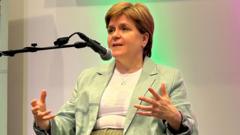
Nicola Sturgeon has formally severed personal contact with her estranged husband, Peter Murrell, following his imprisonment for financial crimes involving the Scottish National Party. The former first minister stated during a recent public appearance that she will not visit Murrell in prison and has ceased all communication with him since his sentencing in June. This marks a definitive end to their relationship, which had already been strained by allegations of misconduct and the subsequent legal proceedings.
Murrell, 61, was sentenced to five years in jail after admitting to embezzling more than £400,000 from SNP accounts between 2010 and 2022. While serving as the party’s chief executive, he used funds for personal luxury items, including a motorhome valued at over £124,000, high-end electronics, and designer household goods. Sturgeon has consistently denied any knowledge of these transactions and was cleared of wrongdoing after a police investigation concluded she was not involved in the theft.
During an interview at the Edinburgh Festival Fringe, Sturgeon disclosed that she remained unaware of the full scope of Murrell’s actions until he entered a guilty plea in May. She revealed that she only learned of his impending court appearance one week before it occurred, despite evidence suggesting he had been negotiating terms for months. This revelation caused significant distress, as she described feeling blindsided by the legal strategy and the extent of the deception.
Sturgeon reflected on the period leading up to the trial, noting that Murrell had become increasingly isolated and uncommunicative. She admitted to worrying about his mental health and wellbeing during this time, a sentiment she now views with regret. Describing herself as a fool for maintaining concern for someone who showed no regard for her, she emphasized that his actions caused profound personal harm that she is still processing.
The financial misconduct included several high-profile purchases that drew public scrutiny. The most notable was the motorhome, which was seized by police with minimal mileage and later written off in SNP accounts. Other expenditures included a robotic lawn mower, expensive coffee equipment, and luxury salt and pepper grinders. These items were bought entirely with party money, constituting what a judge described as a calculated crime of dishonesty, though the court noted difficulty in identifying a clear motive for the theft.
Sturgeon indicated that discovering the details of the embezzlement on the day of the guilty plea forced her to reassess her understanding of their long-term relationship. She stated that she realized she had lived with someone whose true actions and intentions were hidden from her. This realization has created a difficult emotional process for both her and her family, who are grappling with the betrayal and the public nature of the scandal.
The former first minister also addressed broader political tensions during the same appearance, including criticism from author JK Rowling regarding trans rights and independence issues. However, the primary focus of her remarks remained on the personal fallout from Murrell’s conviction. She emphasized that while she does not understand his motivations, she recognizes that his actions were deliberate and harmful, leaving little room for reconciliation or continued contact.
As Sturgeon moves forward without political office, the resolution of the Murrell case represents a closing chapter in a period marked by legal scrutiny and personal turmoil. Her decision to cut ties underscores the finality of the situation and her desire to distance herself from the events that defined much of her recent public life. The SNP has since moved on from the financial irregularities, focusing instead on current political challenges and leadership transitions.
The case highlights the complexities of separating personal relationships from professional responsibilities in high-profile political roles. Sturgeon’s acknowledgment of her own error in judgment regarding Murrell’s retention as chief executive adds nuance to her defense, while her firm stance against visiting him signals a clear boundary between her past and present. The legal and personal consequences of the embezzlement continue to resonate within Scottish political discourse.
Observers note that Sturgeon’s public statements provide insight into the emotional toll of the scandal, beyond the legal and financial aspects. Her description of feeling like a victim of deception aligns with her broader narrative of being subjected to circumstances beyond her control. As she adjusts to life outside of government, the resolution of this personal conflict appears to be a necessary step in her transition away from the spotlight.
Sources behind this briefing
Go to the original reporting
- BBC News↗Sturgeon hasn't spoken to Murrell since he was jailed for embezzling SNP funds
- The Guardian World↗Nicola Sturgeon ‘has not spoken to’ estranged husband, Peter Murrell, since he was jailed

