The short version
- A new study finds that human-induced global heating has made the conditions driving Canada's current wildfires twice as likely to occur.
- Extreme fire weather in Ontario and the Northwest Territories is now expected every few years rather than once per generation, marking a shift in frequency.
- Political friction has emerged as US officials blame Canadian management for smoke pollution, while scientists attribute the crisis to global emissions.
A comprehensive analysis released this week establishes a direct link between human-driven climate change and the severe wildfire conditions currently engulfing parts of Canada. Researchers from World Weather Attribution, an international consortium of climate scientists, determined that the burning of fossil fuels has doubled the probability of the extreme weather patterns fueling these blazes. The study highlights how heightened global temperatures have amplified risks in Ontario and the Northwest Territories, regions that are currently experiencing significant fire activity.
The findings indicate a fundamental shift in the frequency of such events. Without the influence of anthropogenic warming, scientists estimate that fire conditions of this severity would occur less than once every forty years. In contrast, the current climate reality means these extreme scenarios are now projected to happen every two to six years in the Northwest Territories and every six to fifteen years in Ontario. This acceleration transforms what were previously rare anomalies into recurring hazards for communities across northern Canada.
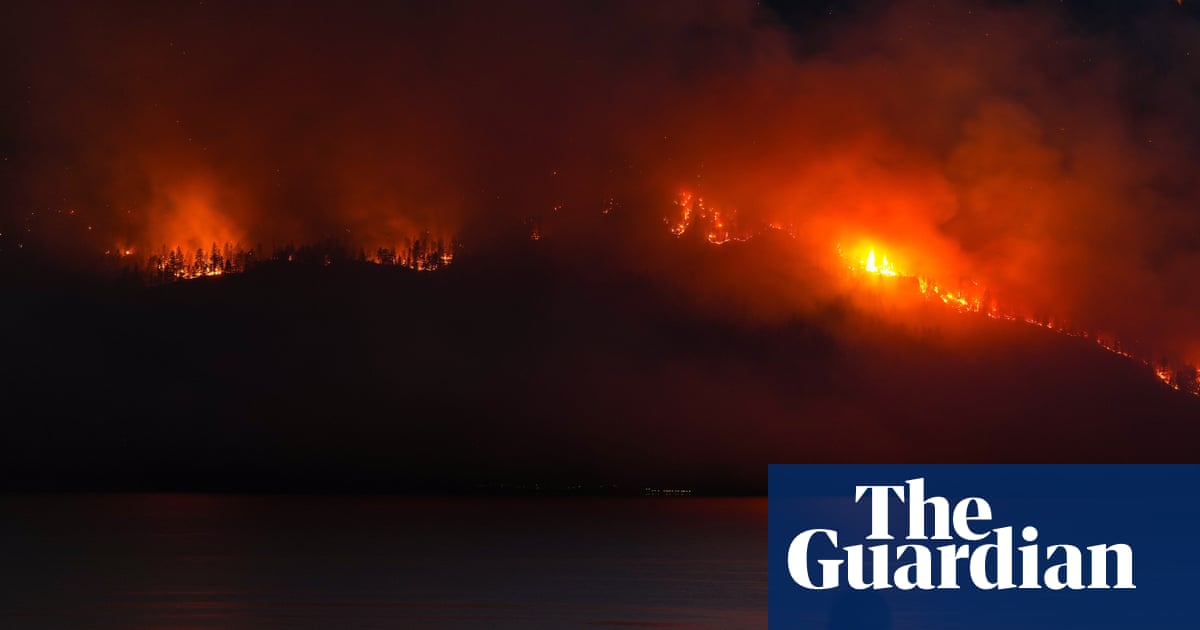
The physical impact of this shift is evident in the scale of the ongoing crisis. Nearly seven hundred fires are currently active across the country, consuming approximately 3.8 million hectares of land. Much of this area consists of boreal forest, a critical ecosystem that covers a quarter of the world’s total boreal reserves. The intensity and geographic spread of these blazes have prompted evacuations in multiple towns and generated thick plumes of toxic smoke that have drifted across borders, affecting air quality in numerous North American cities.
Experts emphasize that the nature of these fires has changed since 2023, when similar large-scale events occurred. Theodore Keeping, an extreme weather specialist at Imperial College London and a member of the research team, described the current situation as fundamentally different in both scale and intensity. He noted that while Canada has historically experienced wildfires, the climate crisis has exacerbated conditions to a degree that standard adaptation measures are no longer sufficient. The drying of vegetation and soils due to increased temperatures makes landscapes significantly more prone to rapid combustion.
The scientific consensus underscores the limitations of local management strategies in the face of global environmental changes. Friederike Otto, a co-author of the study from Imperial College London, pointed out that climate change is a primary driver behind the uncontrollable size and unprecedented nature of these fires. She argued that the science has long predicted that fossil fuel emissions would lead to more frequent, intense, and difficult-to-contain wildfires. The current events serve as a validation of those decades-old warnings rather than a surprise.
Despite the clear scientific attribution, political responses have diverged sharply from the data. US President Donald Trump has publicly criticized Canada for failing to control fires that often burn in remote, inaccessible areas. He characterized the influx of smoke into the United States as an invasion of polluted air and threatened economic reprisals, including potential tariffs. This stance contrasts with the scientific view that blames global emissions rather than local governance failures.
Critics of the US administration’s position argue that it misplaces responsibility for a phenomenon driven by worldwide carbon output. Jonathan Boucher, a researcher with the Canadian Forest Service, stated that blaming Canadians is unjustified given that most boreal forests are unmanaged and affected by planet-heating emissions from around the globe. He highlighted that the United States remains the historic largest emitter of greenhouse gases, contributing significantly to the warming trends that exacerbate fire risks in neighboring countries.
The immediate humanitarian impact continues to escalate beyond the specific regions analyzed in the study. In British Columbia, for example, eight thousand people remain under evacuation orders due to explosive and dangerous fire conditions. As the season progresses, the combination of dry fuels, high temperatures, and strong winds creates a volatile environment that challenges firefighting resources. The situation illustrates the growing difficulty of containing wildfires in a warming world.
Looking ahead, scientists warn that without rapid reductions in fossil fuel use, events like these will become even more common and severe. The World Weather Attribution group finalized this analysis shortly after releasing similar findings regarding record-breaking fires in Spain and France, which prompted the largest peacetime evacuation in those nations’ histories. The pattern suggests a global trend where climate change is intensifying extreme weather events across multiple continents.
The convergence of scientific evidence and political rhetoric highlights the complex challenges of addressing climate-related disasters. While local authorities struggle with immediate containment and evacuation efforts, the broader context requires international cooperation on emission reductions. The current crisis in Canada serves as a stark example of how global environmental changes translate into local emergencies, affecting public health, safety, and diplomatic relations.
Sources behind this briefing
Go to the original reporting
- The Guardian US↗Human-driven climate crisis fuels Canada’s deadly wildfires, study finds

