The short version
- Nineteen homes were completely destroyed and many others damaged during wildfires that erupted on the region's hottest day of the year.
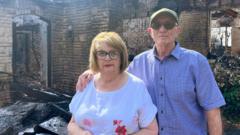
- Residents like Robin and Loxie Williams, who lived in their Stourbridge house for twenty-six years, face a reconstruction period estimated at more than two years.
- Emergency crews prioritized protecting neighboring structures after determining that saving certain properties was no longer feasible due to the intensity of the flames.
The aftermath of the recent wildfires in Stourbridge has shifted from immediate emergency response to a prolonged period of assessment and recovery for those who lost their homes. On Sunday, residents began returning to affected areas under escort from fire services, confronting the physical reality of what was destroyed just days earlier. The blaze, which ignited on Thursday afternoon during the hottest day recorded so far this year, spread rapidly across more than five hundred acres, forcing evacuations and resulting in significant property loss.
Among those surveying the damage are Robin and Loxie Williams, a couple who had lived in their four-bedroom home on Ounty John Lane for twenty-six years. They were out with friends when the fire broke out near Stourbridge Golf Club around 1:30 p.m. Upon their return, they found roads closed by firefighters and were forced to watch the destruction of their neighborhood via video clips sent by others. The speed of the event left them stunned, with Loxie Williams noting that seeing flames erupt from the roof was difficult to process in real time.
The couple’s home, built in the 1960s and occupied since 2000, was one of nineteen properties fully destroyed across five streets. Virtually all personal possessions were lost, with only a few items such as a teacup, some documents, and remnants of clothing remaining in the kitchen. Loxie Williams recalled ironing clothes that morning before leaving for their outing, unaware that those garments would become part of the debris. The garden, which had been a long-term project for Robin, was also devastated.
Firefighters worked extensively to contain the blaze, but conditions ultimately forced them to make difficult decisions about resource allocation. Loxie Williams acknowledged that crews were fighting a losing battle when it came to saving their specific property. Once it became clear that the house could not be saved, emergency personnel redirected their efforts to protect neighboring homes. This strategy appears to have been effective in some cases, as only two houses on Ounty John Lane were completely destroyed, while others suffered varying degrees of fire damage but remained standing.
The human impact of the disaster extends beyond property loss to the disruption of long-established lives. Robin Williams, who retired from a sixty-eight-year career as a butcher in Oldbury earlier this year, and Loxie, both born in Birmingham, have spent their entire lives in the West Midlands. The sudden loss of their home has left them without a place to live, though they received immediate support from volunteers at Stourbridge Town Hall. Loxie expressed gratitude for the care provided by both emergency responders and community members who stepped in to help displaced residents.
Rebuilding efforts are expected to be lengthy and complex. Loxie Williams indicated that reconstructing their home could take more than two years, a timeline that reflects the broader challenges facing other affected homeowners. The fire service has maintained cordons around damaged properties to ensure safety during the initial assessment phase. As residents begin the process of sorting through wreckage and planning for reconstruction, the focus is shifting from emergency containment to long-term recovery.
The incident highlights the vulnerability of residential areas to rapid-fire spread during extreme weather conditions. While farmers and local residents have been praised for their efforts in helping to stop the fire’s advance, the scale of the destruction underscores the limitations of defensive measures when faced with intense heat and wind. The West Midlands Fire Service responded with over one hundred firefighters, but the sheer size of the blaze required strategic triage rather than universal protection.
In the coming weeks, authorities will likely provide more detailed information about compensation processes, rebuilding regulations, and support services for displaced families. For now, the immediate priority remains ensuring that those who lost their homes have access to temporary shelter and emotional support. The Williams’ experience mirrors that of many others in Stourbridge, where the physical scars of the fire are matched by the psychological weight of starting over after decades of stability.
As the region moves forward, the incident serves as a stark reminder of the increasing risks associated with extreme weather events. While no single cause for the fire has been confirmed, the rapid spread suggests that dry conditions and high temperatures played a critical role. Community resilience will be tested in the months ahead as residents navigate insurance claims, construction delays, and the emotional labor of rebuilding lives from scratch.
Sources behind this briefing
Go to the original reporting
- BBC News↗'Words cannot describe losing our home in Stourbridge wildfire'

