The short version
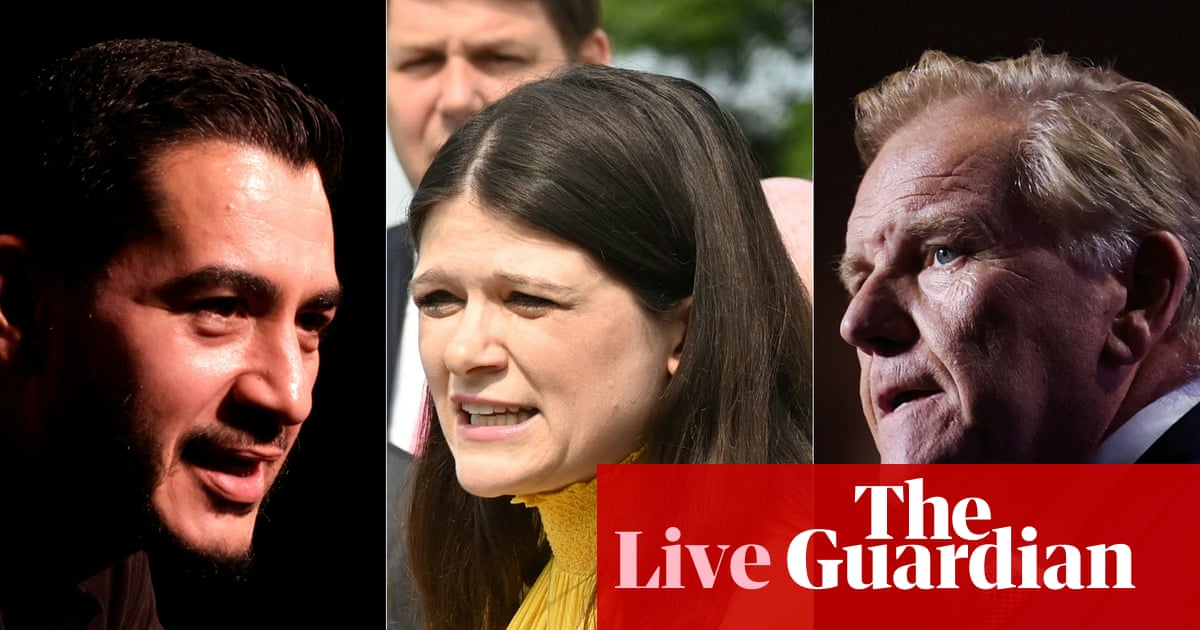
- Haley Stevens endorsed Republican Mike Rogers, prompting fierce backlash from Democratic officials who labeled the move a betrayal of party principles.
- The endorsement follows a public dispute between Stevens and primary winner Abdul El-Sayed over an outside advertisement linking inflation to U.S. support for Israel.
- President Trump praised Stevens’ decision while continuing to attack El-Sayed with inflammatory rhetoric at campaign events ahead of Tuesday’s election.
The Michigan Senate race has taken a dramatic turn following the announcement that Haley Stevens, the Democratic nominee who lost the August primary, has endorsed Republican candidate Mike Rogers. The move has ignited immediate and severe criticism from within the Democratic Party, with leaders characterizing the endorsement as a fundamental breach of loyalty. Stevens’ decision comes just days before the midterm elections, in a contest that is widely viewed as critical for determining Senate control. Her support for Rogers marks a stark departure from her previous campaign platform and has left party officials scrambling to contain the damage.
Stevens had previously refused to campaign alongside Abdul El-Sayed, the progressive who defeated her in the primary. The rift centered on an advertisement produced by an outside group that suggested a connection between rising living costs and American military aid to Israel during its conflict in Gaza. Stevens demanded that El-Sayed publicly disavow the ad before she would participate in joint events. When El-Sayed’s campaign declined this condition, Stevens withdrew her support for his bid. This dispute appears to have been the catalyst for her subsequent endorsement of Rogers, a move that has drawn accusations of sour grapes and political opportunism from Democratic allies.
Reaction from national Democratic figures has been swift and harsh. Senate Minority Leader Chuck Schumer described Stevens’ action as a despicable betrayal, emphasizing that Democrats remain united behind El-Sayed. Schumer argued that El-Sayed is better positioned to advocate for working families in Michigan compared to Rogers, whom he characterized as aligned with billionaire donors and former President Donald Trump. Former House Speaker Nancy Pelosi also condemned the endorsement, warning that it jeopardizes healthcare access and future freedoms for Michigan residents. Her comments underscored the high stakes involved in this particular Senate seat.
Local party leadership has been equally vocal in its disapproval. Curtis Hertel, chair of the Michigan Democratic Party, stated that Stevens is no longer considered a member of the party and will not be welcomed back in the future. Hertel expressed confusion over the motivation behind the endorsement, noting that it contradicts everything Stevens claimed to fight for during her congressional career. He suggested that while disappointment from the primary loss might explain some frustration, there is no reasonable justification for supporting a Republican opponent. This internal fracture highlights the deep divisions within the party regarding strategy and candidate selection.
Representative Debbie Dingell of Michigan focused on the broader issues at play, suggesting that voters are more concerned with cost of living, healthcare, and housing than with Stevens’ personal grievances. Dingell’s statement aimed to redirect attention away from the intra-party drama and toward the substantive policy differences between the candidates. Meanwhile, other Democratic figures, including New York Mayor Zohran Mamdani, emphasized that working-class interests are on the line. Mamdani criticized Stevens for endorsing the very Republican she had previously opposed, framing the decision as a betrayal of ordinary citizens.
Despite the backlash from Democrats, some Jewish leaders and candidates have sought to maintain unity without explicitly addressing Stevens’ actions. Congressional nominees Brad Lander and Daniel Bliss issued a joint statement urging voters to support El-Sayed, focusing on the contrast between accountability and authoritarianism. They highlighted the importance of fighting for an equitable future while avoiding direct commentary on the controversy surrounding Stevens. This approach reflects a broader effort to keep the focus on policy outcomes rather than internal party conflicts, even as those conflicts threaten to overshadow the election.
Former President Donald Trump has seized upon the situation to bolster his own campaign efforts. He praised Stevens on his social media platform, describing her as a highly respected Democrat who demonstrated loyalty to Michigan residents. During a rally in Iowa, Trump welcomed the possibility of Stevens joining the Republican Party and used the moment to attack El-Sayed. His rhetoric included repeated references to El-Sayed as a jihadist, employing inflammatory language aimed at discrediting his opponent. These comments reflect Trump’s strategy of leveraging racial and religious tensions to influence voter behavior in key battleground states.
Trump’s attacks on El-Sayed have drawn significant attention due to their overtly racist undertones. At the Iowa event, he suggested that Congress would need special metal detectors for El-Sayed if elected, implying a threat to national security based solely on his faith. Such remarks aim to sway undecided voters in a neck-and-neck race that could determine Senate majority status. The intensity of Trump’s involvement underscores the national significance of the Michigan contest and the lengths to which political figures are willing to go to secure victory.
As election day approaches, the fallout from Stevens’ endorsement continues to reverberate through both parties. Democrats face the challenge of repairing internal divisions while countering aggressive attacks from Republicans. Meanwhile, voters must navigate a landscape shaped by personal feuds, national politics, and deeply polarized rhetoric. The outcome of this race will likely have lasting implications for legislative priorities and the balance of power in Washington. For now, the focus remains on how these dynamics will influence final voting patterns in one of the most closely watched contests of the midterm cycle.
The coming days will test the resilience of both campaigns as they attempt to mobilize their bases amid heightened tensions. Democratic leaders hope to minimize the impact of Stevens’ defection by reinforcing their message of economic stability and social justice. Republicans, emboldened by Trump’s support, aim to capitalize on any perceived weakness in the Democratic ticket. With little time remaining before ballots are cast, the stakes have never been higher for all parties involved. The resolution of this conflict will depend largely on voter turnout and the ability of each side to maintain discipline under pressure.
Sources behind this briefing
Go to the original reporting
- The Guardian World↗Democrats condemn Haley Stevens’ ‘betrayal’ following endorsement of Republican Mike Rogers – US politics live
- The Guardian US Politics↗‘A despicable betrayal’: Democrats incensed by Haley Stevens’ endorsement of Mike Rogers


