The short version
- Keir Starmer asserts that closer European integration is essential due to a lasting decline in US reliability as a security partner.
- The former prime minister warns that Europe failed to anticipate both the Russian invasion of Ukraine and the withdrawal of American financial support for regional defense.
- Current leadership under Andy Burnham signals continued momentum toward deeper EU cooperation on trade, energy, and mobility ahead of upcoming summits.
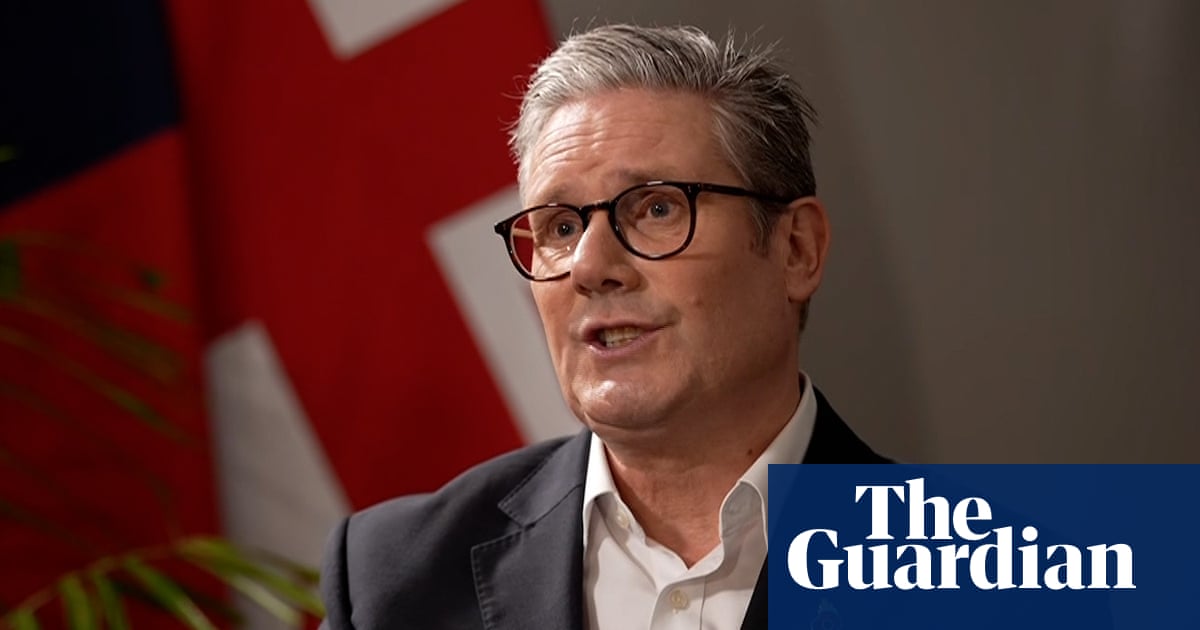
Keir Starmer has issued a stark warning to European leaders, arguing that the United Kingdom must forge significantly closer ties with the continent as the United States becomes an increasingly unpredictable ally. Speaking at the British Irish Chamber of Commerce, the former prime minister framed this realignment not as a temporary reaction to current American politics, but as a necessary response to a permanent shift in global affairs. He emphasized that the era of relying on Washington to underwrite European security is over, urging Brussels and London to catch up to new geopolitical realities before further vulnerabilities emerge.
Starmer identified two critical failures in recent European history that necessitate this pivot. First, he pointed to the continent’s unpreparedness for Russia’s invasion of Ukraine, which exposed deep-seated weaknesses in defense infrastructure and strategic coordination. Second, he highlighted the failure to anticipate President Donald Trump’s explicit stance that the US would no longer financially support European security arrangements. Starmer argued that these events were not anomalies but predictable outcomes that leaders ignored at their peril, leaving Europe vulnerable to external threats without adequate internal safeguards.
The former leader stressed that Britain must remain at the center of any strengthened European project. He cited the UK’s status as a nuclear power, its leading role in NATO, and its advanced defense industry capabilities, including next-generation fighter jet programs, as assets that are indispensable to continental security. Starmer proposed the creation of a common security framework that mirrors the economic integration of the single market, suggesting that political and military cooperation must evolve alongside trade relations to ensure stability.
While acknowledging the enduring strength of military and intelligence alliances with Washington, Starmer made it clear that the nature of the transatlantic relationship has fundamentally changed. He rejected the notion that ties would reset once Trump leaves office, describing the current dynamic as a structural shift rather than an aberration. This perspective reflects a growing consensus within the UK political left that economic and military security are now inextricably linked to deeper engagement with European neighbors, moving beyond the limited scope of post-Brexit arrangements.
The call for closer integration comes amid ongoing efforts by the current government to rebuild bridges with the EU. Andy Burnham, who succeeded Starmer as prime minister, has indicated intentions to pursue bolder policies regarding European cooperation. Upcoming discussions at an EU-UK summit will focus on critical areas such as food standards, energy policy, and youth mobility. These negotiations represent a practical step toward the broader strategic alignment Starmer advocates, aiming to mitigate some of the economic damage caused by Brexit while enhancing regulatory compatibility.
Burnham has also signaled a desire for a public debate on how the UK might move toward an even closer relationship with the EU after the next general election. This suggests that the push for reintegration is not merely a diplomatic gesture but a long-term political strategy. The current administration’s approach appears to balance immediate practical needs with longer-term strategic goals, recognizing that economic resilience and security are mutually reinforcing objectives in an increasingly volatile global environment.
Defense officials have echoed these sentiments in recent international meetings. UK Defense Secretary Wes Streeting recently affirmed the government’s united and unwavering support for Ukraine during a gathering of European defense ministers in Paris. This stance underscores the commitment to collective security even as the financial burden shifts away from American contributions. The emphasis is on building pan-European coordination that can withstand external pressures without relying on external bailouts or guarantees.
Starmer’s remarks also highlighted the specific importance of the UK-Ireland relationship within this broader European context. He noted his recent meetings with Irish political and business leaders, including Taoiseach Micheál Martin, to reinforce the annual summit mechanism established between the two nations. By positioning Britain and Ireland as partners in a coalition willing to guarantee continental security, Starmer aimed to demonstrate that peripheral nations can play core roles in defense when they act in concert.
The overarching message from Starmer is one of urgency and necessity. He argued that Europe cannot afford to remain caught asleep while threats materialize. The proposed path forward involves ambitious economic cooperation and robust security frameworks that leverage the strengths of individual nations while creating a unified front. As the UK navigates its post-Brexit identity, these interventions suggest a clear trajectory toward re-engagement with European institutions, driven by both pragmatic security concerns and economic imperatives.
Looking ahead, the success of this strategy will depend on the ability of European leaders to translate rhetoric into actionable policy. The upcoming EU-UK summit offers a testing ground for these ideas, with outcomes in trade and mobility potentially setting the tone for future cooperation. If Starmer’s assessment is correct, the window for incremental change may be closing, requiring decisive action to establish a new equilibrium that does not rely on the inconsistent support of former allies.
Sources behind this briefing
Go to the original reporting
- The Guardian World↗Starmer says UK must get closer to Europe as US relationship changes