The short version
- Annie Andrews, a Democrat and pediatrician, is running to fill the Senate seat vacated by Lindsey Graham’s death in a special election scheduled for November.
- The race serves as a focal point for 314 Action, an organization aiming to elect one hundred physicians to public office by 2030 through targeted fundraising and candidate support.
- Political scientists note that while health issues have become more salient for voters, candidates with scientific backgrounds historically face significant electoral hurdles and do not always align with pro-science policy positions.
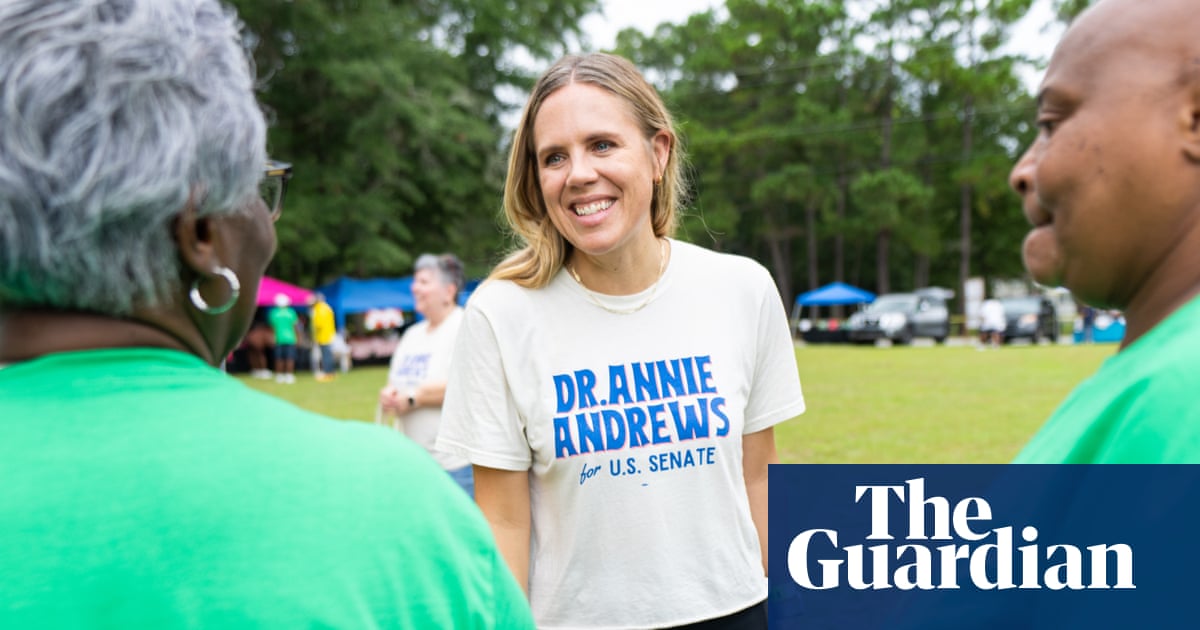
The sudden passing of Senator Lindsey Graham has reshaped the political landscape in South Carolina, creating a special election that draws intense national attention. Democrat Annie Andrews, a pediatrician with two decades of clinical experience, now finds herself competing for the Republican-held seat. The contest pits her against Darline Graham, the late senator’s sister, who was selected as the Republican nominee following a persuasion campaign by Donald Trump among state voters. Despite the high profile of the matchup, political analysts indicate that the conservative leanings of South Carolina still heavily favor a Republican victory in the upcoming November vote.
Andrews’ candidacy is emblematic of a broader strategic effort by 314 Action, a political action committee dedicated to electing scientists and medical professionals. The group initially backed Andrews when she was considered a long-shot challenger against an incumbent with five terms in office. Following the senator’s death, her campaign has gained prominence as a test case for whether medical expertise can translate into electoral success in a deeply divided political environment. Andrews has centered her platform on public health and scientific integrity, pointing to recent measles outbreaks in the state as evidence of the need for informed leadership.
The push to place doctors in government is part of an ambitious timeline set by 314 Action, which aims to see at least one hundred physicians elected to state and federal positions by 2030. The organization recently achieved its initial fundraising goal of twenty-five million dollars, a sum intended to build a pipeline of talent for higher offices, including governorships and congressional seats. Shaughnessy Naughton, the group’s president, emphasized that this financial backing is crucial for establishing a sustained presence of medical professionals in legislative bodies.
This political strategy emerges against a backdrop of heightened public concern regarding health and science. Recent years have seen significant disruptions to national health agencies, historic reductions in Medicaid funding, and increased restrictions on scientific research. Additionally, issues such as immigration enforcement within hospitals and outbreaks of infectious diseases have made these topics more visible to the general electorate. Andrews argues that medical professionals are uniquely positioned to address these challenges because they operate on the frontlines of healthcare delivery.
However, historical data suggests that electing candidates with backgrounds in science, technology, engineering, and mathematics remains difficult. During the 2018 midterm elections, nearly two hundred individuals with such credentials ran for Congress, yet only about twelve percent secured victory. Matthew Motta, an assistant professor at Boston University’s School of Public Health, noted that while endorsements from groups like 314 Action improve a candidate’s odds, the goal of electing one hundred physicians in four years is exceptionally ambitious. The statistical likelihood of success remains low despite increased financial support.
Experts also caution that a scientific background does not automatically guarantee pro-science voting records. Meredith Conroy, a political science professor at California State University, San Bernardino, observed that STEM candidates were actually less likely to win than their non-STEM peers in 2018. She suggested that scientific identity was not sufficiently salient to voters at that time to influence election outcomes. Furthermore, Motta pointed out that some elected officials with medical degrees, such as Senator Rand Paul, have contributed to the spread of health misinformation, illustrating that professional training does not ensure alignment with evidence-based policy.
The partisan divide in healthcare politics is evident in the current composition of Congress. While there are twenty physicians serving in the House and Senate, only six of those representatives are Democrats, and no Democratic doctors currently hold Senate seats. Josh Green, the governor of Hawaii and an emergency physician, is the only doctor-governor in the United States. He has expressed a desire to reduce this isolation by mentoring candidates through 314 Action, helping them develop the communication skills necessary for political engagement.
Financial barriers remain a significant obstacle for many medical professionals considering public service. The high cost of medical education often leaves physicians with substantial debt, making it difficult to leave lucrative practices for lower-paying elected positions. Consequently, those who do run tend to be wealthier individuals, a demographic that historically skews conservative. Advocates like Naughton argue that increasing the number of doctor-politicians could help restore public trust in science, leveraging the credibility physicians hold with patients to promote fact-based problem solving in government.
As the special election approaches, the outcome will provide early insight into whether the strategy of electing medical professionals can gain traction in a polarized electorate. While national health agencies face challenges and states consider restrictive laws on vaccination and reproductive rights, state-level leadership becomes increasingly critical. The race in South Carolina will test whether voters prioritize professional expertise over party affiliation when deciding who should represent them in Washington.
Looking ahead, the success or failure of Andrews’ campaign may influence the broader efforts of 314 Action and similar organizations. If candidates with scientific backgrounds continue to struggle despite increased funding and salient health issues, it may indicate deeper structural barriers within the political system. Conversely, a competitive race could signal a shift in voter priorities, potentially encouraging more medical professionals to enter public service in future election cycles.
Sources behind this briefing
Go to the original reporting
- The Guardian US Politics↗A pediatrician is running for Senate. Can doctors change the political debate over health and science?