The short version
- Spain has issued an ultimatum to Italy to lift border controls imposed after the Ceuta crossings, threatening proportionate retaliatory measures if compliance is not achieved by August 9.
- The dispute highlights deepening fractures within the Schengen area, with Italy citing security concerns while Spain argues its citizens are being unfairly targeted despite most migrants having returned to Morocco.
- Blame for the crisis is divided among European leaders, Moroccan officials, and judicial rulings, with emerging evidence suggesting coordinated disinformation campaigns may have driven the mass movement.
A significant diplomatic confrontation has emerged between Spain and Italy regarding border management protocols within the Schengen area. Madrid has formally demanded that Rome reverse its decision to partially suspend open-border arrangements with Spain, setting a deadline of August 9 for compliance. The Spanish government warned that failure to lift these restrictions would result in proportionate countermeasures designed to protect national interests and citizen dignity, though specific details regarding the nature of these reprisals remain undisclosed.
The tension stems from Italy’s recent move to close maritime and air entry points while reinforcing land border controls against Spanish nationals. Rome justified this action as a necessary precaution to prevent migrants who recently entered the Spanish exclave of Ceuta from traveling onward into Italian territory. This decision was supported by Finland and Denmark, reflecting broader concerns among certain EU member states about migration flows. Conversely, the Czech Republic took a more severe stance, calling for a temporary suspension of Spain’s Schengen membership entirely.
Spanish officials have strongly rejected Italy’s rationale, labeling it unjustified and discriminatory. Madrid argues that the premise is factually flawed because the vast majority of individuals who crossed into Ceuta have already returned to Morocco. Furthermore, Spanish authorities contend that those remaining in the exclave have no viable means of entering the wider Schengen zone, rendering Italy’s preventive measures unnecessary and based on spurious arguments rather than established evidence.
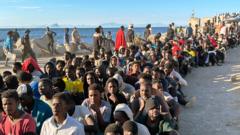
The incident in question involved approximately 78,000 migrants arriving in Ceuta by sea over a short period last week. The event resulted in significant loss of life, with around 100 fatalities reported. Images from the scene showed hundreds of individuals lined up on beaches to receive aid. While the immediate influx has subsided, nearly 1,400 minors remain in Ceuta under Spanish care. Youth Minister Sira Rego acknowledged that the system was initially overwhelmed but stated that control is being restored, with priority given to the most vulnerable cases.
Determining the cause of such a coordinated mass movement remains complex and contested. European Commission Migration Commissioner Magnus Brunner suggested that criminal networks spreading disinformation played a key role in organizing the crossings. The Spanish government has aligned itself with this assessment, pointing to social media activity as a driver. Meanwhile, Moroccan officials have placed blame squarely on Spain’s Supreme Court, which recently ruled against the summary return of migrants stopped at sea near Ceuta and Melilla.
Moroccan sources described the judicial decision as the catalyst that collapsed the deterrent element of the border system, likening the breach to a dam giving way. This perspective shifts responsibility away from state actors in Rabat and toward legal changes in Madrid. Questions also persist regarding why Moroccan border guards did not attempt to stop the large-scale swimming attempts, raising issues about enforcement capacity or intent on the North African side.
The crisis has strained relations between Spanish Prime Minister Pedro Sanchez and Italian Prime Minister Giorgia Meloni, whose political platforms have long diverged on migration policy. Meloni has consistently advocated for stricter EU-wide migration rules, while Sanchez faces domestic pressure to manage border security effectively. The incident underscores the fragility of the Schengen agreement when member states face asymmetric pressures and interpret shared responsibilities differently.
Looking ahead, the situation remains volatile. Moroccan media reports indicate fresh online calls for another coordinated crossing attempt similar to the previous week’s event. If such an effort materializes, it could further test the resolve of EU border mechanisms and deepen existing political divisions. The coming days will be critical in determining whether diplomatic channels can de-escalate tensions or if retaliatory measures will lead to a broader fragmentation of European border cooperation.
Sources behind this briefing
Go to the original reporting
- BBC World↗Spain threatens retaliation if Italy fails to lift border controls after Ceuta crossings

