The short version
- Christopher Wright was sentenced to a minimum of 35 years in prison for the 2019 murder of his lodger, Richard Dyson.
- Wright dismembered Dyson's body and concealed it in a concrete-filled barrel on his farm, where it remained undiscovered for over five years.
- The case concluded with Wright's conviction and a separate sentence for an accomplice who helped cover up the crime.
A South Yorkshire farmer has been sentenced to a minimum of 35 years in prison for the murder of his lodger, a crime that involved shooting the victim, dismembering his body, and hiding the remains in concrete for more than five years. Christopher Wright, 73, was convicted at Sheffield Crown Court in July for killing Richard Dyson, 55, in November 2019. The sentencing marks the end of a long legal process that finally provided answers to Dyson’s family after years of uncertainty regarding his disappearance.
The conflict between Wright and Dyson began when the two men had a falling out on Wright’s farm in Hoyland. Dyson had been living in his car on the property and performing various jobs for Wright, who was 67 at the time of the incident. Tensions escalated when Wright, an avid collector of antique firearms, suspected Dyson of stealing valuable items from his collection and selling them. This suspicion led to a confrontation that turned fatal.
During the argument in November 2019, Wright shot Dyson in the chest and arm with a shotgun. The court heard that Wright’s background as a former butcher provided him with the specific skills necessary to dismember Dyson’s body over several days following the shooting. This aspect of the crime was highlighted by Mr Justice Cotter during sentencing, who noted that Wright possessed a level of capability for such acts that few ordinary individuals would have.
After dismembering the remains, Wright placed them in a barrel and filled it with concrete to conceal the evidence. He then moved the barrel into a trailer and asked a neighbor to store the vehicle on their property without revealing its contents. This cover-up was facilitated by Karl Schwalbe, a lifelong friend of Wright, who assisted in hiding the crime. Schwalbe was sentenced to three years in prison for conspiracy to pervert the course of justice.
For more than five and a half years, Dyson’s disappearance was treated as a missing person case. Although South Yorkshire Police were aware that Dyson had been on Wright’s land in the days leading up to his vanishing, they could not initially find evidence linking the farmer to the crime. Wright denied any knowledge of Dyson’s whereabouts, and the investigation stalled without concrete proof.
The breakthrough came in July 2025 when new evidence emerged showing that Wright had contacted a local farmer about storing a vehicle on his property shortly after Dyson disappeared. This information prompted police to search the farm, where they discovered the barrel containing concrete and human remains. Forensic analysis later confirmed that the remains belonged to Richard Dyson.
The prolonged lack of closure took a significant toll on Dyson’s family. His daughter, Bethany Dainty, filed a missing person report shortly after her father vanished. In a victim impact statement read in court, she described the anguish of not knowing the truth, which prevented her from grieving properly. She expressed deep frustration that someone knew her father’s fate while she suffered in uncertainty for years.
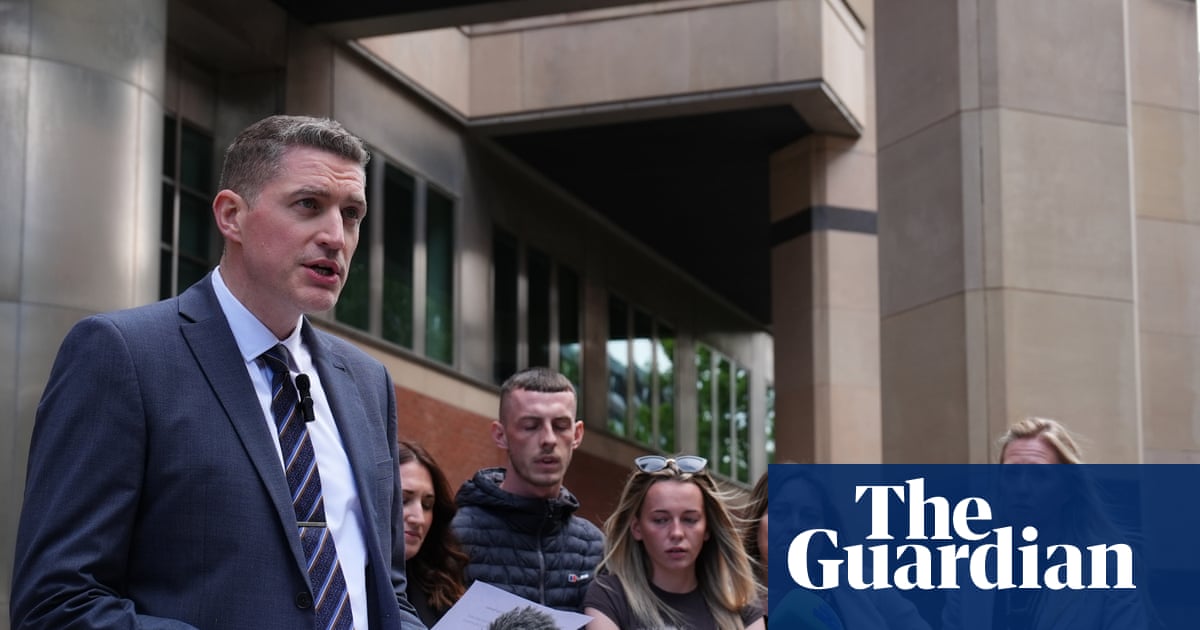
Detective Chief Inspector Andy Knowles praised the resilience of Dyson’s family during what he described as a long and emotionally draining investigation. He noted that both Wright and Schwalbe continued to deny accountability despite mounting evidence, forcing the family to endure a trial filled with harrowing details. The sentencing provides a final legal resolution to a case that had remained unsolved for half a decade.
Mr Justice Cotter told Wright during the sentencing that he would likely die in prison given the length of his minimum term. The judge emphasized the severity of the crime and the deliberate efforts taken to conceal it. The case underscores the challenges faced by law enforcement when suspects actively obstruct investigations and hide evidence for extended periods.
The conviction and sentencing bring a measure of justice to Dyson’s family, who have waited years for accountability. While the legal process has concluded, the emotional impact of the crime and the subsequent cover-up remains profound for those involved. The case serves as a reminder of the complexities in solving crimes where evidence is deliberately concealed and suspects deny involvement.
Sources behind this briefing
Go to the original reporting
- The Guardian World↗South Yorkshire man who killed lodger and hid body in concrete gets 35-year sentence

