The short version
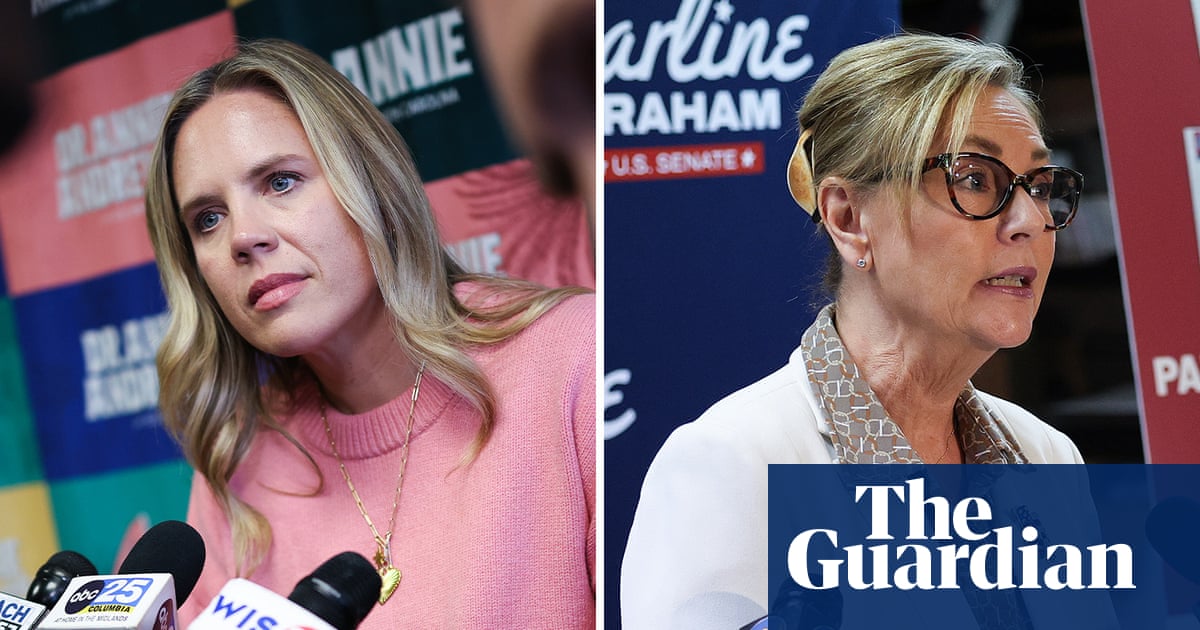
- A recent survey indicates a statistical tie between Democratic pediatrician Annie Andrews and Republican incumbent Darline Graham in South Carolina.
- Voters express significant concern regarding Graham's lack of elected experience, with over half believing she is unprepared for the role.
- Andrews has gained substantial support from independent voters by positioning herself as a moderate alternative to both party extremes.
The United States Senate race in South Carolina has emerged as one of the most competitive contests in the nation, defying historical trends in a state that has consistently voted Republican. A new poll conducted by The New York Times and Siena College reveals that Democratic challenger Annie Andrews is tied with incumbent Senator Darline Graham, with each candidate securing 48 percent of the vote. This development marks a significant shift in a political landscape where no Democrat has won a Senate seat since 1998, and former President Donald Trump carried the state by nearly eighteen points in the previous election cycle.
The contest centers on two candidates with vastly different backgrounds and political trajectories. Graham assumed her Senate seat through appointment following the death of her brother, Senator Lindsey Graham, in July. She entered the general election at the urging of Donald Trump, despite having never previously held elected office. Her campaign has been defined by this lack of traditional political experience, a vulnerability that opponents have exploited throughout the race. In contrast, Andrews is a practicing pediatrician from Charleston who has built her platform around her professional expertise in healthcare.
Voter sentiment regarding Graham’s qualifications appears to be a decisive factor in the tightening race. The same poll indicating a tie found that 51 percent of voters believe she lacks the necessary experience to serve effectively as a senator. This perception was highlighted during an August debate, where Graham admitted she was not well-informed on national security matters when questioned about U.S. policy toward Taiwan. Such admissions have allowed Andrews to frame the election as a choice between seasoned professional competence and untested political loyalty.
Andrews has strategically positioned herself as a moderate alternative, distancing her campaign from the more progressive elements of the Democratic Party. While she advocates for a public health insurance option and lower prescription drug costs, she explicitly rejects the Medicare for All model. Furthermore, she has acknowledged Democratic failures on border security and declined to endorse any national Democratic figures, a tactic that appears to be resonating with independent voters. Data shows independents favor Andrews over Graham by a margin of 57 percent to 37 percent, providing her with a crucial coalition in a heavily Republican state.
Graham’s campaign relies heavily on the endorsement and active support of Donald Trump, who visited South Carolina last week for a ninety-minute rally. During the event, Trump characterized Andrews as extreme and faced repeated interruptions from protesters. Graham aligns closely with Trump’s policy positions, including opposition to abortion rights, full trust in his tariff strategies, and support for immediate deportation of undocumented immigrants. Trump is scheduled to return to the state later this week to continue campaigning for the incumbent.
Despite the Republican Party’s historical dominance in South Carolina, internal unity within the party is not absolute. Some establishment figures have expressed reservations about Graham’s candidacy. Notably, Congressman Ralph Norman, who lost a runoff election against Graham, has announced he will not campaign on her behalf. This lack of full-party cohesion contrasts with the heavy financial resources Republicans are pouring into the race, underscoring the high stakes involved in retaining the seat.
Other recent surveys corroborate the tightness of the contest, though most show Graham maintaining a narrow lead within the margin of error. A survey by the South Carolina Policy Council conducted this month gave Graham a one-point advantage. However, these polls also reveal a broader challenge for Democrats in the state, as Andrews is significantly outperforming other candidates on her party’s ticket. For instance, the Democratic candidate for governor, Jermaine Johnson, trails his Republican opponent, Alan Wilson, by ten points, suggesting that Andrews’ success may be driven by specific local dynamics rather than a statewide partisan shift.
As the election approaches, the race remains a bellwether for how voters in traditionally conservative states weigh experience against party loyalty. The ability of Andrews to maintain her lead among independents while Graham consolidates Republican support will likely determine the outcome. With both candidates locked in a statistical tie and external factors such as Trump’s involvement playing a prominent role, the South Carolina Senate seat stands as one of the most unpredictable outcomes in the current political cycle.
Sources behind this briefing
Go to the original reporting
- The Guardian World↗South Carolina tossup means state may elect Democrat to Senate for first time in 28 years