The short version
- The runoff pits interim Senator Darline Graham against Representative Ralph Norman following a rapid primary process triggered by Lindsey Graham's death.
- President Trump has heavily endorsed Graham, viewing the race as a test of his ability to drive voter turnout for down-ballot Republicans.
- Norman emphasizes his legislative record and conservative credentials while criticizing Graham's lack of political experience and reliance on outside management.
South Carolina voters will decide the Republican nominee for the U.S. Senate on Tuesday, concluding an unusually brief election cycle triggered by the sudden death of Senator Lindsey Graham in July. The runoff pits Darline Graham, who was appointed to serve out her brother’s term, against Representative Ralph Norman. This contest determines which candidate will face Democrat Annie Andrews in the November general election, a race occurring in a state where Republicans have dominated statewide offices for twenty years.
The compressed timeline has created a distinct dynamic compared to typical Senate campaigns. Political observers note that candidates usually spend eighteen months preparing for such contests, but this process unfolded in roughly forty-five days. Reese Boyd, chair of the Horry County Republican Party, remarked on the abnormal speed of the proceedings, suggesting that while the rush is atypical, it may ultimately prove effective. The accelerated schedule has limited opportunities for voters to evaluate policy positions in depth, shifting focus toward name recognition and party loyalty.
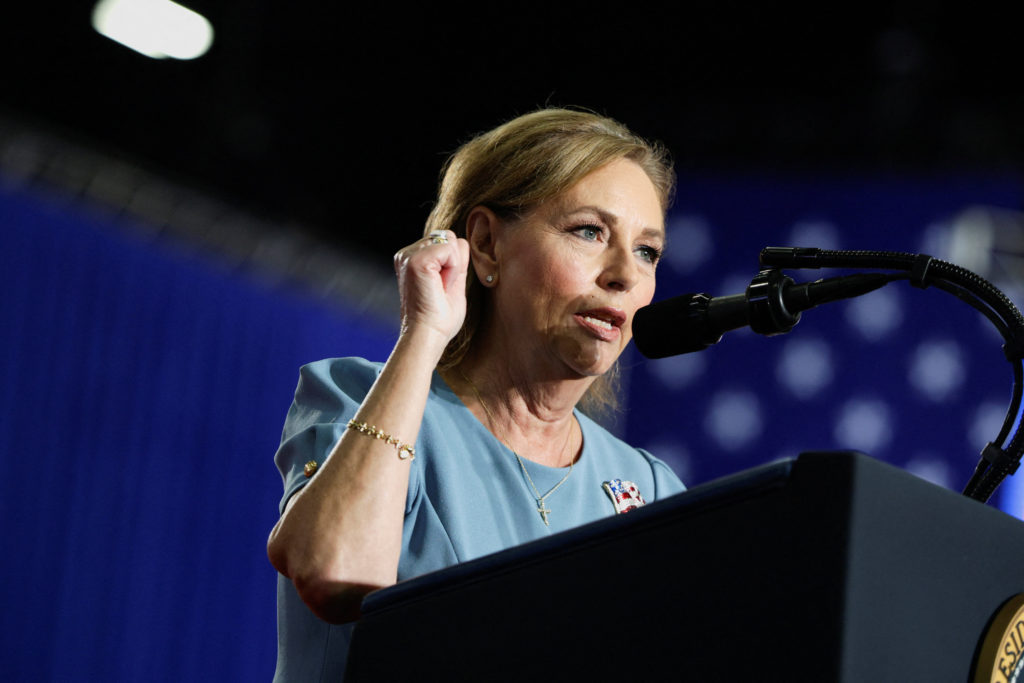
Darline Graham entered the race as a political novice with a background in civil service rather than elected office. She previously led the state commission for the blind before assuming her Senate seat. Her campaign strategy has relied heavily on her familial connection to the late senator and explicit alignment with President Donald Trump. Graham has framed her candidacy as an effort to preserve her brother’s legacy, though she has offered few specific policy details beyond her support for Trump’s legislative priorities, including a voting bill he champions.
President Trump has made his support for Graham unmistakable, endorsing her before she officially declared her candidacy and campaigning vigorously on her behalf. He framed his intervention as a tribute to Lindsey Graham and a test of his own influence over the Republican base. At a rally in Myrtle Beach, Trump urged supporters to treat the Senate race as if he were personally on the ballot, arguing that his presence is necessary to ensure high turnout for allied candidates. His super PAC, MAGA Inc., also injected significant funds into Graham’s campaign shortly before the runoff.
Ralph Norman, a long-serving member of Congress and former gubernatorial candidate, has positioned himself as the experienced alternative. He highlights his two decades in public office and his reputation as one of the most conservative members of the House. Norman has sought to capitalize on voter familiarity with his record, securing endorsements from prominent conservative figures including Senators Rick Scott and Mike Lee. He has also invested substantial personal wealth into his campaign, spending over a million dollars in the final week alone.
The central tension in the race revolves around experience versus loyalty. Norman has criticized Graham’s lack of legislative background, pointing to a debate moment where she admitted that military affairs were not her specialty. He used an analogy involving sports recruitment to argue that family connections do not substitute for qualifications. Conversely, Graham has portrayed her campaign as being managed by Washington elites, a characterization Norman has pushed back against by emphasizing his own independence and willingness to challenge political norms when necessary.
Uncertainty remains regarding whether Trump’s endorsement will be sufficient to overcome concerns about Graham’s readiness for the role. While some voters have indicated they support her primarily because of the president’s backing, others may prioritize Norman’s established record. The outcome will provide early insight into Republican voter behavior ahead of the midterm elections, particularly regarding the weight placed on presidential endorsements versus candidate experience.
Regardless of the runoff result, the winner will face a challenging general election environment. Democrats have not won a statewide office in South Carolina for two decades, making the seat heavily favored for Republicans. However, the unusual circumstances of this primary, including the rapid succession and the high-profile involvement of the president, add layers of complexity to what might otherwise be a routine contest. The coming weeks will reveal how these factors influence voter engagement and party cohesion.
As the campaigns conclude, both candidates have attempted to define their identities in a short window. Graham has emphasized her commitment to Trump’s agenda and her role as a caretaker for her brother’s legacy. Norman has focused on his conservative credentials and legislative experience. The final vote will determine not only who holds the Senate seat but also how much influence the president retains over primary outcomes in competitive Republican districts.
The broader implications of this race extend beyond South Carolina. It serves as a bellwether for the upcoming midterm elections, testing whether Trump’s endorsement can mobilize voters for candidates who are not himself on the ballot. Analysts will closely watch turnout patterns and demographic shifts to gauge the strength of the Republican base. The result may inform strategies for other races where party leadership is divided or where candidate experience is in question.
Sources behind this briefing
Go to the original reporting
- PBS NewsHour↗Darline Graham, Ralph Norman go head-to-head in South Carolina's GOP Senate runoff
- The Guardian US Politics↗Darline Graham and Ralph Norman head to South Carolina’s Senate runoff

